
Society of the Snow is now one of the most-watched non-English language Netflix movies ever with 64.4 million views to date.
It's even picked up two Oscar nominations and one BAFTA nomination, so it's absolutely a movie you should be watching. And once you've seen it, we're sure you'll have some questions about just how accurate it is.
Society of the Snow is based on the harrowing true story that shocked the world over 50 years ago. You've probably heard of the Miracle of the Andes before (perhaps through the 1993 movie Alive, starring Ethan Hawke), but you've never seen it quite like this.
Spanish filmmaker JA Bayona's spectacular Netflix production shows the horrors of the infamous plane crash, paying tribute to those who survived and those who didn't.
There have been many accounts of what happened, from best-selling book Alive: The Story of the Andes Survivors by Piers Paul Read, to the personal perspectives of some survivors like Roberto Canessa's I Had To Survive: How a Plane Crash in The Andes Inspired My Calling to Save Lives, and Nando Parrado's Miracle in the Andes.
This Netflix movie is based on Pablo Vierci's La Sociedad de la Nieve, which manages to unite all perspectives into the "definitive" chronicle of the crash, and its aftermath.
What to Read Next
This is what happened, and where the survivors are now.
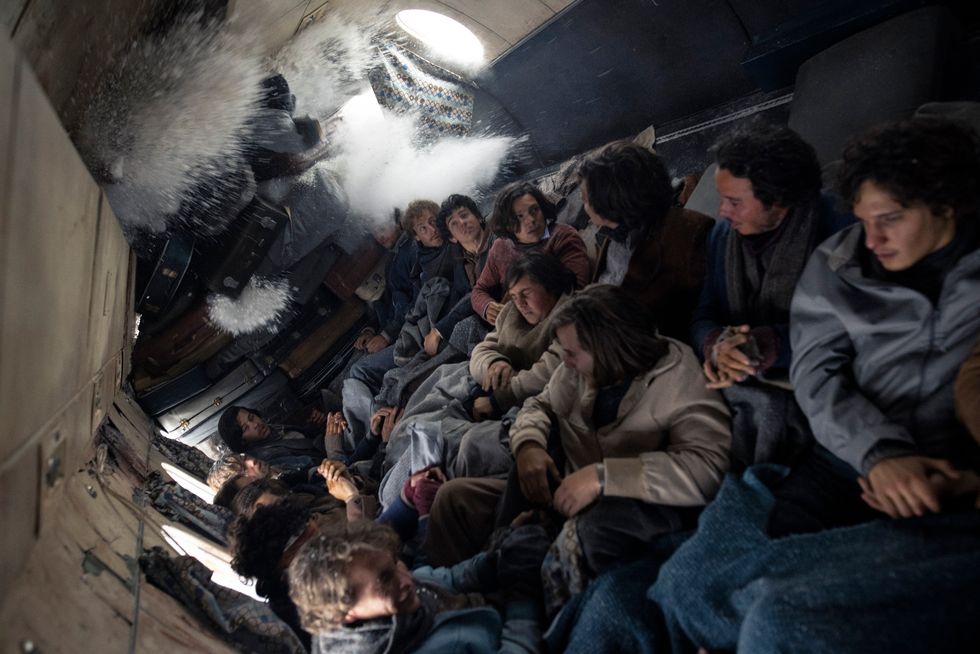
Society of the Snow true story: How did Flight 571 crash?
On October 13, 1972, Uruguayan Air Force Flight 571 crashed in the Andes with 40 passengers and 5 crew members aboard.
The plane was heading to Santiago (Chile) with an amateur Uruguayan rugby team, Old Christians Clubs, who were joined by some friends and family.
"It was a very abrupt moment," remembered survivor Robert Canessa in an interview with National Geographic in 2016.
"We were trying to cross the Andes when the pilot said, 'Fasten your seatbelts, we are going to enter some turbulence.' Rugby players like to fool around and play macho. So we were throwing around rugby balls and singing a song," he recalled. Suddenly, they realised they were flying too close to the mountains.
"The pilot had made a huge mistake," Canessa explained, "he'd turned north and begun the descent to Santiago while the aircraft was still in the high Andes. He began to climb, until the plane was nearly vertical and it began to stall and shake. Then we smashed into the side of the mountain."
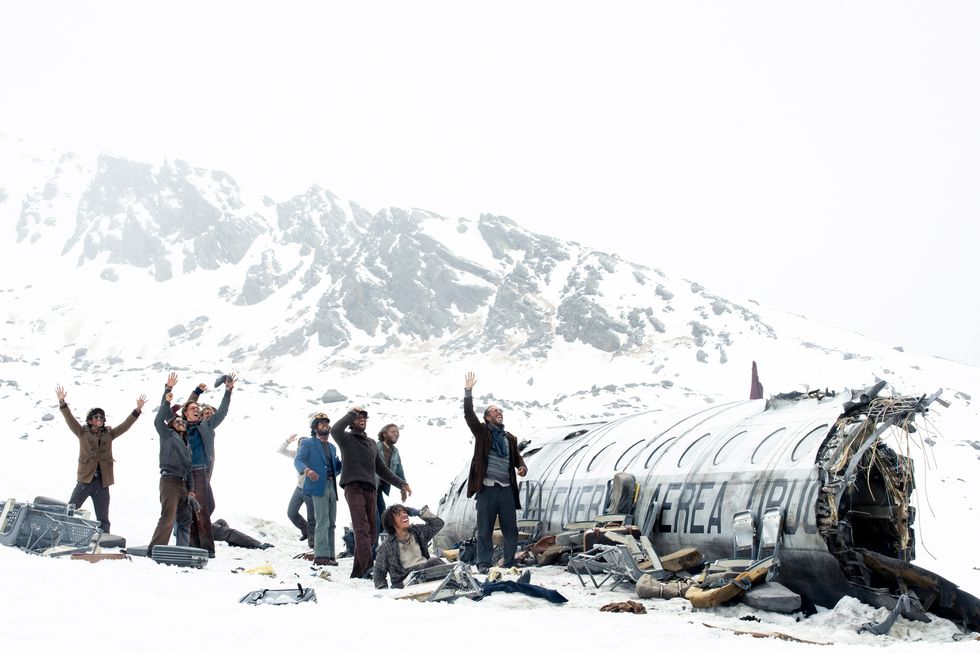
The two wings and the tail were lost during the fall. The rest of the plane fell into an isolated valley.
In an interview with The Guardian, survivor Nando Parrado remembered that first moment realising their complicated situation: "I saw the magnitude of the place we were in. It's immense. It's huge. And I said: 'F**k. This is going to be horrible. How are we going to get out of here? They won't find us here.'"
During the crash and shortly after, a total of sixteen passengers and crew members died, leaving 29 to find a way to stay alive. That's when the true nightmare started.
After a few days, it was clear nobody knew exactly where to find them. The rescue parties flew close to their location, but they were invisible down in the valley because of the snow.
Ten days after the crash, the survivors found out thanks to a radio (their only connection to the outside world) that the rescue efforts had stopped until the weather conditions were more favourable.
Those same conditions put the survivors in serious danger. On the 17th day, an avalanche buried them inside the plane, causing the immediate death of eight passengers.
However, they managed to pull through. For ten weeks, the survivors faced extreme conditions, temperatures below zero, another avalanche and famine.

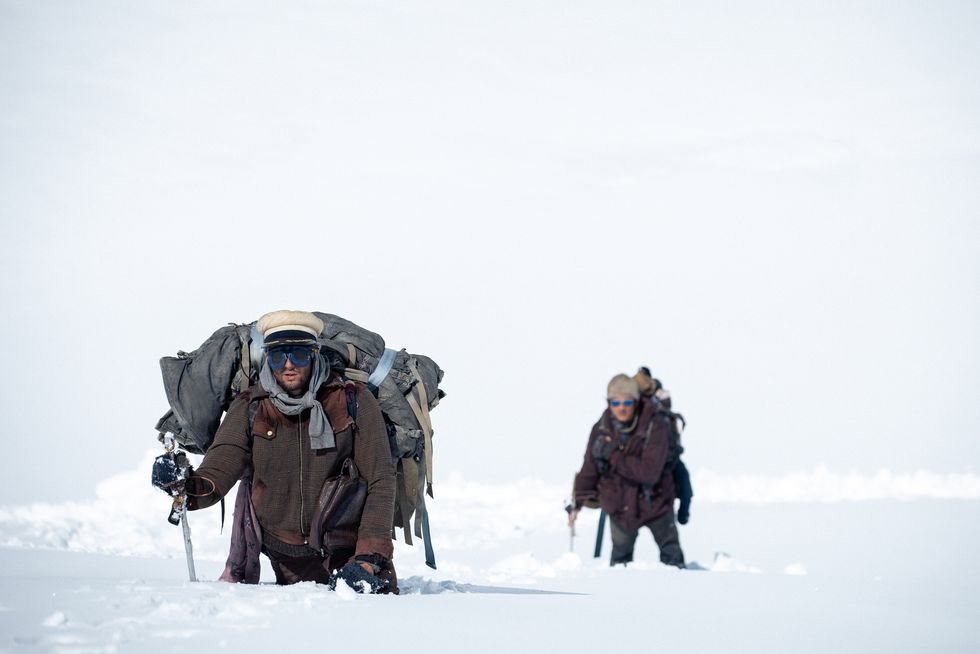
After a two-month ordeal, on December 12, three survivors decided to venture into the unknown in order to find help. It took Canessa, Nando Parrado and Antonio 'Tintín' Vizintín over a week to find anything beyond snowy mountains. Their bravery paid off.
On the eighth day of the trip, alongside a river, they found cattle and a rusty soup can. On December 21, they were found by Chilean muleteer Sergio Catalán. Since they were on different sides of a river and couldn't hear each other, the man came back the next day with pen and paper, which he threw at them in order to know who they were.
Parrado wrote the famous message, which is featured in the Netflix movie – a message that would save their lives:
"I come from a plane that crashed in the mountains. I am Uruguayan. We have been walking for 10 days. I have 14 friends injured at the accident site. We need help. We have no food. Please come look for us."
Catalán reached the authorities, and the nightmare was finally over.
Survivor Carlos Páez Rodríguez recalls his experience at seeing the helicopters reaching them at last: "I saw them as two giant birds, bringers of freedom. I can't explain the happiness of that moment."
When the survivors were rescued, the media frenzy started, quickly focusing on one particular aspect of their survival.
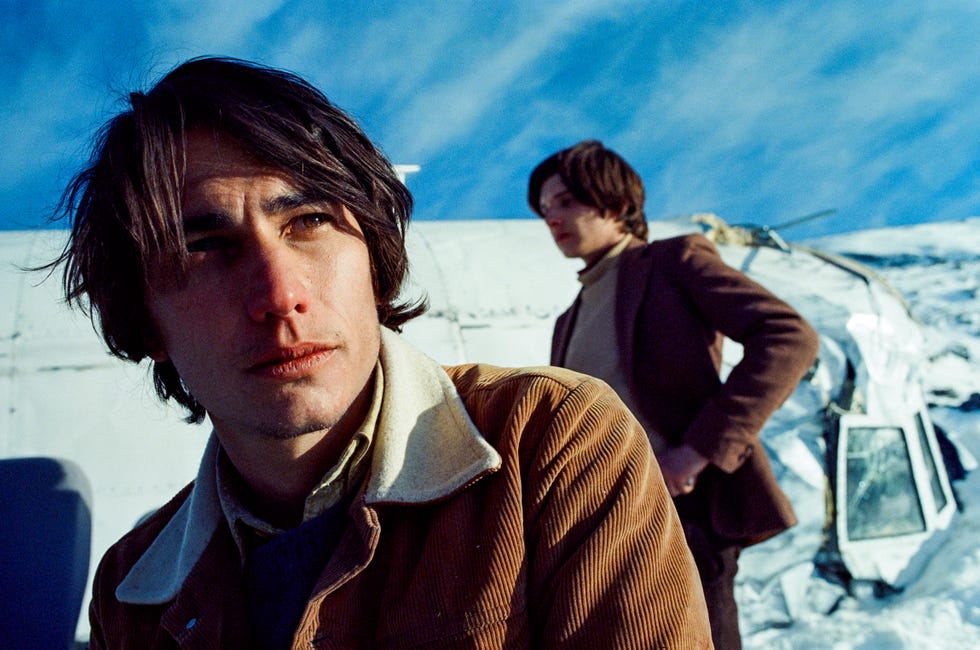
Is Society of the Snow and Alive the same story?
Yes, both Society of the Snow and Alive are based on the same true story.
Released in 1993, Alive was an adaptation of Piers Paul Read's book Alive: The Story of the Andes Survivors and was directed by Frank Marshall. It starred Ethan Hawke, Josh Hamilton, Vincent Spano, Bruce Ramsay, John Haymes Newton, Illeana Douglas, Danny Nucci, and John Malkovich as the narrator.
This Hollywood movie was the second retelling of the tragedy, almost two decades after 1976's Mexican thriller Survive! directed by René Cardona.
One of the survivors, Nando Parrado, served as the technical advisor for Alive, in order to ensure the story was as accurate as possible.
However, the movie's reception was not stellar – Alive received 61% of positive reviews according to Rotten Tomatoes, while the average audience rating stands at 68%.

How accurate is Netflix's Society of the Snow?
The Netflix movie is extremely faithful to the true story, apart from some minor differences.
For example, the plane didn't fly straight from Montevideo to the mountains where it crashed in real life. In fact, due to the terrible weather, the crew decided to stop on October 12, 1972, at the city of Mendoza (Argentina), where they spent the night before continuing the journey to the final destination in Santiago (Chile) on October 13. In Society of the Snow, this stop is not included.
As for the rescue, it actually took two days to get everybody out of the valley. In the movie, it happens faster, and all at once.
In an interview with Deadline, Bayona explained his commitment to realism.
"I was obsessing in the drama and trying to try to tell the story of these men with the maximum realism and maximum respect in order to make everyone go through the experience like being in the plane inside with them, and by feeling empathy towards them, understand what they did and what they went through," he explained.
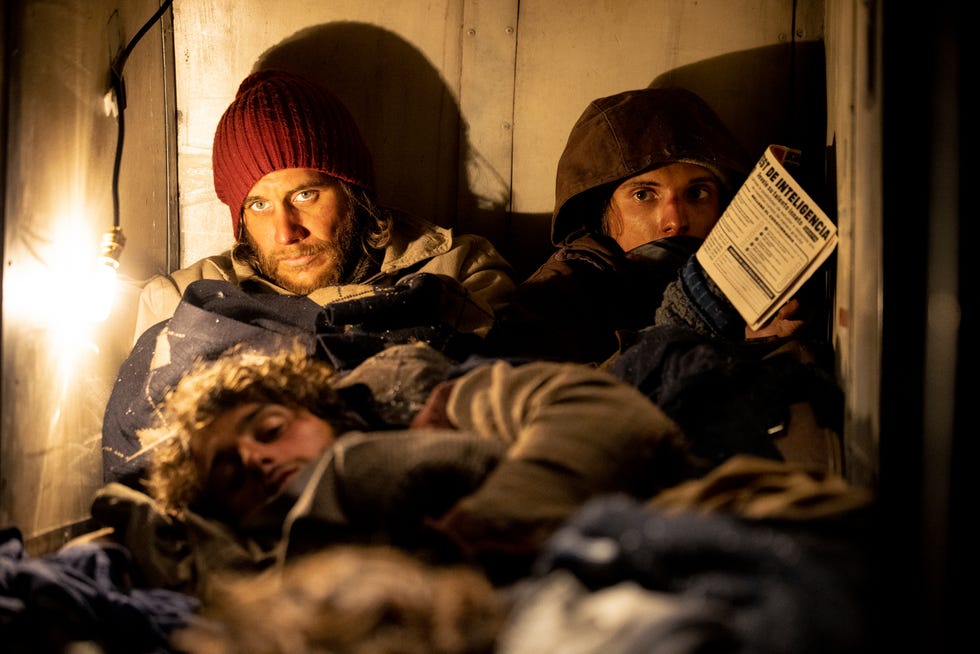
"There have been like 20 books done on this tragedy, two films and lots of documentaries, but it was not until I read Pablo Vierci's book that I was able to see how big, how massive this story is, even on a spiritual, psychological and philosophical level," he added.
In the same interview, producer Belén Atienza talked about the film's emotional screening in the Uruguayan capital of Montevideo for the survivors and the families of people who perished in the crash.
"We had like a theatre with 300 people only. For us, it was incredible after 10 years to be sitting down in that theatre that was totally charged with energy, with emotion. We were so scared and I think that they were scared because they didn’t know what they were going to feel," she remembered.
"It was one of the most emotional moments of the 10 years of doing the film. When the film finished we were all in tears, like everyone else in the theatre. There was silence and there was some applause and everyone was relieved."
Where are the Flight 571 survivors now?
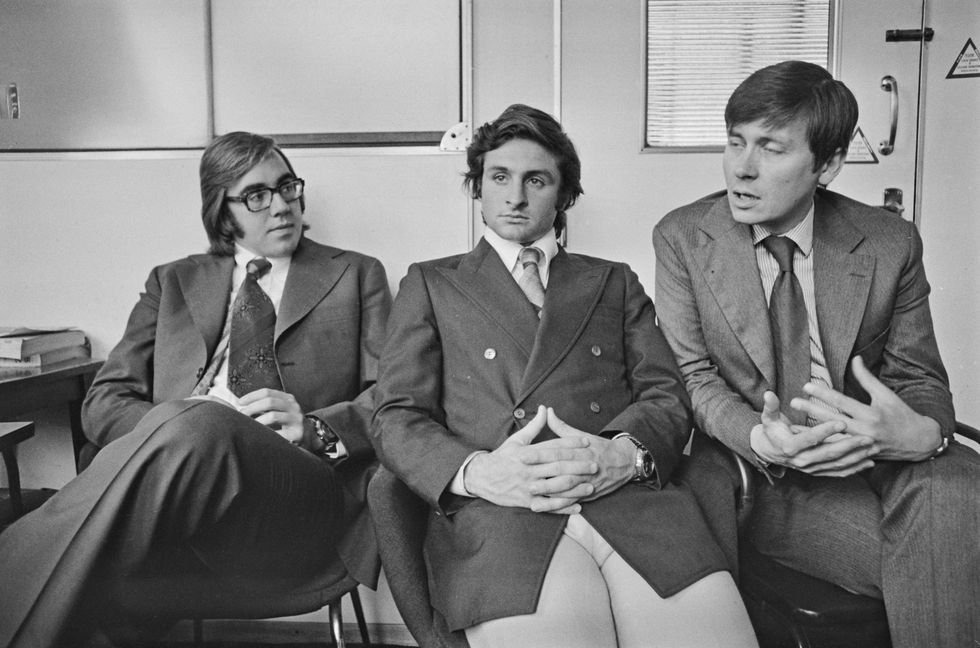
It's been 50 years. Since they were very young when the accident happened, almost all sixteen of them are still alive — Javier Methol and José Luis "Coche" Inciarte died in 2015 and 2023, respectively.
The survivors met on October 13, 2022, to pay tribute to the victims 50 years after the crash. They also meet every December 22, the day they were rescued, in order to share a meal together and remember they survived (via New York Post).
As mentioned, many of them have written books about the incident from their own perspective. They have not been directly involved in the making of the movie, but they were consulted during its creation (both survivors and the families of those who died in the snow) and they were shown the movie once it was finished.
Canessa said to USA Today it was not easy watching the movie, saying: "I was immersed in that place again. I was back in the fuselage."
Society of the Snow: When "cannibalism" made the headlines
Many remember this story as a story of cannibalism. That was the aspect that got most of the attention, dominated the headlines and marked a divisive conversation.
The morbid perspective won over the human story. For the survivors, it was about staying alive after the very few provisions ran out and the frozen bodies of their friends were piling up in front of them.
As a medical student, Roberto Canessa found himself in charge of many of the injuries, as well as the handling of the corpses, recalling: "I had to drain infections from the boys' legs and stabilize fractures. I was also in charge of carting the dead bodies, which some people couldn't stand."
Canessa has addressed the "cannibalism" issue numerous times, clarifying it was actually "anthropophagy".
"I've had these discussions for 40 years. I don't care. We had to eat these dead bodies, and that was it. The flesh had protein and fat, which we needed, like cow meat," he said in 2016. "That was very tough. Your mouth doesn't want to open because you feel so miserable and sad about what you have to do."
"But then I thought, if I were killed I would feel proud that my body could be used for others to survive. I feel that I shared a piece of my friends not only materially but spiritually because their will to live was transmitted to us through their flesh. We made a pact that, if we died, we would be happy to put our bodies to the service of the rest of the team."
The issue also had a religious layer to it, since the team was part of a devout Christian community. The media put them under scrutiny, but they always maintained they did nothing wrong.
"We didn't have food. We thought, if Jesus at the Last Supper distributed his body and blood to all of his apostles, he was giving us to understand that we had to do the same. It was an intimate communion between all of us and it was what helped us survive," survivor Pancho Delgado explained during a press conference at the time, as featured in the documentary Naufragos de los Andes.
Society of the Snow is available now on Netflix.



Mireia (she/her) has been working as a movie and TV journalist for over eight years. Based in the UK, she is a former deputy movies editor at Digital Spy, and previously worked for the Spanish magazine Fotogramas. Mireia's work has been published in other outlets such as Esquire and Elle in Spain, and WeLoveCinema and GamesRadar+ in the UK. She is also a published author, having written the essay Biblioteca Studio Ghibli: Nicky, la aprendiz de bruja about Hayao Miyazaki's Kiki's Delivery Service.
During her years as a freelance journalist and film critic, Mireia has covered festivals around the world and has interviewed high-profile talents such as Kristen Stewart, Ryan Gosling, Jake Gyllenhaal and many more. She's also taken part in juries such as the FIPRESCI jury at Venice Film Festival and the short film jury at Kingston International Film Festival in London. LinkedIn


