Snow White spoilers follow.
Aside from its groundbreaking technical feat in animation and establishing Disney into the studio they are today, for many young girls, Snow White would have been their first Disney princess growing up.
We were enchanted by her virtues in kindness, love and her pure-hearted and caring spirit. As the first Disney Princess, she set the standards for others to follow, or in other words, Snow White walked so that Cinderella, Rapunzel, Belle, Tiana and Mulan could run.
But as new fans embark on the latest Disney live action remake starring Rachel Zegler, Snow White's 'happily ever after' is a complicated affair.
1937's Snow White and the Seven Dwarfs introduced a lot of the stereotypes and tropes that have plagued Disney princesses throughout history. Take your pick from the list of publicised arguments, anywhere from unrealistic body shapes to damsels-in-distress waiting for their prince charming.

Snow White's agency is rooted in motherly qualities. Thanks to the Evil Queen, she is judged on her beauty and punished with domestic servitude. When the huntsman allows her to escape into the woods, her first instinct upon arriving at the cottage is to clean, whistling as she works with her animal companions to sweep the floors, clean the cobwebs, dust the fireplace and wash the plates.
What to Read Next
She also cooks for the dwarfs upon their return from the mines and looks after them, believing they had no maternal figure to be around them. It's a stark contrast from Grumpy's line stating that, "All females is poison. They're full of wicked wiles!"
Obviously, a lot has changed since Snow White's first introduction. It's a heavy burden and price to pay for being the first. These stereotypes were based on outdated beliefs where a woman's value was viewed on domesticity and beauty rather than her thoughts, beliefs and integrity.
Disney Princesses reflect and adapt to the times of their creation, so it's no surprise the 2025 remake attempts to address those issues – even if it's done with mixed results.
Alongside the eponymous character's extended backstory (including how she got the name, what happened to her parents, and how Gal Gadot's Evil Queen wormed her way into the kingdom), Snow White's major changes begin with her 'I Want' song.

Instead of dreaming of her "prince" to sweep her away like the original, Snow White's yearning for leadership and identity does most of the heavy lifting in Erin Cressida Wilson's script, amplifying her characteristics that go beyond simple beauty.
Despite the controversy that courted Zegler throughout the production, the chance to introduce a new generation to an empowered character is one of the reasons why she embarked on the role. This naturally extends to Snow White's other personable qualities, such as her caring nature being given a turbo-charge in her interactions with Dopey.
The "love at first sight" that dominated the original is reworked, with her Prince Charming transformed into a Robin Hood-esque bandit in Andrew Burnap's Jonathan. It's an attempt for Snow White to go on a romantic journey and feel loved, rather than resting solely on beauty objectifications or a kiss from her 'one true love' to wake her from her sleeping death.
Her cleaning scene is also given the switch up with the dwarfs (a digital eyesore) cleaning up their own home as Snow White dances and sings like a fairytale Mary Poppins – and she does this without getting one speck of dirt on her iconic dress!
Yet these changes are still surface level at best. Like most Disney remakes, changes are built on quick resolutions and fixes still bound by the formula of its original material and its non-committal energy to fully flesh out its ideas.

A clear example has the young Princess leading a rebellion against the evil Queen and to restore her kingdom to the joy and happiness it once shared.
Cloaked in red, she sings a song from their glory days to unite the townspeople and to lead a march towards the castle gates. While war doesn't break out, the remake opts for a peaceful solution: Snow White gets the soldiers to remember the good old days of their past lives rather than continuing their violence and cruelty.
In theory, it works, tying back to who Snow White is; in practice, its lightweight and rushed execution is less than satisfying when the soldiers don't get enough screen time to reconcile with their actions under an oppressive regime.
Even the Evil Queen's death, a scene of supposed poetic justice where her skin is robbed of beauty and pulled into a magical vanity mirror lacks the grim triumph the original had in abundance.
Snow White is not the first Disney remake to be beset by such challenges.
Beauty and the Beast's 2017 remake staved off allegations of Belle conforming to an abusive relationship by placing Belle and the Beast on more assured and equal footing, but it's still a relationship that starts with her being imprisoned.
The Little Mermaid (2023) may have given 'Poor Unfortunate Souls' a rewrite to remove Ursula's toxic view on women's behaviour (yet include an unforgivable Lin-Manuel Miranda track in 'The Scuttlebutt'), but it still had Ariel lose her voice to be with Prince Eric.
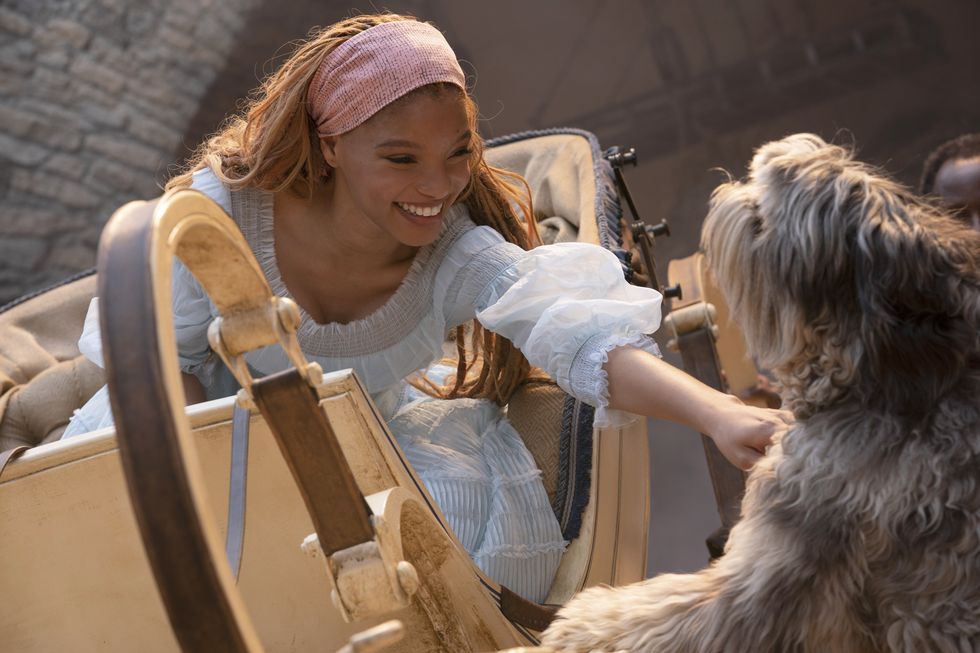
Like its live-action predecessors, Snow White is unable to take advantage of her changes when other re-interpretations of Grimm's famous fairy tale, like Mirror Mirror or Snow White and the Huntsman, have covered White's growing ascendancy and independence with more assertiveness and courage than what the Disney remake can muster.
Despite all the changes, this Snow White still has to be saved by true love's kiss, even if it's now not the Prince.
But perhaps the question should be how we wrestle with Disney history. While die-hard fans may appreciate these films and their attempts at change, they're still products of the studio's complicated past. In attempting to find new light in old material for new audiences, the same outdated baggage is carried through into Disney's live action remakes.
Rather than looking back like a nostalgic record stuck on its groove, the studio may be advised to look forward. Disney Princesses are not always perfect examples of feminist agency, but a path is possible when examples such as Moana or Elsa exist.
Only then can true modernisation of its female characters be fully realised.
Snow White is out now in cinemas.