
Mr & Mrs Smith ending spoilers follow.
Prime Video's Mr & Mrs Smith cracks the code to an enjoyable life-or-death romance, though it tragically mishandles motherhood for its female protagonist.
Fronted by Donald Glover and Maya Erskine as John and Jane Smith, the eight-episode series is an honest take on intimacy through the story of two strangers joined in holy matrimony by a mysterious spy agency.
Under the guise of a hip NYC couple, John and Jane carry out increasingly dangerous quests guided by cryptic chat service Hihi, which warns them against collecting three "fails".
Looking at the 2005 film starring Brad Pitt and Angelina Jolie and the 1996 series of the same name, Mr & Mrs Smith reframes love within the unique structure of an action comedy.
Powered by a natural, relatable chemistry between Glover and Erskine, the show hinges on a witty metaphor of marriage as a high-risk assignment, presenting the leads with relationship milestones in the form of missions.
What to Read Next

WATCH MR & MRS SMITH NOW ON PRIME VIDEO
Co-created by Glover with his Atlanta producer Francesca Sloane, Mr & Mrs Smith devotes episode five ('Do You Want Kids?') to the children chat, unveiling the cracks in John and Jane's bond during a perilous outing in Lake Como, Italy.
For Jane, having kids in this line of work wouldn't be sensible and, whether she means it literally or the series implies an allegory for our world falling apart, she makes a valid point. John assures her he's happy with eventually settling for a low-risk job so that he can take care of the baby, disingenuously denying that the brunt of raising a human being still falls primarily on women in heteronormative relationships.
Horrified at the prospect of compromising on her career, Jane stands her ground but later laments the expectations – on the part of John and society at large – to fulfil a maternal role.
Jane and John's discussion offers a candid insight into a married couple with different values, hinting at a dealbreaker for them further down the line but also having the potential to challenge the cliché of motherhood as the ultimate goal.

Sadly Mr & Mrs Smith falls into the same trap many shows have before, resorting to a stereotyped, negative representation of a child-free woman.
During couples' therapy, a flashback reveals that John guilt-tripped Jane in a heated row, equating not wanting children with not being a caring, loving partner, daughter, or friend.
Together with a cheap shot at neurodivergent people to explain Jane's aloofness ("I don't know if you're on the spectrum or what"), John's hurtful comments confirm they probably shouldn't be together. If they hadn't been forced by their secret agents' agreement, that is.
The show nails the urgency and stubbornness some couples experience when stuck in relationships that simply don't work out, though it offers a disheartening resolution to Jane's arc in the season finale ('A Breakup').
Mr & Mrs Smith steers Jane in an unexpected way when John's mum Beverly (Glover's real-life mum Beverly Glover) calls at their gorgeous brownstone.

Bordering on a violation of privacy, the conversation ends with Beverly asking Jane if she's pregnant and replying the stakes of their marriage aren't "that high" when her daughter-in-law says she isn't.
However well-meaning, that exchange perpetuates the sanctity of motherhood and the idea of the female body as a vessel that's almost concerning at a time when reproductive rights are under attack.
Moments before the end credits roll on a cliffhanger finale, Jane relents. She tells a wounded, possibly dying John they can have "one kid". "Two, but that's it," she adds when he demands five, single-handedly making a point for normalising vasectomies.
The life-altering choice of having a child becomes another terrain where the two spies manipulate each other. Jane's change of heart could be a genuine reconsideration or a desperate attempt to make sure John stays alive, but it plays out like a concession rather than the sweet moment the show aimed for.
Worse yet, the scene suggests that agreeing to become a mum is what makes Jane finally human, her icy exterior thawing to fully commit to John.

In a show that captures the uncertainty of modern relationships at the intersection of race and gender and brings new blood into a couple dynamic from decades ago, seeing Jane adjusting to John's desires while her ambitions take a backseat is an outdated, capital fail.
Such U-turns aren't rare on TV, with many series bringing women back on the designated path, even if that means disregarding character development.
Not long after Parks and Rec had April pressured into having children, Bernadette and Penny in The Big Bang Theory also had that choice made for them.
While Bernadette's being pregnant at least allowed the sitcom to explore the complicated emotions surrounding motherhood, Penny's ill-conceived pregnancy – the "one size fits all" of happy endings – subverted everything we knew about the firmly child-free character. So much, in fact, that star Kaley Cuoco, too, wished they hadn't opted for such a twist.
TV needs to stop springing babies onto characters who've maintained they didn't want them, thus invalidating the position that some may just not be interested in becoming parents, regardless of their relationship status. (The trope also pertains to certain male characters, namely Jake in Brooklyn Nine-Nine and Simon in Bridgerton.)
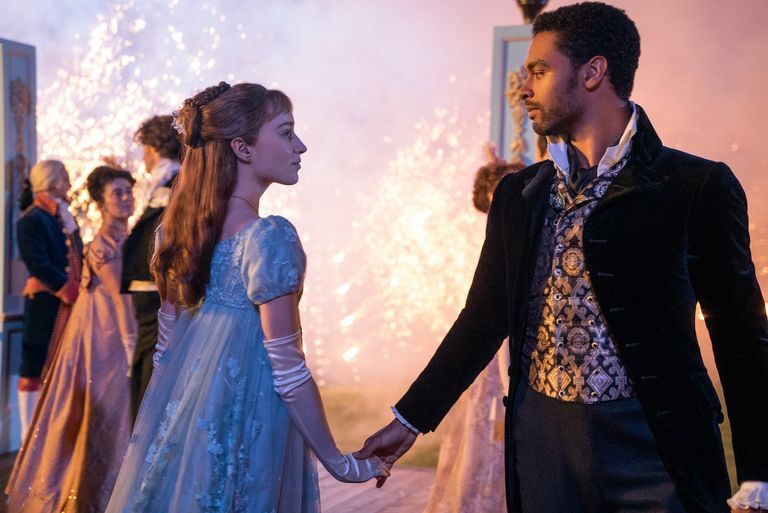
Even when TV does feature some iconic women who stay child-free, their portrayals hardly ever come across as entirely neutral or positive, with their choices being conditional to some buried ordeal or inherent flaw.
Despite supporting her best friend Meredith with her kids, Cristina was constantly accused of being cold in Grey's Anatomy. (Notably, actress Sandra Oh also played an abrasive child-free antiheroine in Killing Eve.)
On a more comedic but equally clichéd note, Elaine in Seinfeld was referred to as self-centred and insatiable, with Carrie and especially Samantha in Sex and the City following suit as deliciously unapologetic, but fundamentally self-centred, child-free protagonists.
On How I Met Your Mother, Robin wasn't spared a tearjerking storyline in which she discovers she can't have kids. After countless episodes in which she reiterated motherhood wasn't her bag, infertility is dropped on her like the only acceptable pathway to not having children – and a pathway associated with regret, at that. It's understandable why Robin mourned the possibility of changing her mind, but the writers didn't have to go there to make her child-free.
To different extents, these women are painted as selfish, sexually promiscuous, somewhat unlikeable, workaholic characters. On top of that, some fictional child-free women have a hard time establishing female friendships and display a vehement dislike of kids, once again connecting not wanting children to being an antisocial monster.

Disappointingly, Mr & Mrs Smith falls into the same category. And not just that.
Erskine's spy appears underwritten compared to Glover's, with her arc following a conventional trajectory that seem mostly accessory to his.
But a trajectory can be tweaked. Like Van taking centre stage in the season three finale of Atlanta, Jane could have her own motherhood-questioning crisis.
This charming spy show could flip the narrative in a possible round two, picking up after the titular spouses' deadly showdown with the rival Smiths — provided they're both still alive.
Mr & Mrs Smith is available on Prime Video.


Reporter, Digital Spy
Stefania is a freelance writer specialising in TV and movies. After graduating from City University, London, she covered LGBTQ+ news and pursued a career in entertainment journalism, with her work appearing in outlets including Little White Lies, The Skinny, Radio Times and Digital Spy.
Her beats are horror films and period dramas, especially if fronted by queer women. She can argue why Scream is the best slasher in four languages (and a half).


