Sinners spoilers follow.
It has become a signature trademark of Ryan Coogler's directing style that he does love a one-take shot. In Creed, its prominence allowed audiences to enter the ring, watching Adonis fight his way to victory in his first professional bout against Leo 'The Lion' Sporino. In Black Panther, it's T'Challa, Nakia and Okoye infiltrating an underground casino.
Like Spike Lee's trademark dolly shot move, Coogler demonstrates – both as a storyteller and expert craftsman – how these one-take moments can be a powerful immersion for worldbuilding and character emotion, be it getting into the psychological mindset of a fighter alone in the ring or the spatial awareness of three visionary Wakandan figures to showcase how Blackness is not a monolith when it comes to their individual fighting styles.
In Sinners – the latest chapter in his outstanding filmography – is his best yet.
Sammie, son of a preacher, defies his father's orders to "stop dancing with the devil" to play guitar for his cousins Smoke and Stack at their newly-opened juke joint. As he performs his rebellious song 'I Lied to You', we're launched into a slow, one-take reveal of a funk master guitarist from the 1970s, the DJ record decks of hip-hop from the 1980s, the flowing moves of a ballet dancer and the folklore dances from African and Asian cultures as they seamlessly join this party.
It's a visual representation of the opening narration. Sammie has managed to conjure spirits from the past and pierced the veil between life and death. As poetic references go, this is Coogler at his most ambitious in a genre-bending collision of musical heritage, traditions and culture converging in the same time and space.
What to Read Next

Knowing the power behind such entertaining imagery, it's a stark contrast from the movie's spoiler-packed second trailer which, among other things, revealed Mary as one of the infected vampires. But while such reveals might ruin your typical genre movie, it doesn't really matter when it comes to Sinners.
You may know what will happen, but while vampirism may be the hook, Coogler has an ace up his sleeve that means you leave with a Black musical history lesson instead.
Like Kendrick Lamar's recent half-time performance at Super Bowl LIX, Coogler's own visual tapestry doesn't shy away from how America was built on the backs of slavery, incarceration and subjugation. It's a rigged game, punching the controller buttons for value, self-worth and equality set against the Jim Crow-era backdrop of cotton pickers, chain gang prisoners and harrowing accounts of a lynched musician at the train station, as told by Delta Slim.
It's why blues music plays a vital role in Sinners, not just as a levity to the darkness but for the healing power it brings. The music is recognised as a powerful magical gift, embedding a rich, ancestral history within every note, hymn and soulful war cry that brings people together – represented and brought to life by Ludwig Göransson's score and Miles Caton's vocals.
Sinners also highlights the systematic erasure of the blues, despite its pioneering legacy. You wouldn't have rock and roll – the evolved version of blues music – without Big Mama Thorton's 'Hound Dog' for example, and yet, it was Elvis Presley's re-recorded version that ascended the pop charts.
2006's Dreamgirls had a whitewashed and reappropriated version of 'Cadillac Car' for white audiences and in Netflix movie Ma Rainey's Black Bottom, its titular character experienced musical exploitation by record owners despite being one of the female pioneers of the blues.

Sinners finds itself in good company when discussing the continued fight for cultural relevance, particularly when exploring deeper themes of ownership, freedom and legacy. For Smoke and Stack, it came through financial freedom, hoping to evade their troubled past and build a new legacy in 1930s Mississippi.
Coogler's stylish recreation also channels it through Remmick, a culture vulture vampire who, after escaping capture, transforms a Ku Klux Klan couple, before the three travel to the juke joint. Envious of what the twins have built, the troupe, armed with a banjo and additional musical elements, perform their routine, claiming it is rooted in "fellowship and love", all while hoping to negotiate their entry – only to be denied access.
Sinners marks Coogler's first movie since his two MCU outings, and it becomes more prescient in his long-awaited return from the corporate trenches of franchise filmmaking. Like its contextual theme, this was a story he was burning to tell, a director at his most liberated to produce a narrative swing that most creatives wished they could engineer without interference or compromise.
For a major studio film, that access and opportunity is not always afforded to all Black creatives when Captain America: Brave New World (for instance) buckled under the weight of rewrites and reshoots.
Yet despite Coogler's growing reputation as an elite director with global and award-winning success, the commentary surrounding Sinners from entertainment trades is still met with frustration with their use of the same, tired discourse that Black movies are a "gamble" and do not sell.

It's an industry still clutching onto mythological pearls to keep this mentality going, which frankly needs to stop. When applied through Sinners' vampiric metaphor, the commentary is not lost on anyone when Remmick can seduce the promise of togetherness when the goal has always been appropriation and assimilation.
It's an unapologetic statement and analogy on who gets to consume and control art, rewriting history to fit their own expectations and ideals under a singular and parasitic proprietor and identity. We may all 'dance with the devil' with our creative talents, but the world will find ways to take your soul and suck your blood dry.
And as much as Michael B Jordan is the magnetic highlight of Sinners, Miles Caton equally holds his own as the film's soul and connecting tissue between the blues' past and modern-day present. In its fiery third act, that guitar becomes his voice and weapon for his dreams to escape segregation.
Its mid-credit scene showcases Sammie's continuing legacy as an old man playing the blues circuit on electric guitar, and finally, the end-credit sting that reaffirms his joy as he plays 'This Little Light of Mine'. Just as vampirism and its blood-sucking mythology found longevity through various cinematic representations (and subsequently keeping that genre alive), Sammie's light refuses to be extinguished, a beacon of hope despite the trauma and struggles of the Deep South.
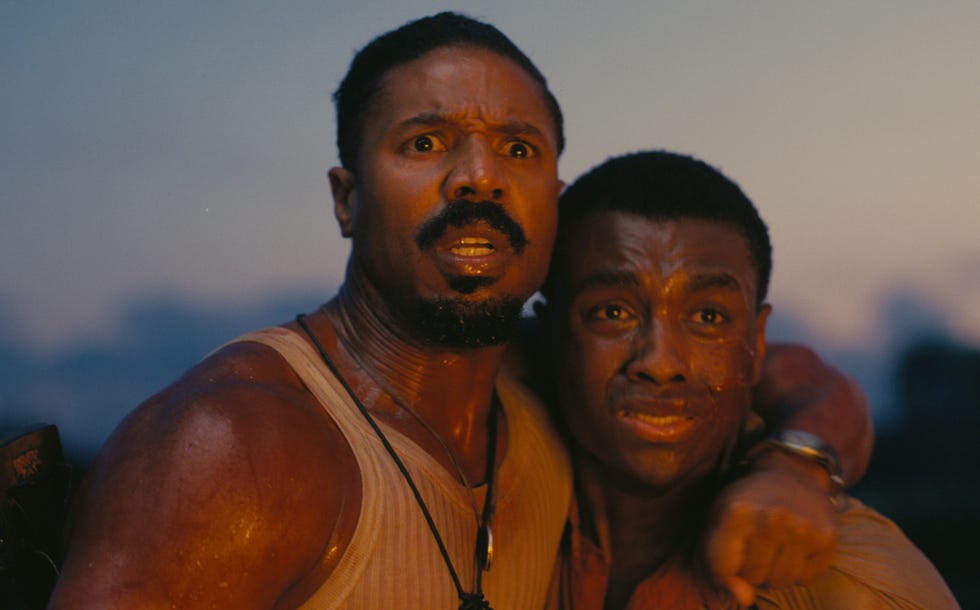
In addition, it's the 'how we don't lose ourselves' amid the chaos of assimilation that makes Sinners so prevalent. Black ownership is encouraged, negotiation is key (as demonstrated by Smoke teaching a young Black girl about how much she should charge to watch his truck) and community is valued with its representation of Asian, Irish and Native American cultures.
But it's also a powerful reminder of the literal evils that exist, the wickedness of racist structures that uphold white supremacist ideals when safe spaces are victimised, terrorised, vandalised, violated and erased out of the history books only to resurface as a dark stain on America's past. Looking at the juke joint raises the case point of the Tulsa race massacre of 1921 or the Dozier School for Boys atrocities as depicted in RaMell Ross's Nickel Boys.
Sinners is very much about not losing our connections with the past, a past increasingly becoming under repeated threat by current global, social and political shifts, and when Black history is history, it simply cannot be left out of the conversation.
Otherwise, as Coogler beautifully demonstrates, it's a further indignation about the value of Black art itself: they want our rhythm, but none of our blues.
Sinners is out now in cinemas.