Is Gladiator 2 historically accurate? It's the question on everyone's lips – not out of genuine academic interest, for the most part, but because it's so easy to anticipate exactly how director Ridley Scott will react.
To quote his feelings on the historians who picked apart last year's Napoleon: "Get a life".
Unfortunately for Scott, history enthusiasts can't be hurt by the accusation that they lack extracurricular hobbies. We are already aware of this and we're going to pick apart Gladiator 2 anyway.
What Scott doesn't understand is that most classicists, from personal experience at least, are absolutely delighted by the existence of these movies because it opens the doors wide for them to sit down non-classicist friends and rant, at length, about their daily thoughts on the Roman Empire.
So, get comfortable, because here's a few basic things you should know about Scott's latest venture into the past. And beware, there are major spoilers ahead.
Did they put sharks in the Colosseum?
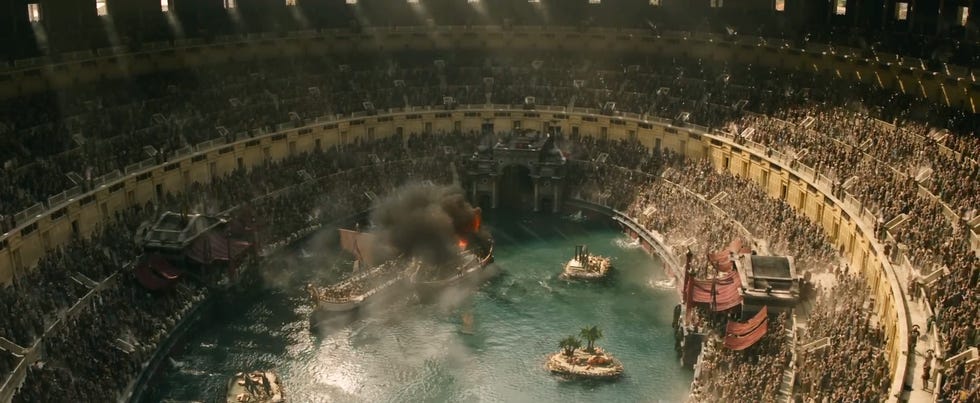
No.
What to Read Next
But, there's need for clarification here. After branding Scott's movie "total Hollywood bullshit", the University of Chicago's Dr Shadi Bartsch told The Hollywood Reporter that the Romans were unlikely to have even known what a shark was. This is demonstrably untrue.
Several Roman writers, including the admiral and naturalist Pliny the Elder, wrote about sharks, and they were depicted in art, including in a second-century BCE mosaic from Pompeii of a decorative scene of marine life.
It is, however, highly implausible that the little guys would have been swimming around the Colosseum, but we shouldn't be too harsh on Scott. Gladiator 2 deserves major kudos for having the gumption (and budget) to finally depict what we've never seen on cinema screens before: the naumachiae, or large-scale mock naval battles, in which criminals and prisoners of war would be placed on ships and forced into combat.
The naumachiae seem mostly to have been recreations of famous historical engagements – in the movie, it's the Battle of Salamis, waged between the Greeks and the Persian Empire in 480 BCE. Emperor Nero, according to Roman historian Cassius Dio, staged a naval battle "representing Persians and Athenians".
We tend to hear about specialised pools having been dug to accommodate these shows, but several writers, including Dio, describe the Colosseum itself being flooded by both emperor Titus and his successor Domitian in order to present naumachiae.
And what about the other creatures our unlucky hero Lucius is forced to battle against and, at one point, chomp on? There's no mention of gladiators riding around on rhinos, but they were certainly brought to Rome and displayed for the public, and there are stories of them being pitted against elephants, bulls and bears.
All kinds of animals were captured for display, and staged hunts were also the norm, though you'll mostly hear about men being pitted against lions, panthers, elephants and crocodiles. A rhino and a fleet of baboons is certainly a more fantastical flourish, but it's not an entirely laughable idea.
Did the Romans read newspapers?
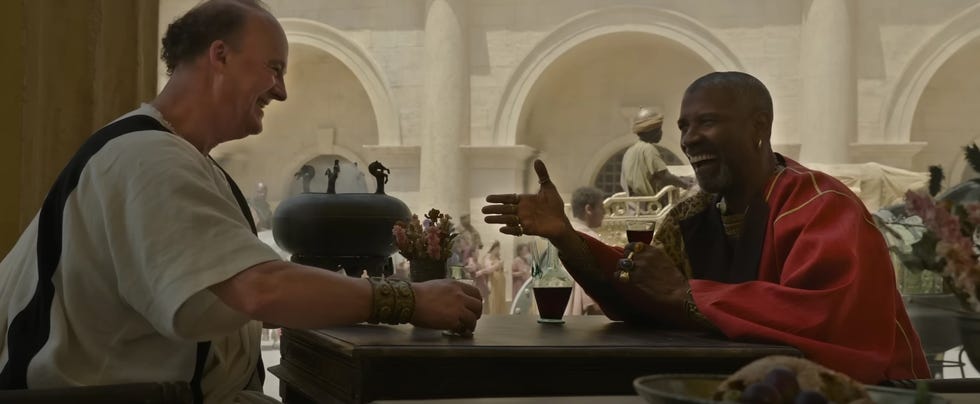
Bartsch's interview with The Hollywood Reporter zeroed in on one particularly flagrant anachronism, in which Macrinus sips tea in a café while perusing the morning paper. That kind of swift production and mass distribution of written materials would require a printing press, which was not invented until 1440 CE.
But, as Bartsch points out, the Romans did have the Acta Diuma, daily official notices carved on stone or metal and presented in public places, which served much the same function.
There was no tea, coffee or chocolate in the Roman Empire, but the Romans did partake in something called calda, or ca'lida, which consisted of warm water mixed with wine, likely with a few spices thrown in.
So, while that rules out the existence of the café, it's important to note that Romans did have places to acquire, essentially, fast food: the thermopolium, which featured a long, street-facing counter, and would sell hot, ready-to-eat dishes like fish, stews, and baked goods. You can see these in person if you visit Pompeii or Herculaneum.
Gladiator 2 does, also, correctly depict the use of a wax tablet, as Lucilla digs out and looks wistfully at some of Lucius's old school work.
Made out of wood and covered in a layer of wax, these were reusable and portable writing surfaces you could carve into with a pointed stylus, and then easily wipe clean. And, as shown, they were used by students for their exercises.
Did Caracalla really appoint a monkey as consul?
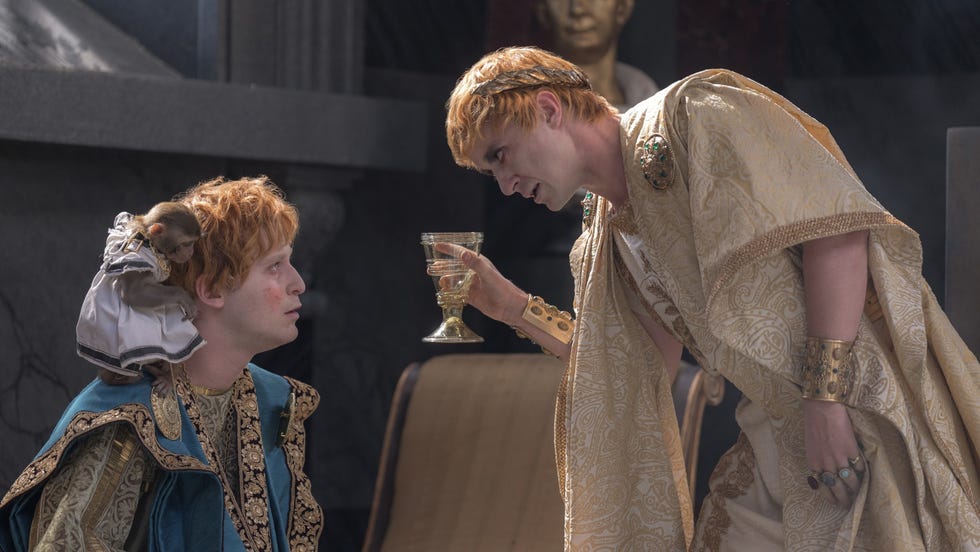
It might pain you to learn that Gladiator 2's MVP Dundus, the beloved pet monkey of emperor Caracalla, didn't exist in history.
However, they were a popular species of pet, and the scene in which a maddened Caracalla promotes Dundus to the esteemed position of consul must be a reference to Roman historian Suetonius's claim that the emperor Caligula was so fond of his horse Incitatus that he tried to make him a consul.
It's a wild story. But, it's important to keep in mind that ancient historians tended to be gossip fiends (and also had personal, vested interests), and that many of these scandalous anecdotes about "mad, bad" emperors may have actually been the work of embittered rivals and successors intent on staining the historical record.
Were there twin emperors of Rome?
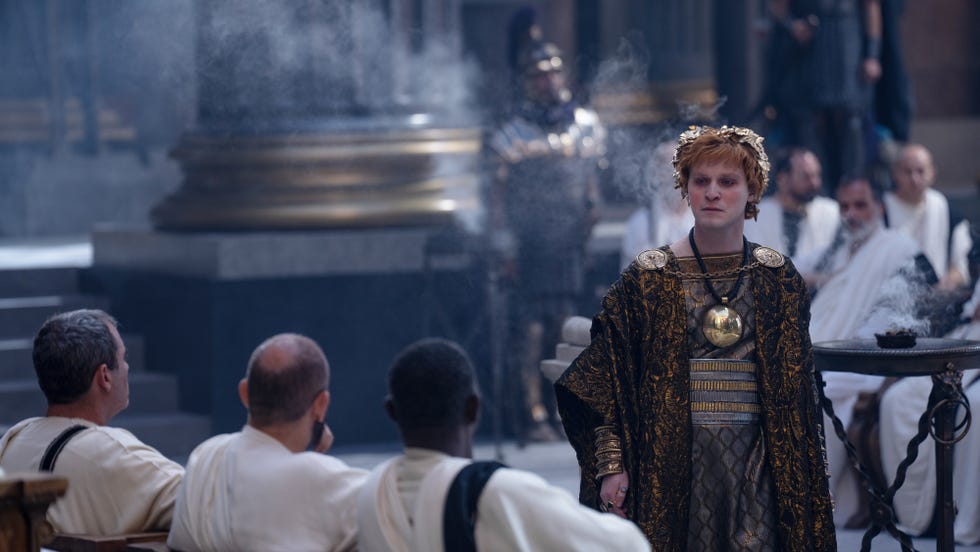
Geta and Caracalla were joint emperors of Rome, but they weren't twins. Caracalla was the older brother, although Scott's depiction of them is pretty wide of the mark.
What is true is that their father, Septimius Severus, had intended for them to co-rule after his death, but that their rivalry was so intense that it swiftly culminated in the murder of Geta, supposedly on Caracalla's orders. Caracalla then ordered for his brother's name to be wiped from memory.
(In the movie, Caracalla kills Geta, but it's more a manipulation by Macrinus to get him to do it, with Macrinus later killing Caracalla too. In real life, it was a soldier who killed Caracalla while he was having a wee, and Macrinus orchestrated that assassination.)
But Caracalla's reputation wasn't that of a monkey-obsessed, syphilis-inflicted, petulant brat, but of a cruel and ruthless military man. Senators despised him because of the favouritism he showed the army, raising their annual salary and increasing their social status, while spending all of his time out on military campaigns. Ironically, he'd eventually be murdered by one of his disgruntled soldiers.
And, while Scott's vision of the Roman Empire is intentionally aligned with the western European, Christian empires audiences are likely more familiar with, driven by ideas of white supremacy, it obscures the far more complicated reality of how Romans viewed race and identity.
Septimius Severus was actually born in Leptis Magna, in present-day Libya, while Geta and Caracalla's mother, Julia Domna, was a Syrian noblewoman.
Did the Romans fight female archers?
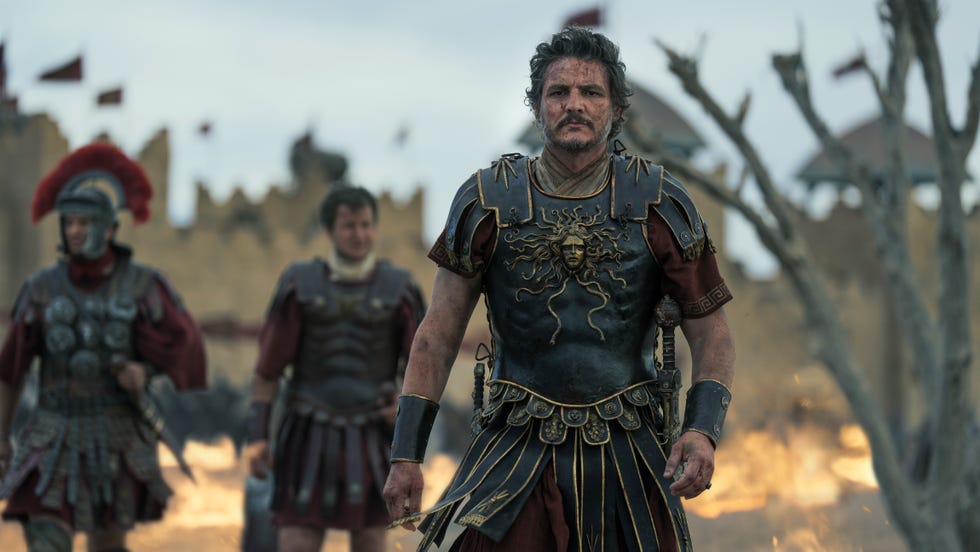
At the start of Gladiator 2, Lucius defends an unnamed city in Numidia from a Roman attack commanded by Marcus Acacius, where we see his wife fight alongside several other female archers.
It's unclear who these women are supposed to be, but it's notable that Scott had already featured female archers in the first movie, as gladiatrices or female gladiators, who did exist but were rarely depicted or written about.
There are numerous accounts of women, and ferocious female leaders, standing up to the might of the Roman Empire.
You've probably heard of Boudica, queen of the ancient British Iceni tribe. But Scott's attachment to the specific image of the female archer seems, inevitably, to come from a single source: the legendary Amazons, who some claimed lopped off one of their breasts to more efficiently draw their bows, and only socialised with men in order to reproduce.
They're rife in Graeco-Roman myth, but archaeological evidence has pointed to a real source for these stories, as more and more graves across Eurasia unearth female warriors among the Scythian, Sarmatian and Hittite peoples.
Was Macrinus a real person?
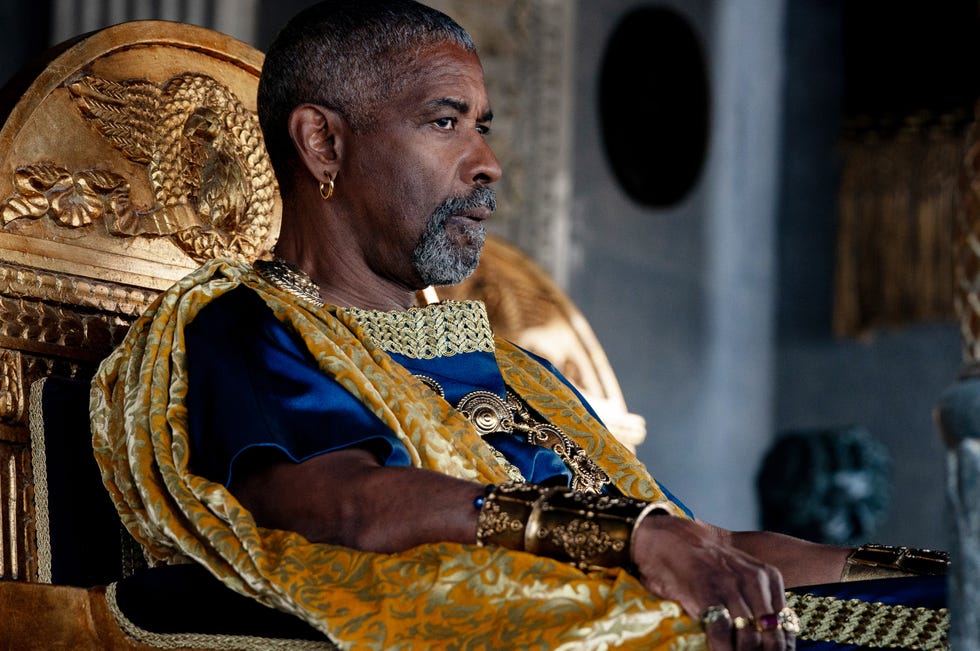
Yes and no. A Macrinus did succeed Caracalla, but he shared almost nothing in common with Denzel Washington's Macrinus, and he certainly didn't get his hands chopped off by Paul Mescal.
(An important side note: the Roman Republic was not restored at the end of Commodus's reign, and neither was it at the end of Caracalla's. There really was no "dream of Rome".)
The fact Macrinus is a former slave who rose to power could, arguably, be a reference to the fact the real Macrinus was the first emperor not to come from the senatorial class, having been born in modern Algeria to an an equestrian family of Amazigh origins.
He wasn't an arms dealer, but did serve under Caracalla as a praetorian prefect dealing with civil affairs. And he did have him murdered, and was actually successful in succeeding him as emperor. But then, as Scott would surely argue, where's the fun in that?
Gladiator II is out now in cinemas.