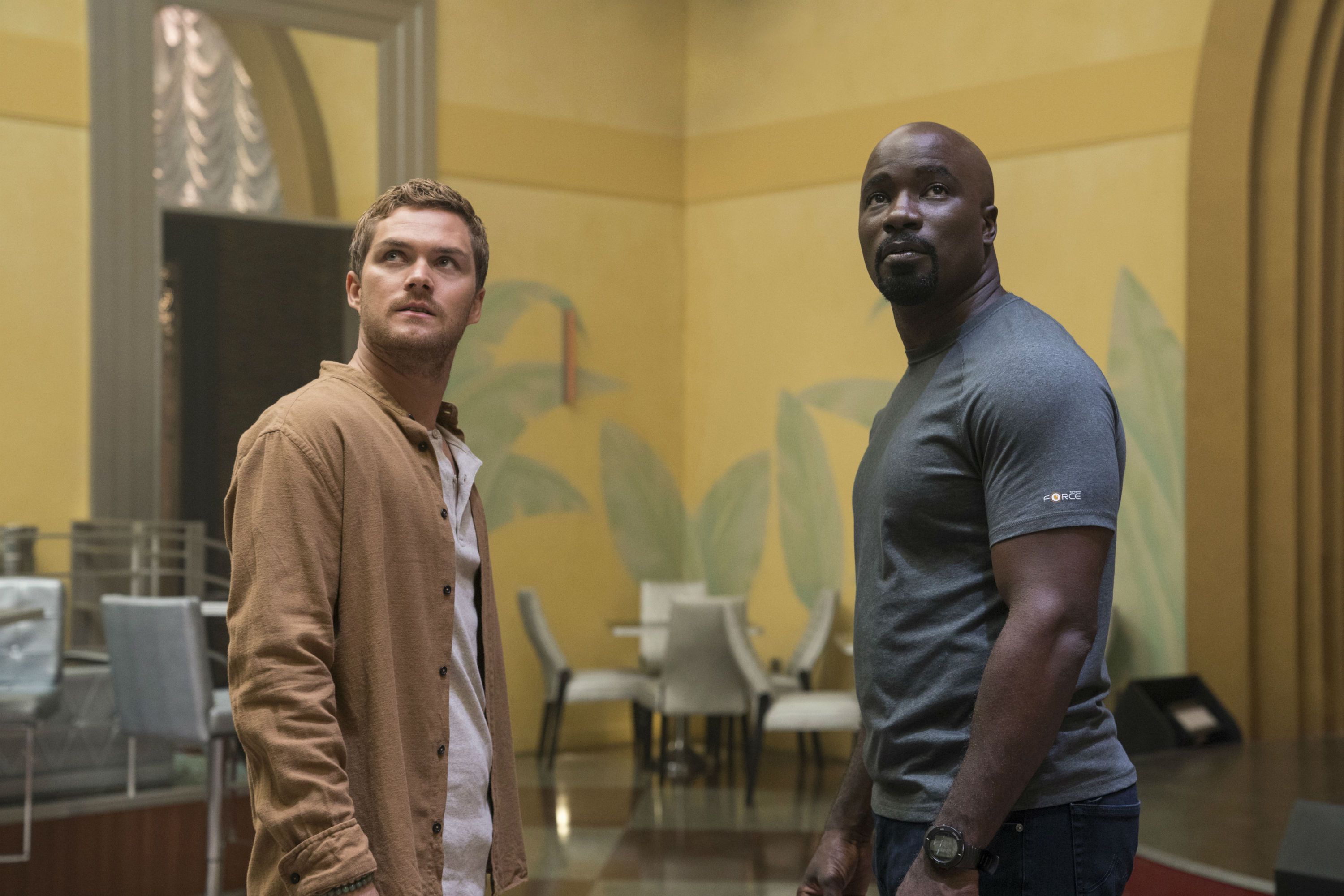
It's almost five years since Netflix and Marvel first announced plans for an ambitious partnership, with the streaming giant commissioning five original series featuring the house of M's heroes back in November 2013.
So as of July 2018, where do we stand? Daredevil launched strong (though its second outing was met with a mixed response), Jessica Jones was a critical smash (though its second outing wasn't as well-liked), the reaction to Luke Cage was mostly favourable (and its second season was an improvement) and Iron Fist was... well, it wasn't as bad as Inhumans.
A mixed bag, then, but what little data we have suggests that the Marvel shows rank among Netflix's most-watched series. They are, broadly speaking, a success.
Still, with team-up series The Defenders – the last series to come out of that original deal – reportedly drawing a smaller audience than any of the solo series, leading to no current plans for a second season, is viewer apathy a concern?
With both film and TV awash with comic book projects, Netflix and Marvel might need to do more to hold onto their corner of the market. And we've got some tips for starters...
1. Expand the universe

They say that slow and steady wins the race, and that edict certainly holds true with the MCU. Launching with Iron Man in 2008, the mega-franchise added more heroes to its ranks before capping off its first Phase with glorious ensemble outing The Avengers in 2012.
What to Read Next
But what Marvel Studios did next was key. While it produced sequels to each of its hit movies, it didn't just do that. Phase 2 also brought us new heroes in the Guardians of the Galaxy and Ant-Man, to great acclaim and big box-office on both occasions. The Marvel / Netflix partnership needs to follow that example, adding in new properties alongside the established favourites.
Handing The Punisher his own series after Jon Bernthal's performance proved to be the most popular aspect of Daredevil season 2 was a good start, but with literally hundreds of characters in the Marvel pantheon yet to be featured in a film or TV series, there's the potential to do so much more, instead of just new seasons with the same characters.
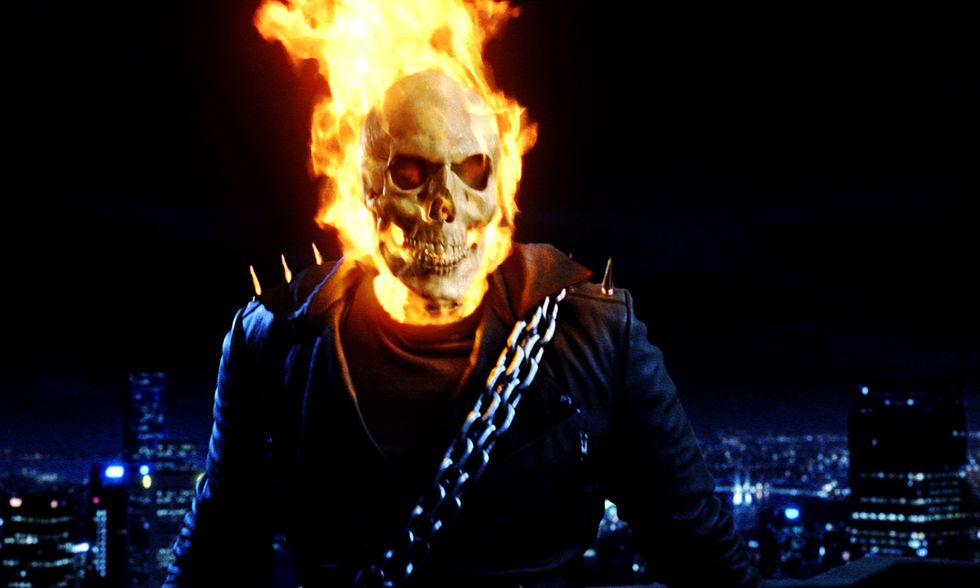
Why not a Moon Knight series? Or a screen outing for Daimon Hellstrom / Hellstorm? And while the Robbie Reyes version of Ghost Rider already featured on Agents of SHIELD, maybe Netflix could have Johnny Blaze or Danny Ketch lead its next series?
2. Cut what doesn't work


There's nothing more dangerous than being on autopilot. Netflix and Marvel need to learn to not just capitalise on their successes, but also learn from their failures.
Every single one of their original core four shows – Daredevil, Jessica Jones, Luke Cage and Iron Fist – has been awarded a second season (and in the case of Daredevil and Jessica Jones, a third). But if a series hasn't performed as well as expected, why not put that strand on hold while pursuing other avenues?
Few fans are crying out for more Iron Fist right now, but that's exactly what we're getting. Elsewhere, Netflix has been seen to be more ruthless in the past year, killing off some of its more expensive failures – Marco Polo, The Get Down – to finally prove there's a limit to both its patience and its wallet.
Now it needs to apply this same thinking to its Marvel shows: be more ruthless and cull the shows that don't catch on.
3. Experiment with different tones


Bringing in new heroes and new stories would also allow the Netflix / Marvel series to explore a greater variety of tones and flavours.
When the collab was first announced in 2013, it all hinged on presenting a "street-level" view of the MCU, exploring the gritty world of heroes and villains in Hell's Kitchen, New York.
But just as Guardians of the Galaxy offered us something quite unlike any previous Marvel movie both in its more comedic tone and its intergalactic setting, now might be the time for the Netflix shows to branch out.
Digging deeper into the supernatural would be one way to do that, and with characters that work within the genre, like Ghost Rider (rather than forcing square peg Jessica Jones into the round hole of the Hand's world).
The opportunity's there for the Netflix corner of the Marvel universe to be every bit as textured and varied as the rest of the MCU. To be a small-screen sibling, rather than a moody cousin lurking in the corner.
4. Don't make it all about Iron Fist
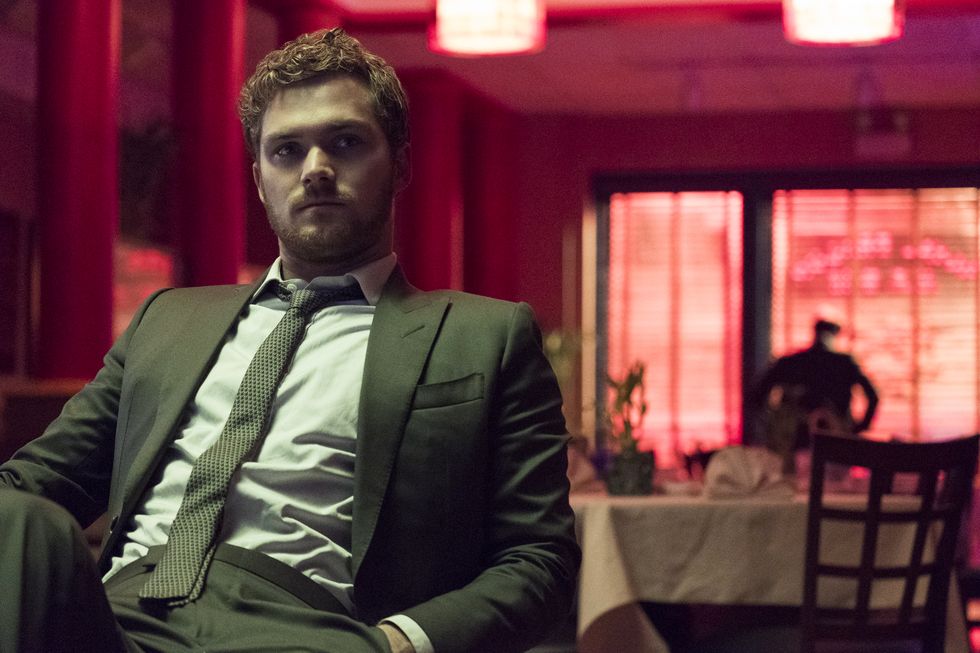

Not to hammer this point home too hard, but Iron Fist didn't set the world alight. And yet Danny Rand, the immortal Iron Fist, protector of K'un-Lun, sworn enemy of the Hand, seems to be a favourite with whoever's pulling the strings at Marvel / Netflix.
His own solo series was followed by The Defenders which, while ostensibly an ensemble drama, was really more about Danny than anyone else. It served almost as a direct sequel to Iron Fist, with Rand vs The Hand being the struggle at the heart of both series.
Then he popped up in Luke Cage season two, albeit only for a brief time, and while we get that the two form Heroes for Hire in the comics, that doesn't mean the TV adaptations have to follow suit.
Alright, so production on The Defenders was well under way by the time the reviews for Iron Fist starting to drop, but surely they must have got the memo by now?
5. Don't neglect your villains


Now, let's be clear: the partnership between Netflix and Marvel has brought us some terrific villains. Vincent D'Onofrio's nuanced take on Wilson Fisk, David Tennant's deranged Kilgrave, Mahershala Ali as charismatic Cornell 'Cottonmouth' Stokes... (We'd add Mustafa Shakir's Bushmaster in there too, but he's not really an out-and-out villain.)
But, again, resting on your laurels is dangerous and later bad guys haven't been anywhere near as compelling – the Hand and Madame Gao (Wai Ching Ho) have suffered from serious overexposure after outings in Daredevil, Iron Fist AND The Defenders, while the latter show wasted Sigourney Weaver's talents with the rather nondescript (and short-lived) role of Alexandra Reid.
Marvel's movies have been seriously hit-and-miss on this front too, which is why Tom Hiddleston's Loki, easily the MCU's most successful antagonist, has been brought back again and again.
Netflix's shows are at risk of ending up in a similar creative rut, although David Tennant's return as Kilgrave for season two of Jessica Jones was well-judged and resulted in one of the strongest episodes of the season.
Take a risk on new villains, and take the time to flesh them out. So much hinges on your antagonist, especially when your hero is already established, their traits and quirks familiar to the audience.
6. Play with the format


Again, don't be afraid to change things up. A common complaint among critics and fans has been that, across the board, the Netflix / Marvel shows have failed to sustain over 13 episodes.
Jessica Jones arguably pulled it off best, but still lagged in its final episodes – cut the episode order back to 10, jumping straight from Kilgrave's escape in the superb 'AKA Sin Bin' to season finale 'AKA Smile' and you'd have a perfect season of television.
Sagging in the middle or dropping off in the late running (see also the first season of Luke Cage) is a persistent problem. So why not commission more shorter seasons / mini-series like the eight-part Defenders? Sure that didn't work perfectly, but at least it didn't feel like a slog to get through.
Part of the problem is that the episodes are often too long as well. Take Luke Cage season two for example where the shortest one is 54 minutes and the longest clocks in at 69 minutes. What's wrong with 45-minute episodes? Just because you can do longer episodes as it's on a streaming service doesn't mean you should.
Marvel could even expand into one-off Netflix movies for characters new to the streaming service (to serve as an unofficial pilot, with a full series to follow if the demand is there).
Cable television has been working with shorter seasons for years, and now even network television is learning to scale back its episode orders, with 22 or even 13 episode seasons less sustainable in a box-set / binge culture. Netflix should take note.
Want up-to-the-minute entertainment news and features? Just hit 'Like' on our Digital Spy Facebook page and 'Follow' on our @digitalspy Twitter account and you're all set.


