Rainbow Crew is an ongoing interview series that celebrates the best LGBTQ+ representation on screen. Each instalment showcases talent working on both sides of the camera, including queer creatives and allies to the community.
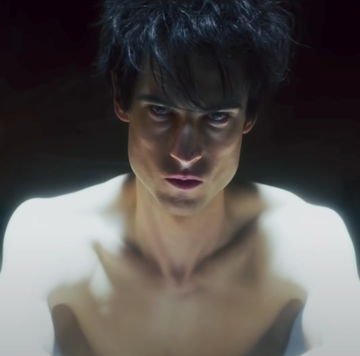
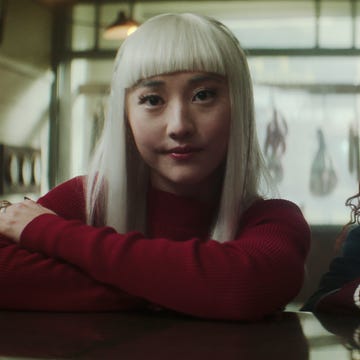
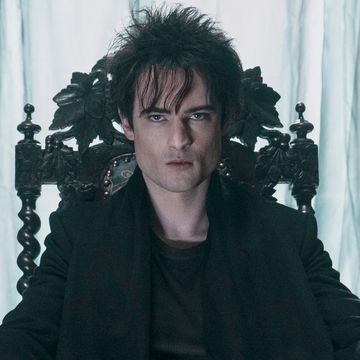
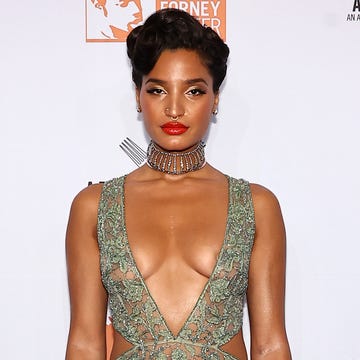
Next up, we're speaking to The Sandman and Cabaret star Mason Alexander Park.
For Mason Alexander Park their roles on The Sandman, Quantum Leap and now as the Emcee in the stage production of Cabaret are more than just a job to them. They have changed Mason's life, in a "radical" way, they add.
What to Read Next
From The Sandman's Desire and Quantum Leap's non-binary chief architect Ian Wright to Cabaret's first non-binary Emcee, Mason is helping to carve out a space for more meaningful, authentic queer representation and they are proud to be a part of this changing landscape.
In an exclusive interview with Digital Spy they talk about the profound effect shows like those mentioned above are having on shaping the conversation around queerness and why this change is ultimately a terrifying yet beautiful thing.
In a previous interview you said that the costume really informs the role for you. How did the Emcee's wardrobe influence the character?
They were all very receptive to me coming in, and being like: "Well, I'm very different than Eddie [Redmayne]. I'm very different than the previous Emcees."
I'm the first non-binary, trans actor to do it in this production. What does that mean for the story that we're trying to tell? What does that mean for the Emcee's journey throughout the show?
We started there, and that just turned into really fun meetings about costumes and bits, and how we wanted to add a corset to the opening number, and change the makeup for these certain songs. It's been a great collaboration.
Do you feel like you really got to have your own say and your own voice in shaping the character?
100%, yeah. It is a group effort to build something that fits within the structure of what they've set up, but also honours my individuality, and allows me to play and create something that I'm also really excited by and proud of. So it's kind of the perfect marriage of a production-to-performer thing, you know?

Cabaret explores hard-hitting themes that are still relevant today. It touches on how dangerous apathy is. How do you think that message transcends into today's society, and was that a part of what drew you to the role?
Absolutely. I mean, the parallels are depressingly, shockingly close. It makes the piece feel more relevant than it ever has in my lifetime.
And it's because the conversations are exactly what you're talking about. The conversations of the piece are so heavily rooted in being complicit in, you know, the political blindness, almost, and ignoring the struggles of the people around you, out of survival.
It's a deeply troublesome story. The fact that people can relate to it in this day and age with all of the hyper-fixation that we're seeing on marginalised communities, with the way that they're being demonised; the way that trans people and people of colour and Jewish people – all of these marginalised groups that have really experienced such disturbing hardship.
All of those horrible seeds are coming back in the political mainstream, and in the exact same way, using a lot of the same tactics that were prevalent during the rise of Nazism.
So to be in the show as a trans person, and go on the journey that the Emcee goes on in our version, which is quite dark, it's challenging to experience every night, knowing that, there's legislation – every day, currently – being introduced back home in America. [Legislations that are] banning people like me from accessing healthcare, and being able to attend nightlife performances, and being able to dress the way that you want to dress without fear of being arrested.
It is a terrifying time but it makes the show feel important.
What role do you think theatre, TV and movies, just that general medium, has in helping to turn things around and changing people's perspectives?
I think that art is an empathy machine. It's an opportunity for people to be able to connect over the things that make us human, the things that make us most alike and most similar.
I find that when you're in a community, in the theatre, when there's a group of people, it can be quite religious. It can be quite church-like in a way, where it's a group of individuals of various backgrounds and experiences, coming to experience a story that sort of mirrors themes and experiences within just the human condition.
And that's reflected back to the audience. They get to take whatever they want out of it, and kind of walk away from it, and have a little chat, or have an emotional experience with it.

Your roles in The Sandman and Quantum Leap show that non-binary roles are growing in television. What does that mean to you?
It's exciting. It's nice because, you know, 10 years ago, that conversation was not really happening in the same way. It was happening within my community but it wasn't necessarily a mainstream topic. So there's good and bad that comes with it.
Obviously, with visibility comes a lot of backlash and so I think the increased – even if it's so tiny – diversity in media, it's really led to this weird fear from people who deem themselves the 'norms'.
They deem themselves very normal and the second that any diversity is sort of included in media that they consume, it sort of shocks their system a bit, because they're like: "Wait, I'm not the only person in the world anymore." [laughs]
And you're like: "Yeah, people of colour exist. Gay people exist, and women exist, and trans people exist."
Look outside the window.
Yeah. You'll be fine. The lead is still a white guy [laughs]. You're still going to be the hero in half the things that exist.
But it's this weird— it's the slipping of power, in a way. It's the challenge, that the world around you isn't just so strictly the one thing that you believe that you are, that I think scares a lot of audiences.
So it is both exciting because I love being a part of that shift in the culture, and I love that it is happening in a time in which I get to experience it, and get to take on those roles. It's also very stressful to watch my peers and people in the real world be affected by media in a negative way, because you would normally think: "Oh my God, trans people on TV! All of these youth, they're going to feel seen. It's going to save so many lives."
That part is true to a degree but the opposition to all of those things, I think, is creating an environment in which so many people are even more fearful, and even more fixated on and picked apart. I'm hoping that that evens out a little more soon.

What advice would you give to LGBTQ+ young people?
That's always a tough one, especially because I feel like it's hard not to give advice and not be super-bleak, right? I feel like my answer [is] really basic, but it's just to stick it out.
There is so much good and so much joy and so many amazing things that are to be had. If you can make it to the other side. If you can make it through whatever difficult period you might be experiencing at the moment, that is not representative of forever.
Often it feels like it is. Often it feels like: "This is all that there will ever be, this horrible, awful feeling. This terrible bout of transphobia or homophobia from my family, or from these external forces." But I promise that they are just external forces that wax and wane as times change and tastes change.
So as long as you can be happy in yourself, and sort of be persistent in that, that will get you through a lot more than I think most people think possible. The more of us that actually stick it out and stick around, the more there will be on the other side that get to sort of thrive and experience the splendours of life. So that's my best advice.
That is really beautiful advice. What was the moment of LGBTQ+ representation onscreen that mattered to you?
My two major onscreen ones will always be John Cameron Mitchell in Hedwig and the Angry Inch and Tim Curry in Rocky Horror. Those two films, I found when I was in high school, around the same time that I found Cabaret. There was just something really euphoric and exciting about seeing gender non-conforming characters as the leads in stories, and being really complicated, and kind of being the baddies of their own stories.
They were just so fun and exciting, to not see gender non-conforming people as weak and uncomplicated, and for their stories to be rooted around very simplistic ideas of gender. It's very much about so many other things. They got to be fully complicated, crazy, insane people [laughs]. I was like: "That's awesome. That's rock 'n' roll. I love that."

What do you think is the importance of having different kinds of representation in different genres specifically?
I think genre allows you an opportunity to introduce ideas to different audiences, because I find that, weirdly, sci-fi and fantasy – the people that flock to it, they run an insane gambit. So you get this melting pot of individuals who may or may not ever have had an experience with a trans person or a queer person, that now get to have that.
The messages that I've gotten just because of Sandman or Quantum Leap, it's changed my life in a radical way. The fact that I will walk through an airport, and these couples in their sixties come up to me, and they're like: "We watch Quantum Leap every single night, and we love you. Our granddaughter is trans, and finally felt comfortable telling us and coming out because of the show."
That's the stuff that just has completely changed my entire experience of the world, because I get to talk to people that never had the language to be able to have those conversations.
It makes it so much more important than just being an actor. These shows have created connections with people and family members, and have brought people together that were not in a place where they were going to have those conversations any time soon without the show's help. That is the greatest gift in the world, to be able to be any small part of that and to get to hear those stories every day.

We were talking about Quantum Leap and its effect in changing things. The original Quantum Leap was so ground-breaking at the time and the continuation is similar in that respect. What storyline means the most to you in this version of Quantum Leap?
Obviously there's a deep, deep connection with the episode that we did called 'Let Them Play', which was the trans episode, only because of how much that would have meant for me to see as a kid. It would have – I don't know – changed my life in many ways. It would have opened so many doors for me.
So I'm really proud of the fact that both NBC and all the people over on Quantum Leap were willing to tackle a subject that is weirdly unpopular, especially in America.
I feel like trans issues are such a hot button issue that it would have been really easy to sort of just avoid it for now, and swing back round when things maybe looked a little better. But to do it during a time of such political unrest, I think was so cool of them, and kind of punk rock. And I'm really excited that we made that hour of television, because I think it does have the capacity to change lives and save lives.
In the next five or 10 years, how would you like to see film and television improve in a way that addresses queer representation in front of, and behind, the cameras?
I think the most important thing is, obviously, to create an environment that doesn't just benefit off of queer stories, but celebrates the people who make those stories, and gives them more power and more access and more money.
Often we're kind of like: "These roles are written for us by people who aren't of our experience," and then they'll bring in a consultant at a lower level.
They'll bring in a writer on staff that is trans or is queer in some way to sort of fill in the blanks, but a lot of times those aren't the people that are running the show. Those aren't the people that are in charge and getting their work greenlit. They are the people brought in to make sure that everyone is doing the right thing – when, in reality, they deserve shows of their own.
So I think in the next five to 10 years, I just want to see more queer showrunners, producers, people at a higher level. Just more diversity behind the scenes, to begin with. That's been a huge thing for all of us on Quantum Leap because the cast is very diverse. So we obviously want the people around us to reflect that as well.
We've had all these amazing trans directors come in just to direct stuff that was an action piece – things that didn't have to be about their trauma or their experience. They didn't get the job because it was a storyline about a trans girl or a non-binary person. They got the job because they're really good at directing, or directing like an action sequence, or really good at certain things that would make them right for our show.
That's the thing that makes me really proud: the fact that the people that we have put in charge on that show, have come from such a litany of diverse voices and backgrounds. I just want to see that kind of amplified as time goes on, and more and more shows do that.
The Sandman season 1 is streaming on Netflix.
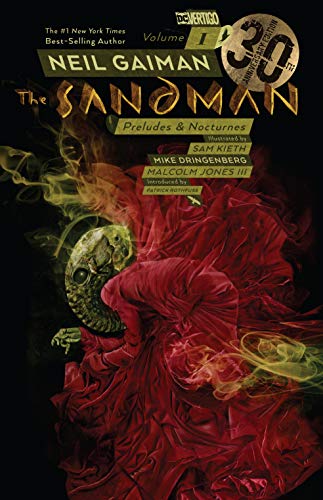
The Sandman Volume 1: 30th Anniversary Edition: Preludes and Nocturnes

![American Gods Season 1-3 [DVD] [2021]](https://hips.hearstapps.com/vader-prod.s3.amazonaws.com/1659452330-51g15mIpSPL._SL500_.jpg?crop=1xw:1xh;center,top&resize=980:* "American Gods Season 1-3 [DVD] [2021]")

TV writer, Digital Spy Janet completed her Masters degree in Magazine Journalism in 2013 and has continued to grow professionally within the industry ever since. For six years she honed her analytical reviewing skills at the Good Housekeeping institute eventually becoming Acting Head of Food testing. She also freelanced in the field of film and TV journalism from 2013-2020, when she interviewed A-List stars such as Samuel L Jackson, Colin Firth and Scarlett Johansson. In 2021 she joined Digital Spy as TV writer where she gets to delve into more of what she loves, watching copious amounts of telly all in the name of work. Since taking on the role she has conducted red carpet interviews with the cast of Bridgerton, covered the BAFTAs and been interviewed by BBC Radio and London Live. In her spare time she also moonlights as a published author, the book Gothic Angel.