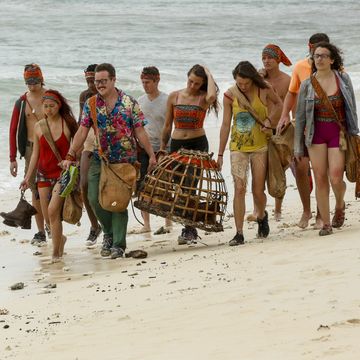
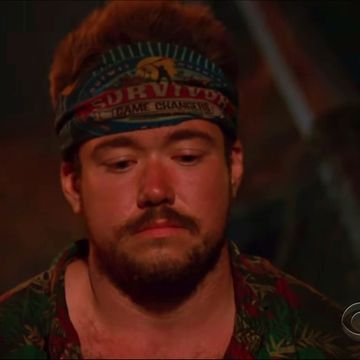
The BBC brought back the hit reality show Survivor hoping that it would be as lovingly received as it was in the States but were left disappointed by its reception.
Originally launched in America and aired in the UK from 2001 to 2002 on ITV, the competition show returned to UK screens this week, bringing together new hopefuls to battle it out for the £100,000 prize.
Hosted by Joel Dommett, the premise of the show remained the same, with the 18 contestants divided into two tribes and pitted against each other.
What to Read Next
Each team is tasked with completing both physical and psychological challenges that would see them one step closer to the prize pot. Eventually, as tribal evictions are made, the teams will merge, leaving contestants to battle it out individually for the win.
Tough challenges, social experiments, evictions; when it comes to what satisfies audiences' reality TV appetites, Survivor is ticking all the boxes, yet somehow it has been reported as a flop. Why? Let's investigate.

Is BBC's Survivor reboot really a flop?
Survivor aired on Saturday night to an audience of 2.6 million, putting it on par with the other recent reality reboot Big Brother, which took in 2.5 million viewers on its debut night.
However, Big Brother's viewership has been considered a win for ITV whereas BBC's Survivor has been branded a disappointment. There are a number of factors that could shed some light on this.
The debut episode of Survivor was awarded the prime time slot of Saturday evening at 8.25pm. While the show's audience numbers don't initially sound bad, they certainly don't compare to the eight million who tuned in for Strictly Come Dancing, which aired directly before Survivor. It also happened to be two million fewer than the audience who tuned in for the previous Saturday-night show, Michael McIntyre's The Wheel.
It's likely that the broadcaster assumed that Survivor would have scooped up some of the Strictly audience who may have been expected to automatically stay tuned, but it was not the case.

While the logic appears sound, Survivor may have been let down by the fact that it more than likely appeals to a different audience.
Strictly is traditionally thought to draw in a multi-generational family audience, while Survivor presumably has a younger demographic, who, it can be argued, may have different social priorities on a Saturday evening.
The BBC may have missed a trick by not awarding Survivor a weekday slot instead, as the absence of their key demographic is likely to have hit the show hard.
Equally, the marketplace is oversaturated with reality shows at present: think Big Brother, Married at First Sight UK, Bake Off, Drag Race UK... and the very similar I'm a Celebrity... Get Me Out Of Here! is about to join the roster. It's possible that the audience is suffering from a bit of fatigue (or shortness of time) which has forced viewers' standards higher.

This would explain the harsh criticism the show has received from viewers, who are said to have branded it 'boring' (as reported by The Express). Whether this is an accurate consensus or not, that's not the sort of press you'd be looking to have around a big-budget launch.
Survivor's mediocre viewing figures also become a bigger issue for the broadcaster when you consider that the BBC is rumoured to have spent £30 million on production.
However, it's still early days. Right now, all eyes are on the iPlayer viewing figures which have yet to be disclosed and will give a fuller picture on how the show has performed.
Survivor UK airs weekly on Saturday at 8.30pm on BBC One and is available to stream on BBC iPlayer.

TV writer, Digital Spy Janet completed her Masters degree in Magazine Journalism in 2013 and has continued to grow professionally within the industry ever since. For six years she honed her analytical reviewing skills at the Good Housekeeping institute eventually becoming Acting Head of Food testing. She also freelanced in the field of film and TV journalism from 2013-2020, when she interviewed A-List stars such as Samuel L Jackson, Colin Firth and Scarlett Johansson. In 2021 she joined Digital Spy as TV writer where she gets to delve into more of what she loves, watching copious amounts of telly all in the name of work. Since taking on the role she has conducted red carpet interviews with the cast of Bridgerton, covered the BAFTAs and been interviewed by BBC Radio and London Live. In her spare time she also moonlights as a published author, the book Gothic Angel.