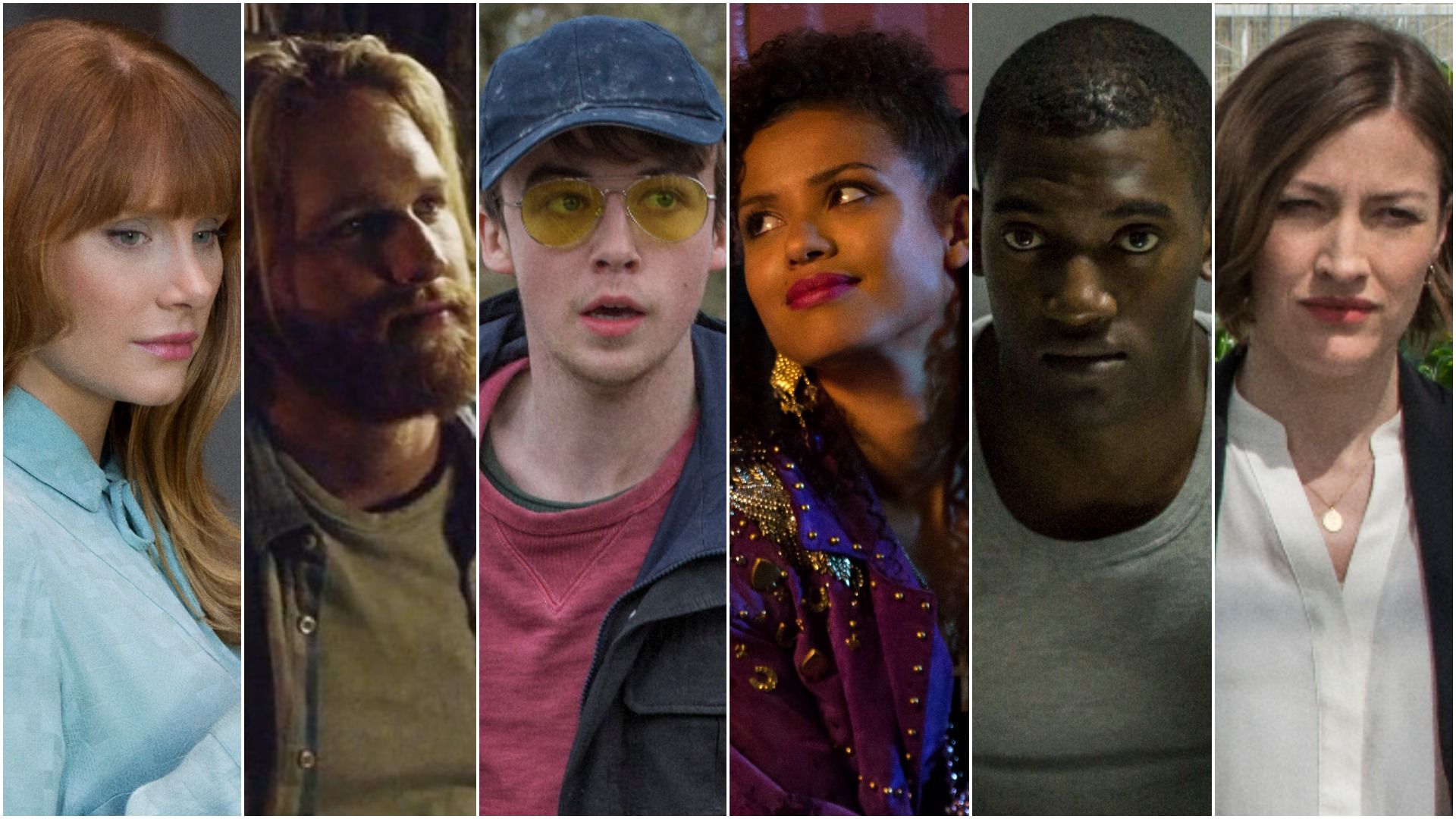
"Netflix allows us to play out on a bigger canvas," said Black Mirror producer Annabel Jones on the terrifying tech anthology's leap from good ol' Channel 4 to the innovative streaming service. "[We can] take more risks and explore more worlds, without destabilising the Black Mirror sensibility."
What to Read Next
Bar the inclusion of Jon Hamm in 2014's decidedly unfestive Christmas special, the Black Mirror of old– with all its cynicism and bleak humour – always felt decidedly British, and while this new season of six episodes unquestionably has a more international feel, the series gains more than it loses by expanding its horizons.
Take the season opener (such as it is, since you can watch this sextet in any order): 'Nosedive' is set in a world where human beings are rated out of five, and the fixed grins and bland, exaggerated demeanour of its characters works far better set amongst America's 'Have a nice day!' culture than it would've in the sarcastic, self-critical United Kingdom.


Black Mirror hasn't totally eschewed its grimy Britishness, though – it's more potent than ever in the race-against-time thriller 'Shut Up and Dance', which breaks distressing new ground all on its own by not really being a science fiction story at all.
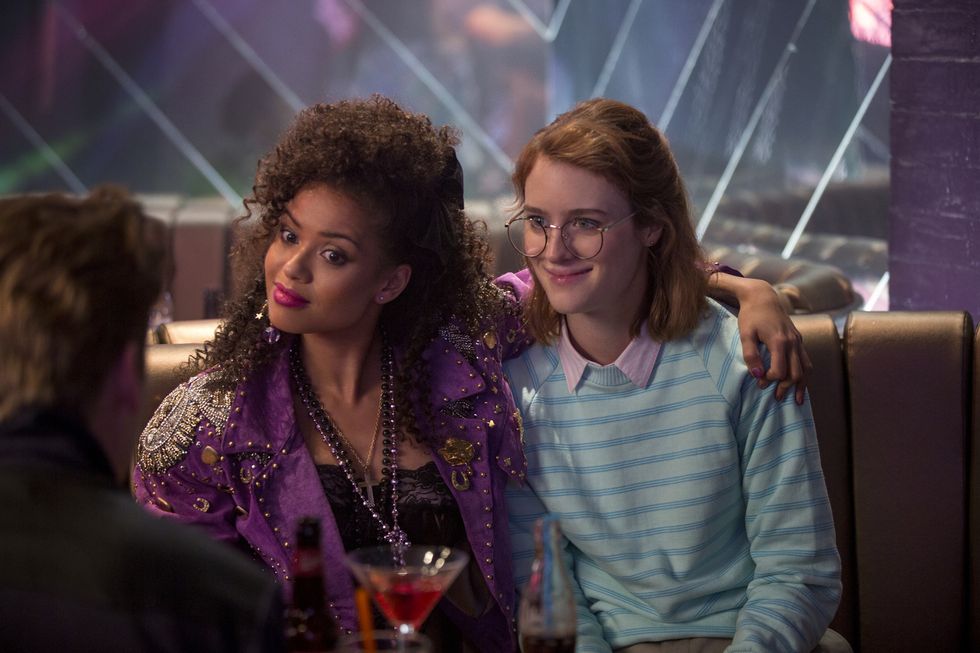
More than ever it feels as though Charlie Brooker's been given the creative freedom to experiment, with the show's Netflix debut exploring genres and vibes as yet untouched by the series – whether that's the knowing horror romp of 'Playtest' or the '80s kitsch of 'San Junipero', which – like 'Nosedive' – presents us with an atypically happy ending.
Increasingly though, nothing is truly atypical for Black Mirror: being on Netflix allows Brooker to play around with structure and form as much as he does with tone and atmosphere.
There's no longer the need to work to ad breaks, or to limit episodes to 43-ish minutes in length – as the man himself says, "We could do two-hour episodes or two-minute episodes, although a two-minute episode would be shit."
The jury's out on whether or not that's a freedom that benefits Black Mirror, though. Sometimes, it works: the season's longest episode – 'Hated in the Nation' – doesn't lag at all at 90 minutes. The extended running time lends a sense of cinematic scope and ambition to this tale of Twitter hate spilling out into the real world.


Sometimes, though, you get the feeling that an episode could've benefited from the more rigid structure of a Channel 4 schedule: 'Nosedive' could easily have lost 15 or so minutes (we're thinking the rather incongruous sequence of Lacey on the bus with the sci-fi geeks) and would've been a leaner beast for it.
One thing that hasn't changed from the Channel 4 days is that, with the best will in the world, Black Mirror can't help but be hit-and-miss. It's inevitable with any anthology series, and particularly one with such wild variations in tone and setting as this, that not every episode is going to win over everyone.
Ranking all 19 episodes of Charlie Brooker's chilling Black Mirror
In a three-part season, chances are you'd get one episode you loved, one you liked and one you didn't care for so much. And with double the episode count here, the arguments over which episode is best and which is worst and which land squarely in the middle are bound to be more fierce than ever.
What's important, though, is that the overall standard is impressively high, with some terrific performances peppered throughout. Of particular note are Bryce Dallas Howard: hilarious and heartbreaking as Lacey in 'Nosedive', Gugu Mbatha-Raw: radiant and captivating as Kelly in 'San Junipero', and Wyatt Russell, so effortlessly compelling and charismatic as Cooper in 'Playtest' that we'll be stunned if he's not fronting huge Hollywood blockbusters sometime soon. Good genes, that kid.

Only one of the six instalments, the underwhelming 'Men Against Fire', fails to sustain, with a decent final twist and game performances from Malachi Kirby and Michael Kelly failing to save an episode that's thin on narrative and heavy on bland, uninteresting characters.
Overall though, Black Mirror's transition to Netflix has to be considered a resounding success. With a show this expansive and experimental, it's worth the odd misfire for all the times Brooker and co. absolutely hit the target.


