In case you hadn't heard, it's our birthday!
Digital Spy is turning 25, and being a '90s baby in the world of the internet is a pretty big deal. So to mark our 25th anniversary, we're bringing you a series of celebratory content. Enter: this list of the very best British and UK dramas from across the past 25 years.
We were around to see each of these shows debut on screen, and Digital Spy has all of the content to prove it – from the biggest TV stories to reviews of the next big thing, we've helped shape the conversation of the TV landscape for two and a half decades.

Broadchurch
With exceptional casting which brought together David Tennant and Olivia Colman, who were spectacular, as well as Jonathan Bailey and Jodie Whittaker, ITV's critically acclaimed crime drama aired from 2013 until 2017, spanning three series.
It was set in the fictional English town of Broadchurch and filmed on the Dorset coast, where show creator Chris Chibnall grew up. This personal touch really elevated the writing and infiltrated even the smallest of on-screen details.
Detective Inspector Alec Hardy (David Tennant) and Detective Sergeant Ellie Miller (Olivia Colman) were called on to investigate the death of a local 11-year-old boy named Danny Latimer. Although it fit the bill of a traditional whodunnit, Broadchurch gave just as much attention to the impact that such a tragedy would have on the community, the grief of the family and the way suspicion can fester in such a tight-knit town.
What to Read Next
It also differed from many others within its genre in another way; instead of bringing a fresh case each series, to be explored by the detective duo, the trilogy was a continuation of the same story, with a roster of returning characters.
But the less said about the American remake – yes, really – the better.

Skins
Most millennials grew up watching Skins, believing that their lives were just as dramatic and edgy. In fact, if you needed further proof of the show's time-capsule status, the series incorporated MySpace into its release schedule (and if you don't know what MySpace is, we can't be friends).
While it drew controversy for some of the themes it explored, many considered Skins to be revolutionary, as one of the first teen shows to depict things like eating disorders, mental health, substance abuse, queerness and sexuality in a way that resonated with its target audience.
Just don't talk to us about Chris. Sob.

Misfits
Another rite of passage of the late noughties, also on E4, Misfits revealed what would happen if your community service got interrupted by a super-powered storm. You know, the sort of thing that any miscreant teenager worries about.
The award-winning series started with a three-season bang, although it has to be noted that – following the eventual exit of the main cast – it trailed off, despite the brilliant addition of Joe Gilgun.
Nathan Stewart-Jarrett, Robert Sheehan and Antonia Thomas all cut their teeth on the show before going on to have impressive on-screen careers. Misfits is also responsible for Iwan Rheon; his first TV role saw him playing the socially awkward, sometimes invisible (and kinda hot?) Simon – long before he completely terrified us as the sausage-eating psychopath Ramsay Bolton.

I May Destroy You
Michaela Coel's 2020 drama was named "the most important thing you have to watch this year" at the time of its release, and for good reason.
Throughout its 12 episodes, the HBO/BBC co-production tells the story of Arabella (played by Coel herself), a young writer who is sexually assaulted after her drink is spiked. Through its characters, I May Destroy You grapples with weighty issues of consent, power imbalance, racism and deception, all the while exploring the ways in which we process trauma.
The show holds a mirror to hook-up culture, and the power of its storytelling derives from its decision to live very much in the grey area. I May Destroy You is not afraid to show humans, and the situations they might find themselves in, for what they are: nuanced and complicated.

It's a Sin
If you want to talk about a show that infiltrated the cultural conversation, look no further than Russell T Davies' It's a Sin.
Set in the '80s, the show introduced us to a group of young gay men as they spread their wings and found a new sense of belonging through a chosen family. But with a deadly new virus starting to impact the community, while the world looked away, It's a Sin still managed to balance this very palpable tragedy with moments of unadulterated joy and inspiration.
Despite dropping as a boxset on Channel 4's streaming platform, It's a Sin became event telly and a shared weekly experience for audiences of all ages. The show generated vital cross-generational conversations – and as a result, was hailed as one of the best new programmes in years.

Happy Valley
Sarah Lancashire's standing as a British TV icon was cemented at the 2023 National Television Awards, when she was celebrated with a Special Recognition award after over 20 years of being beamed into our homes.
Combine her acting prowess with the writing skills of Sally Wainwright – who has also brought us Last Tango in Halifax and Gentleman Jack – and you were always going to have a winner on your hands.
In line with Wainwright's trademark of penning strong, complex, women, as well as setting her stories in West Yorkshire, Happy Valley brought us Catherine Cawood – a no-nonsense police sergeant with a dark past. She'd go toe-to-toe with seasoned criminal Tommy Lee Royce (brought to life by James Norton), the man who had raped her daughter and fathered her grandchild. Their final showdown resulted in one of the most satisfying finales we have seen in quite some time.

This Is England
Shane Meadows' feature film was released in 2006. Capturing a moment in time of British history, but certainly not glorifying it, the story centred on a group of skinheads in the early '80s – touching on working-class struggles, political unrest, a spike in white nationalism and the subsequent split within the growing subculture.
In their Fred Perry polos and Doc Marten boots, This Is England delivered standout performances from then lesser-known actors Stephen Graham, Joe Gilgun and Vicky McClure.
Thanks to its realism and character work, the film captured a certain level of investment from audiences, and so a series of episodic spinoffs followed – giving This Is England almost a decade on screen. The first TV sequel picked up three years after the events of the film, and later series revisited the gang every two years, from '86 up to This Is England '90.

Queer As Folk
Another entry from the powerhouse that is Russell T Davies, Queer As Folk walked so that It's a Sin could run.
First arriving on British TV screens back in 1999, Queer As Folk was truly groundbreaking for its time, centring three gay men on Manchester's famous Canal Street scene. More importantly, the series was steadfast in its exploration of their joy – which was something rarely depicted at the time.
We can't talk about the impact of Queer As Folk without also acknowledging its revolutionary sex scenes. Not only do many hold personal stories of the impact that they had on them while navigating their own identities, but they are an important marker of shaping how queer relationships are represented on screen even today.
For many young LGBTQ+ people tuning in, it helped them make sense of themselves and offered a sense of hope and comfort for the future. And that kind of impression won't be forgotten.
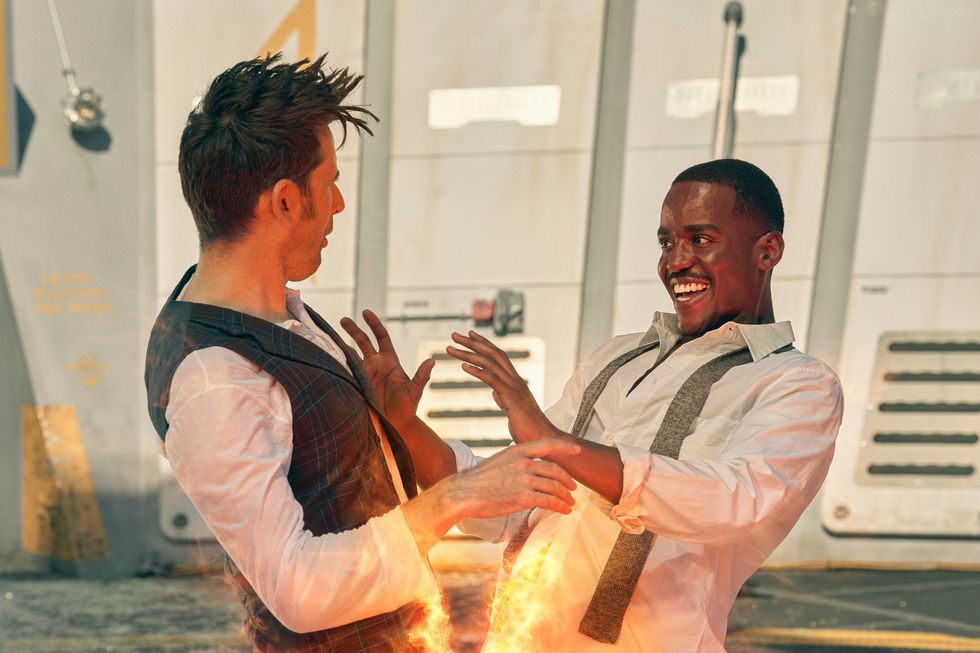
Doctor Who
How many other shows can claim to have been part of the British cultural identity for sixty years and counting? Science fiction without much actual science, the show's not-very-secret formula is its baked-in capacity to evolve, as the lead character takes on a new form and new values with every regeneration (or bigeneration).
Despite many changes, at its heart Doctor Who has held true to one guiding principle: it's an adventure show where the hero's superpower isn't strength or force of will, but cleverness and compassion. That's what sets it apart from its rivals – it's wish fulfilment for people who believe that not only can we be better and do better, but that we can make a better world with the ordinary human gifts we've already got (and maybe a sonic screwdriver).
And the stories! With the entirety of time and space at their fingertips, the writers are never going to run out of ideas, and it's enabled showrunners of the calibre of Russell T Davies and Steven Moffat to stretch their imaginations and storytelling genius to their very limits.

Top Boy
We were first introduced to Hackney's fictional Summerhouse estate in 2011, when seasons one and two of the series – comprising only four episodes each – first appeared on Channel 4.
It starred Ashley Walters and Kane Robinson as Dushane and Sully, and was a grounded portrayal of East London, weaving real-world social issues in among the character-driven storytelling.
Despite its impressive ratings and widespread praise, the series was cancelled – only for Drake, of all people, to swoop in along with Netflix to reboot it in 2019.
Top Boy brought back with it the majority of its original cast and crew, which allowed for an authentic continuation of the very British storytelling, only with more of a big-budget visual feel (and an annoying re-titling of the original seasons to Top Boy: Summerhouse).

Derry Girls
The British-Irish show, produced by a British production company and aired on Channel 4, introduced Erin (Saoirse-Monica Jackson), Clare (Nicola Coughlan), Orla (Louisa Harland) and Michelle (Jamie-Lee O'Donnell) – and we guess we also have to mention honorary girl James (Dylan Llewellyn) also known affectionately as the "wee Englishman".
The gang are going through all of the trials and tribulations universally recognised by teens, and yet the show is very much a love letter to Northern Ireland's Derry set against the backdrop of The Troubles in a Catholic secondary school.
Creator Lisa McGee balanced it all perfectly in this side-splitting and yet emotive series, which pulls back the narrative in a typically male-dominated genre. Here the women are afforded messiness, mischief and brutal honesty.
And a special mention has to go to the scene-stealing Sister Michael (Siobhán McSweeney), quite possibly one of the most hilarious characters to ever grace our screens.

Sex Education
Just like trying to cast our minds back to a world without smartphones, it feels near-impossible to remember life without Sex Education. When it first launched on Netflix in 2019, with its largely unknown cast (bar Gillian Anderson as sex-positive therapist Jean Milburn), nobody quite expected the cultural impact it was about to have.
The actors it propelled forward – the new Doctor, Ncuti Gatwa, his Barbie movie co-stars Emma Mackey and Connor Swindells, Bridgerton leading lady Simone Ashley and constantly in-demand Aimee Lou Wood – have helped shape the screen over the past few years.
But Sex Education itself threw out the rulebook when it came to YA television, propelling the spectrum of on-screen representation forward with such hot-button topics as sexual assault, biphobia, asexuality, ableism, trans visibility and being non-binary (and that doesn't even cover it all). What a show.
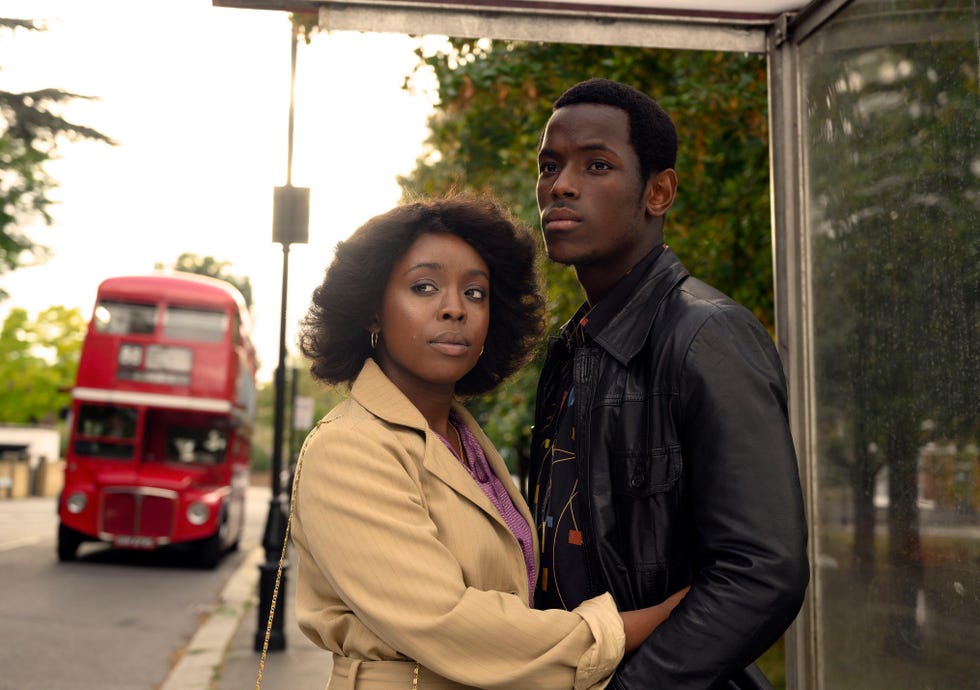
Small Axe
Steve McQueen's anthology premiered on the BBC in late 2020, the year when the (white) world was sitting up and paying some long-overdue attention to Black history and social injustices in the wake of George Floyd's death.
The exceptional series is thought to have been about 10 years in the making, pointing a lens at the experience of Black people in Britain. Small Axe had a star-studded cast that included John Boyega, Rochenda Sandall, Malachi Kirby and Micheal Ward. Each film was critically acclaimed, with standouts including Lovers Rock – which introduced a couple crossing paths at a West London house party in the '80s – and Mangrove, which recalled the 1971 trial of the Mangrove Nine.
Black stories, particularly in a historical context, are still so rarely given prime-time importance on UK screens. The impact of Small Axe cannot be underestimated, and will hopefully invite more vital storytelling in the years to come.

Line of Duty
Once or twice a decade in the UK, there comes a show that transcends genre and channel to become a national talking point. There was only one thing the UK was interested in between 2012 and 2021, son, and that was catching bent coppers.
Line of Duty's first series was a straight-down-the-line blue-on-blue drama about police anti-corruption unit AC-12, investigating Lennie James' dodgy detective Tony Gates. We loved it, but it wasn't till series two that things really started sucking on diesel with the shock murder in episode one of one of its lead characters.
That was just the first in a series of narrative handbrake turns that showrunner Jed Mercurio pulled, as he wove an increasingly baroque tapestry of organised crime and police corruption over the course of six seasons.
With a gift for calling back to seemingly innocuous moments over years of plot and the ever-present possibility that anything could happen, it quickly became the nation's favourite thriller. There's been nothing in the cop-drama sphere to touch it since.

Shameless
In 2004, this Manchester-set comedy series introduced us to the Gallagher family and the fictional Chatsworth council estate which they called home.
Much of the family's dysfunctionality centred around their alcoholic father Frank Gallagher, brought to life by David Threlfall in his career-defining role. In later series, the Maguire family took centre stage with Tina Malone's Mimi Tutton as the potty-mouthed matriarch.
Shameless has won praise for pointing a lens at working-class life and culture, while others have criticised it for leaning too much into stereotypes. But wherever you land on that one, it's hard to doubt the show's input in the space of working-class sitcoms, along with the likes of Only Fools and Horses and The Royle Family (each starting too early to have made this list), which paved the way for newer shows like Brassic.

The Split
The British legal drama was written by a woman and starred a woman, which shouldn't have felt so revolutionary for 2018 but, for the genre and the world in which the show inhabits, it sure was.
When Nicola Walker has top billing, you know you're in for a treat – and it's no wonder that her role in the BBC series is award-winning. With news of a new spin-off, set in the same universe, only just announced in 2024, the longevity and continued appetite for The Split can't be argued with.

Fleabag
How do you turn a one-woman play into a hit series? Breaking the fourth wall and directly addressing the audience isn't anything new in comedy or drama, but rather than simply using it for easy gags or lazy storytelling, Phoebe Waller-Bridge made it a part of the psychology of her messy, guilt-ridden lead character, whose relationship with the audience appeared to be a metaphor for her sense of self.
That makes it all sound terribly postmodern and clever – and so it was, but that overlooks the very relatable comedy of errors that was Fleabag's life as she pinged like a pinball between her ill-advised relationship with Hot Priest Andrew Scott, her fraught family situation and her wild stab at adulthood, the management of a guinea-pig cafe.
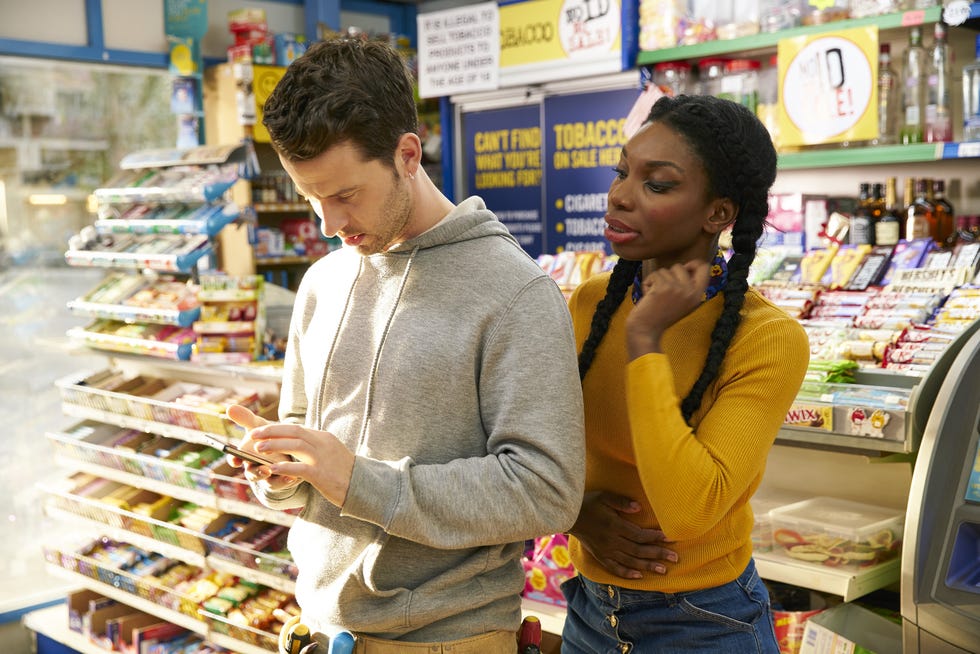
Chewing Gum
We couldn't pop Fleabag on this list without acknowledging the brilliance of Chewing Gum; everyone collectively lost their minds when Phoebe Waller-Bridge broke the fourth wall, and yet Michaela Coel did it in her own Bafta-winning show a year before.
Despite the inevitable Fleabag comparisons, Chewing Gum set the standard for British sitcoms beyond 2015. Michaela Coel's writing prowess is at the heart of this coming-of-age story, in which she also stars, and Coel relishes as much in making her audience feel uncomfortable as she does in making them laugh.

Peaky Blinders
Peaky Blinders transcended the screen, and even the water cooler, to pierce the zeitgeist in a way that not many brand-new TV properties manage to do. We basically have Tommy Shelby to thank (or blame, depending on how you look at it) for putting flat caps on a new generation, and Birmingham itself has become a global destination.
While Steven Knight's best show is fairly male-centric – albeit with an impressive roster of stars that includes the Oscar-winning man himself Cillian Murphy, as well as Tom Hardy and Stephen Graham – we also have it to thank for Helen McCrory's Polly. Even Sophie Rundle's Ada finally got her moment.
Despite coming to an end in 2022, there's more to come thanks to the upcoming movie. We also have a feeling that Peaky Blinders will still be talked about in another 25 years, as a key part of the British cultural landscape.

The Missing
Some might say that crime dramas are a dime a dozen, but then a show like The Missing will come along and generate a buzz so great that it seems like everyone is talking about the same thing at the very same time.
The appeal of this BBC series was two-fold; a compelling detective in the French Julien Baptiste (portrayed by Tchéky Karyo, who would prove so popular he would later star in a spin-off) as well as an anthology of intriguing crime cases. The first series starred James Nesbitt as the desperate father of a missing young boy.

Luther
Or, Loofah!
The Idris Elba-fronted detective thriller first hit screens in 2010, and it was both a critical and audience success from the jump. As a result, it didn't take long for a second season to get the green light – and since then it's spanned five in total, as well as spinning out into a Netflix movie with a cinema run.
Ruth Wilson's Alice Morgan deserves at least some of the credit for Luther's success, as his psychopathic co-lead and love interest. The chemistry in their scenes was always palpable, and Alice's unpredictability was far too much fun to watch.

The Fall
Long before the internet got weird about You's Joe Goldberg, viewers were obsessively transfixed by Jamie Dornan's Paul Spector. The stalkers themselves may change with the times, but the exhausting discourse remains the same.
But we are here to talk about Gillian Anderson's Stella Gibson, who single-handedly ensured that this show made the cut. The Detective Superintendent would go up against Spector, holding her own and using her smarts.
What's more, Gibson was unapologetic about her sexuality – refusing to dial down any parts of herself to become more palatable, or be taken more seriously, in a male-dominated space. There's a reason she made it onto our list of the 50 greatest female TV characters of the 21st century, and why Anderson herself once named Stella as one of her favourite roles.

Mr Bates vs The Post Office
Talk about a show that really made a real-world impact. On paper the drama, starring Toby Jones, was a paint-by-numbers for ITV. True story? Check. Impressive cast? Check. Nobody could have predicted, when it launched on New Year's Day, that it would raise issues that would be addressed by MPs and discussed on front pages for weeks.
While the information presented was far from new – the Post Office scandal, which saw a number of former postal workers lose their jobs or, worse, face criminal charges, had been current for over 25 years – ITV's drama brought mainstream attention and rage, breaking viewing records for ITV.
Mr Bates vs The Post Office highlights how drama can be the perfect medium for important storytelling in a way that breathes life into its subject and that invites us to really care in a truly visceral way.
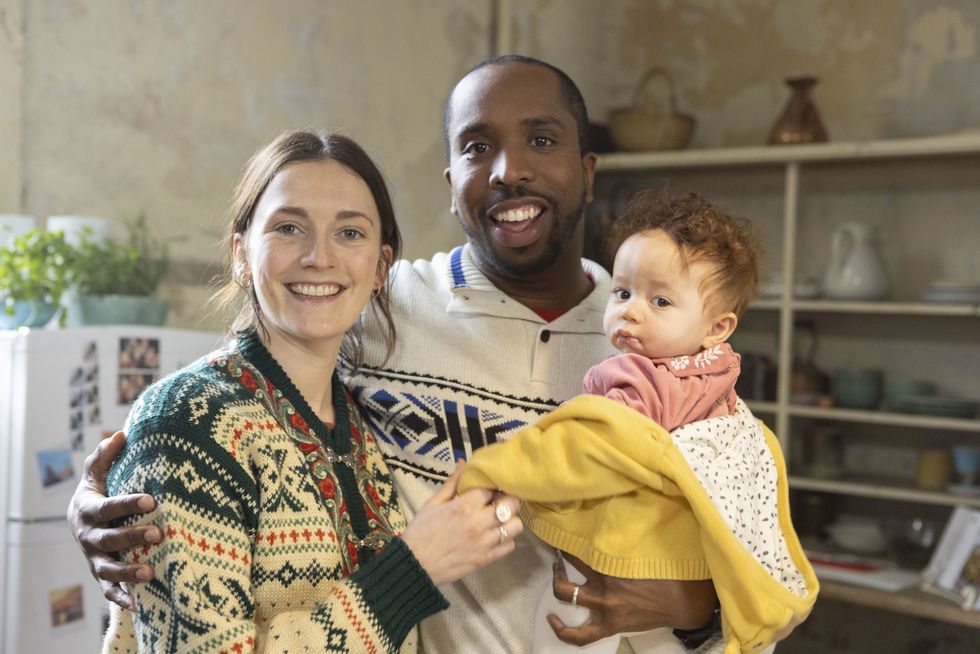
Ghosts
After decades of edgy comedies built on awkwardness and cringe, Ghosts was a revelation: an ensemble sitcom that was smart and silly, warm-hearted and family-friendly (except the running gag about ghosts getting 'sucked off' – that one led to some awkward sofa conversations).
The story of a decaying mansion full of ghosts of diverse vintage who suddenly have to accommodate a living couple, it had two aces up its sleeve. First was the adorable couple-chemistry of Kiell Smith-Bynoe and Charlotte Ritchie as the surprised heirs to Button House, struggling with money worries and unhelpful (undead) housemates.
Second was the genius of the "six idiots" – the creators, writers and stars – in devising a group of characters who felt universally familiar despite coming from different centuries. A disapproving gran, a naughty uncle, a stern father, a self-centred teenage brother and a giddy little sister are all classic sitcom characters, but spun through Ghosts' supernatural prism they become an Edwardian baroness, a sex-pest MP, a WW2 soldier, a Regency poet and an 18th-century heiress.

Black Mirror
Charlie Brooker was known mostly as a caustic satirical comedy writer before 2011. Then the first, three-episode series of Black Mirror launched and showed us that his flair for dark laffs was matched by a deep understanding of drama, suspense and an eerie knack for prediction.
Over six series (so far) plus two special episodes, we've seen a Prime Minister extorted into having sex with a pig ('The National Anthem'); a joke TV personality winning a landslide national election ('The Waldo Moment') and a social media app that directly affects your status in society ('Nosedive').
It's an anthology series that even in its more inward-looking moments reflects the dark possibilities of a very contemporary world that isn't ready for its future. And as the presence of stars like Bryce Dallas Howard, Michaela Coel, Daniel Kaluuya, Jon Hamm, Aaron Paul, Jesse Plemons and Jodie Foster attests, Brooker always tells a cracking story.
For more 25th anniversary content, check out:
- Shut up! An oral history of The Only Way Is Essex
- All the winners of the Digital Spy Reader Awards, from 2008 to 2023
TV Editor, Digital Spy Laura has been watching television for over 30 years and professionally writing about entertainment for almost 10 of those. Previously at LOOK and now heading up the TV desk at the UK's biggest TV and movies site Digital Spy, Laura has helped steer conversations around some of the most popular shows on the box. Laura has appeared on Channel 5 News and radio to talk viewing habits and TV recommendations. As well as putting her nerd-level Buffy knowledge to good use during an IRL meet with Sarah Michelle Gellar, Laura also once had afternoon tea with One Direction, has sat around the fire pit of the Love Island villa, spoken to Sir David Attenborough about the world's oceans and even interviewed Rylan from inside the Big Brother house (housemate status, forever pending).
Editor, Digital Spy Chris has over 25 years' experience as a writer and editor, having worked as a journalist covering TV and movies since the '90s. Starting out as a TV listings editor at the Press Association, he was quickly hired by the nascent Heat magazine, where he rose to become Senior Editor, interviewing the likes of Simon Cowell, Boris Johnson and Paris Hilton. Over the years he has written about entertainment with clarity and wit for Heat, Elle, Q, The Telegraph and of course Digital Spy, and has served many times as a judge in the Royal Television Society awards. He has written and recorded a novelty single with Lord Lloyd-Webber, written scripts for the National TV Awards, made Noel Edmonds cry, accidentally punched an Inbetweener and stolen a small piece of rubble from the Battle of Hogwarts movie set. (They can't have it back.) LinkedIn