Sex Education confronts countless issues facing people of all ages in its fourth and final season, including one that so rarely gets explored: disability.
While Sex Education has brushed the surface of disability in previous seasons, it comes out swinging for its final bow, with varied representations of disability and a laser focus on the impact of inaccessibility and casual ableism on disabled lives.
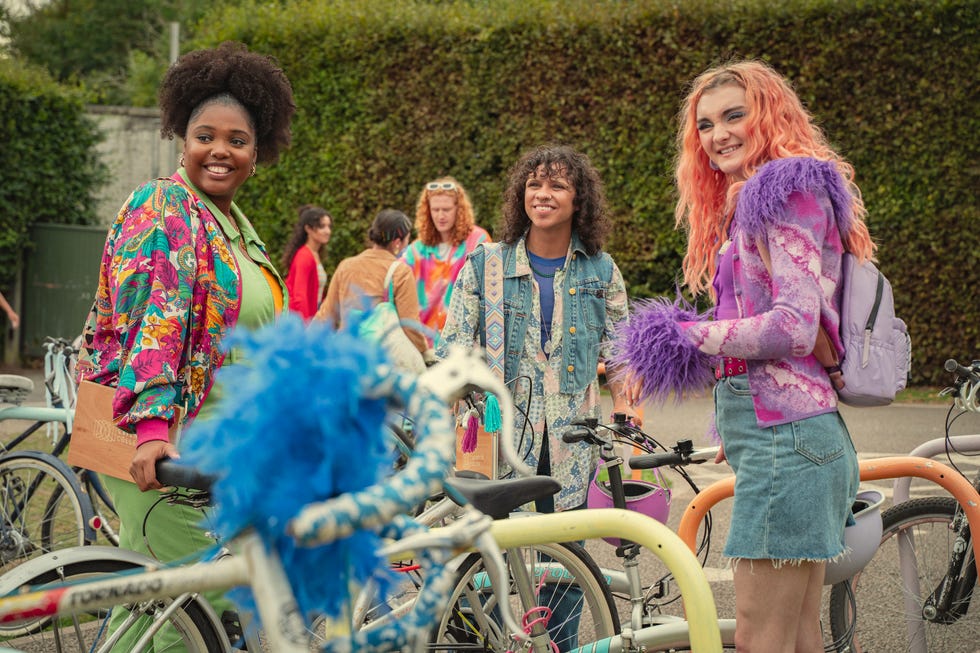
Alongside increasing Isaac (George Robinson), a character introduced in season two who has a spinal-cord injury, the show introduces Aisha (Alexandra James), a deaf woman who wears a hearing aid and is a skilled lipreader. Sex Education also casts an array of disabled background actors, vastly increasing its disability representation without tokenising their disabilities.
The writers scattered subtle ableist remarks and blatant inaccessibility throughout the final season, but never made it the centrepiece before the climax, highlighting how insidious ableism can be.
Related: Sex Education's intimacy coordinator opens up about the show's first trans sex scene
This constant shrugging-off mirrors reality in how inaccessability and ableist language and behaviour are skimmed over by non-disabled people.
What to Read Next
The first episode sets up the initial instance with an awkward exchange between Isaac and Aimee (Aimee Lou Wood). As they take the lift together to their art class, it stops, and the conversation turns to their motivation for taking art A Level.
In classic oblivious Aimee fashion, she assumes that Isaac must also be doing art to process trauma relating to his disability.
Isaac's snarky response that he uses art "to find catharsis from the daily emotional torture of being in a wheelchair through the magic outlet of painting" is a perfect rejection of the stereotype Aimee unthinkingly projects onto him.
The scene also lays the foundation for the season's focus on accessibility, with Isaac lamenting that the school can afford a meditation room but refuses to replace its rickety lift. The non-reaction he gets when he complains is depressingly accurate.

Related: Who is Shay Patten-Walker in Sex Education's dedication?
It’s exceedingly rare for non-disabled people to recognise the impact of inaccessibility or take it seriously. When Isaac asks for the lift to be fixed, his request is treated as an inconvenience, a symbol of systemic ableism.
Aisha, who needs to see people's lips to read them, also faces casual ableism throughout the show, and even some of her closest friends neglect her needs. A blink-and-you'll-miss it moment happens during a group conversation when Abbi (Anthony Lexa) turns away from Aisha to say something and then insists she’ll "tell her later" when Aisha asks what was said.
In her art class, Aisha deals with a teacher who is apparently incapable of using the microphone that enables Aisha to hear her. The teacher unnecessarily shouts into the mic to communicate with Aisha.
The constant need to ask for what should be given freely clearly takes a toll on her. Her frustration finds its voice after a date with Cal (Dua Saleh), where the cinema neglects to put the subtitles on. While Cal says they'll go and get it fixed, Aisha insists that it doesn't matter.
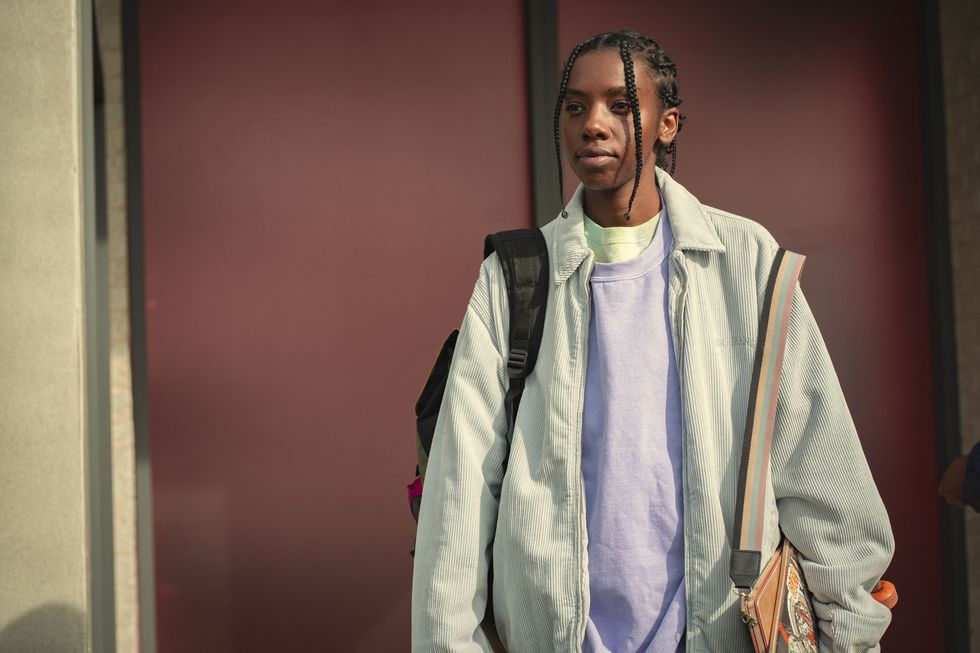
Later, Aisha verbalises something felt by so many disabled people: she doesn't like "making a fuss" because otherwise she'd spend her life having awkward conversations with non-disabled people. Disabled people's requests for reasonable accommodations are often dismissed, making disabled people increasingly jaded at the prospect of having to fight for their rights because accessibility is treated as a nuisance.
In the penultimate episode, the ableism reaches a crescendo on the day of the students' mock exam. Isaac comes up against a broken lift again and, in protest, pulls the fire alarm after blocking the stairs with chairs and tables, with Aimee's help.
This simple act drives his point home beautifully: inaccessibility is distressing. He reiterates this to the panicking students, who are quite ignorant of the fact that they left Aisha behind in the exam room too, by saying how "annoying" it must be to not be able to get where you need to go.
Despite the fact that disabled people encounter inaccessibility and ableism every day, as Aisha says in Sex Education, disabled inclusion is an afterthought. It's draining for disabled people to live in a world built without their needs in mind because they constantly have to ask for things that should just be there.
Yet accessibility accommodations are treated as an inconvenience. As the disabled students speak up, they perfectly summarise why accommodations are so important and how inaccessibility impacts their lives.

Related: Sex Education's intimacy co-ordinator breaks down Otis and Maeve phone sex scene
In a glorious Mean Girls callback, one very passionate disabled student "who doesn't even go here" explains the social model of disability: "I wish people understood that our problems come from barriers in society, not from our disabilities."
The concept is so simple that it can be explained in a single sentence, but Isaac and Aisha both have to make themselves incredibly vulnerable for meaningful change to happen.
Thankfully, the community takes ownership of their mistakes by using their power as allies to conduct a sit-in until the lift is fixed and Isaac can take his exam.
Their work incites real change. Money is diverted to buying a new lift, and Aisha's friends make a concerted effort to learn sign language.

With a dash of fiery allyship and honest accountability, Sex Education season four shines a light on what people so desperately need to understand: equality for disabled people is impossible without non-disabled people's allyship.
As Isaac says: "It's everyone's fault because it's everyone's responsibility."
While the show has said its farewells, here's hoping another lighting-in-a-bottle project picks up where Sex Education's disability representation leaves off.
Sex Education is available to stream on Netflix.


