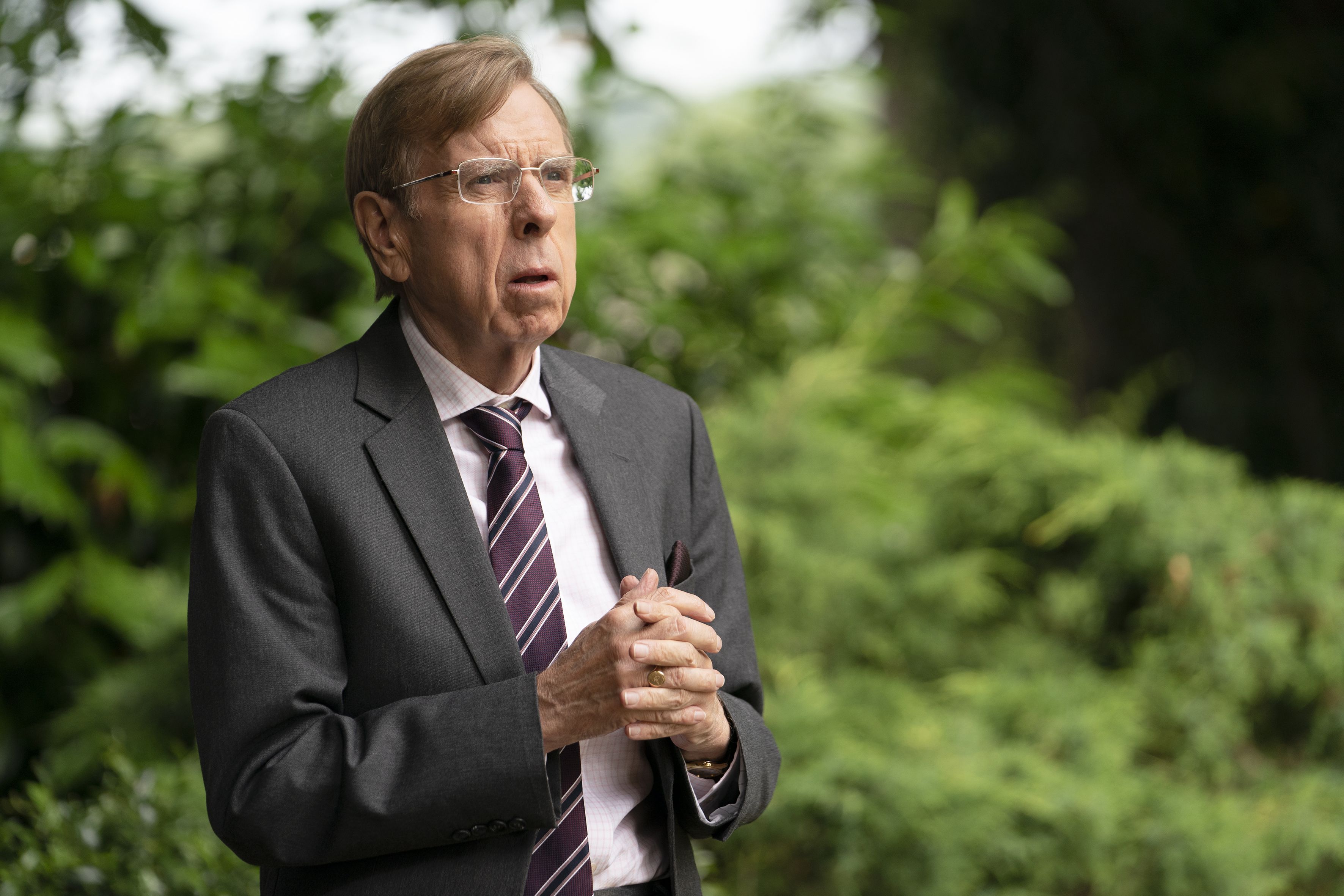
The BBC drama The Sixth Commandment could have sunk like a stone into the swollen ranks of the true crime TV catalogue, where shows seem to plumb fresh horror from dust-ridden police files every other week.
TV hits like Black Mirror's 'Loch Henry' episode and Netflix's Dahmer have re-ignited conversations around the ethics of the genre, particularly when families of the victims have not been involved in the making of the dramatisation.
Yet the BBC's four-part true crime drama about the deaths of Peter Farquhar and his neighbour Ann Moore-Martin recognises the uglier conventions of the saturated genre and tackles them head on, coming away with a sensitive and well-handled show.
Written by Sarah Phelps, who has penned several Agatha Christie adaptations as well as A Very British Scandal, the four episodes unspool how Peter (played by Timothy Spall) and Ann (played by Anne Reid) were befriended and romantically ensnared by young churchwarden Ben Field (played by Éanna Hardwicke).
The Sixth Commandment tells the expansive Buckinghamshire story from Peter's life before he met Field through to the high-profile trial to bring the killer to justice, based on extensive research, interviews and published accounts.

Phelps has told how she felt certain details "needed to be left out," in part because the drama was made with the blessing of both families.
What to Read Next
Phelps told the BBC how the families were at "the forefront of her mind" while writing the script, adding: "It's very difficult for them to revisit these events. What I didn't want to do was to cause them even more distress.
"I had to make some choices about what I was going to leave out, because as I'm sure you can imagine, some of the details are really, really distressing."
The Sixth Commandment is thus a story that foregrounds the experience of the victims and in doing so avoids laying any notoriety at the feet of the killer, who instead comes across as uneasy and controlling in a way that is initially hard to pinpoint.
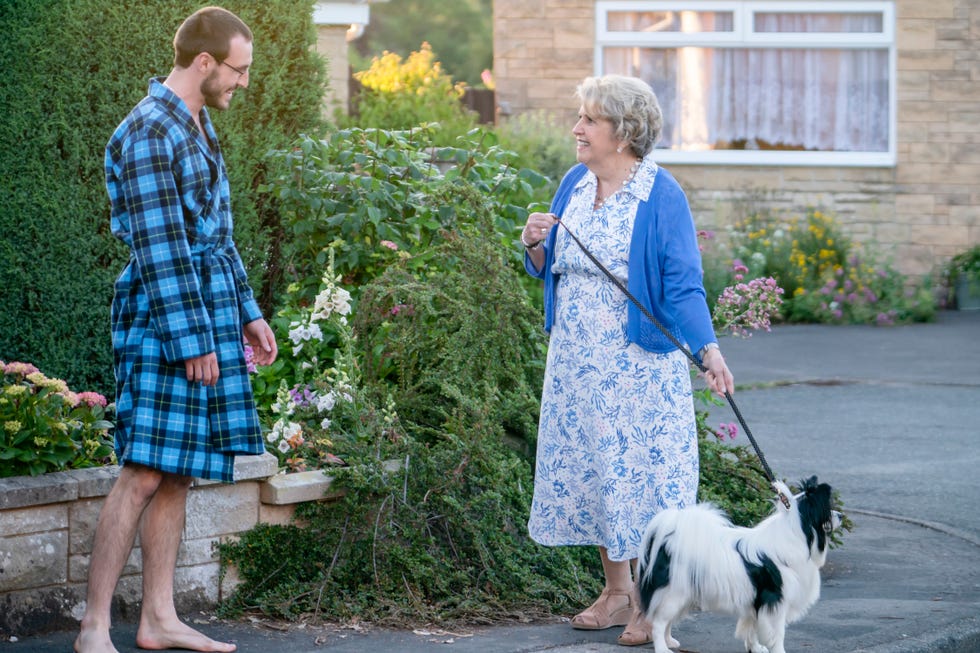
The first episode tracks how Field wholly infiltrated Peter's life after he had retired as a schoolmaster. But before we get to any of that, we see Peter: a lonely gay man struggling to reconcile his sexuality with his faith.
His only outlet for his desires comes from looking through men's sportswear catalogue images. "I waste hours and hours on my pathetic habit," he tells a clergy friend. "Even my deviance is pathetic."
Field then strolls into his life under the guise of being his soulmate, using poetry and their shared faith to convince Peter he has finally found the emotional connection he longed for.
Despite on the face of it being a stock piece of true crime, The Sixth Commandment is not a murder story. It instead raises questions around loneliness among the elderly and how that can be taken advantage of in horrible ways, causing devastation to the families around them.

What does The Sixth Commandment leave out?
The final episode of the four-part drama follows the highly publicised 2019 court case which saw Field found guilty of Peter Farquhar's murder but not guilty of the attempted murder of Ann Moore-Martin. He was sentenced to life in prison, with a minimum of 36 years.
Field's friend Martyn Smith was also accused of aiding in Farquhar's murder and conspiring to murder Moore-Martin. He was found not guilty.

After Field moved into Farquhar's home in the BBC drama, we see Field bringing Peter endless cups of tea. He also suggests to his brother Ian that Peter has a possible drinking problem.
Yet the true extent of his wicked plot was only later revealed. After Field wormed into Farquhar's life and convinced him to write him into his will, Field began to poison the retired schoolmaster with a toxic mixture of alcohol and drugs.
References were found to dosages for the deadly cocktail among Field's journals, as was detailed in the Channel 4 Catching a Killer documentary on the case. His personal video collection was also uncovered and included horrifying footage of Farquhar in a drug-addled state.
Prosecutors on the case also detailed Field's wide-ranging gaslighting of Farquhar, which involved secretly hiding his belongings and deleting contacts on his phone, which he also detailed in his journals.

As the jury are set to deliberate the case in The Sixth Commandment, we flashback to 2015 to see Peter's last night and learn that Field had indeed been there when he died.
An imagined but powerful conversation between the pair sees Peter figure out Field has been manipulating him, before he drinks another cup of tea brought to him by his killer and experiences a horrific bout of terrified confusion.
Peter's final moments were not shown in the BBC show, and we'd argue this was a wise decision allowing The Sixth Commandment to side-step a mistake made by other true-crime dramatisations.
According to prosecutors on the case, Field suffocated Farquhar when he was too weak to resist.
Field set up the scene to made it look like Farquhar had drunk himself to death, leaving a half-empty bottle of whisky with him. Farquhar was found dead on his sofa by a cleaner.

Thames Valley Police detective Mark Glover said of Field: "The extent of his planning, deception and cruelty towards his victims is frankly staggering, and I do not believe he has ever shown an ounce of remorse or contrition.
"If he is sorry for anything it is that he got caught."
The Sixth Commandment is available to stream on BBC iPlayer.
Best Entertainment and Tech Deals


Coronation Street X Joanie - Gilroy Retro Newton And Ridley Sweatshirt












Previously Deputy TV Editor at Digital Spy and, before that, a TV Reporter at The Mirror, Rebecca can now be found crafting expert analysis of the TV landscape, when she's not talking on the BBC or Times Radio about everything from the latest season of Bridgerton or The White Lotus to whatever chaos is unfolding in the various Love Island villas. When she's not bingeing a boxset, in-the-wild sightings of Rebecca have included stints on the National TV Awards and BAFTAs red carpets, and post-match video explainers of the reality TV we're all watching.


