Traditionally, Digital Spy hasn't been hugely kind to Samsung's approach to design. One of our most recent reviews of a Samsung product, the Galaxy Tab S, described it as "something even Kanye West wouldn't be happy carrying about".
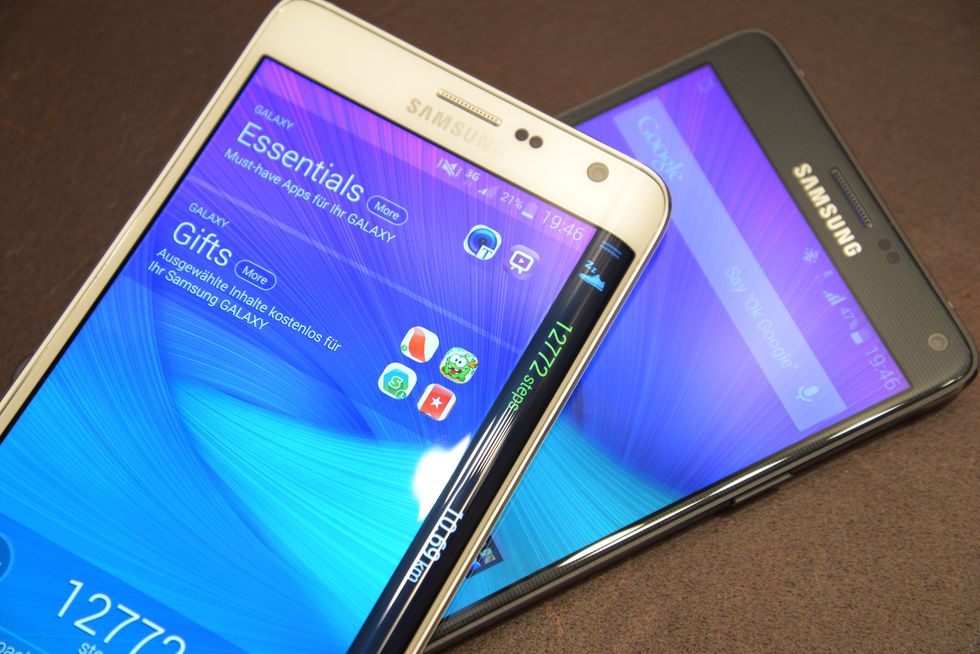

Basically, Samsung likes plastic. As such, anything even remotely approaching premium quality in the world of devices had either an Apple or a HTC badge slapped on it. After our time with the Galaxy Note Edge however, this viewpoint has now changed.
Samsung has finally, after years of criticism, made a U-turn and incorporated some premium materials into a premium device. The Note 4 and Galaxy Note Edge now feel solid and plush, rather than flimsy and cheap. There is still a fair old amount of plastic in the design, but it's clear Samsung now realises what it has to do to keep up with its competitors.

Any talk at IFA of specifications and stats was quickly quashed, replaced instead by Samsung executives giving information on real world usage for device features. Admittedly, we don't really agree that much of it will be genuinely beneficial to our lives. But the smartphone has come so far now that making something interesting really is just about plugging gaps.
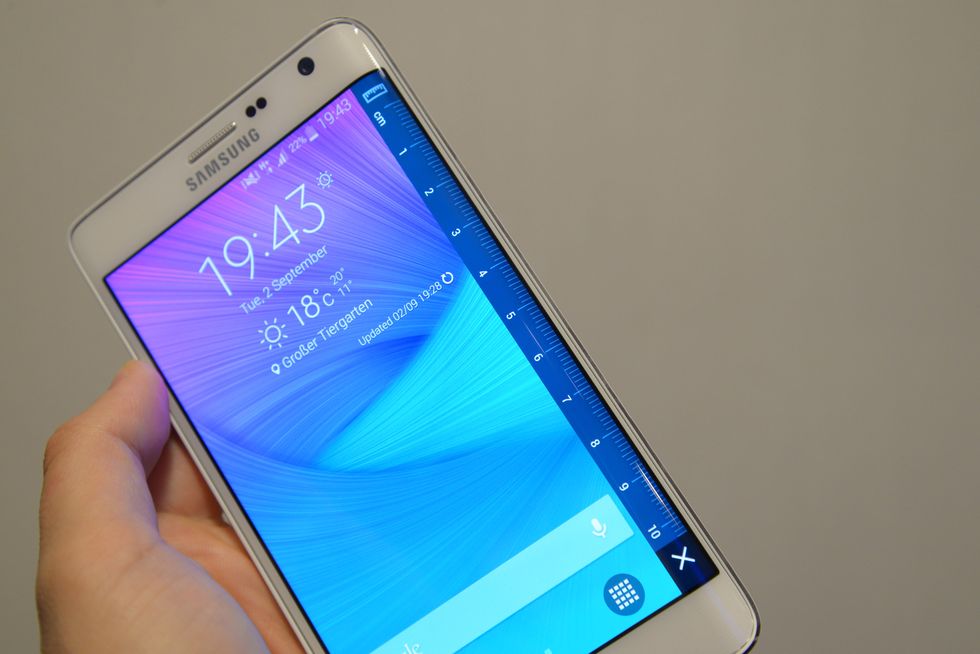
Which is where the Galaxy Edge comes in. It's a truly mad device with use cases that are so obscure, we slightly adore it for its outlandishness. There is absolutely no way that a 10cm ruler incorporated into the side of a curved smartphone will ever get any use, surely?
The difference is, when you first set eyes on that screen, it's definitely a 'wow' moment. As pointless as it may seem, you are going to be talking about that display.
What to Read Next
"It gives a hint of a future where all glass can be curved," says Matt Warman, The Daily Telegraph's head of technology. It's a proof of concept that while visually impressive now, could eventually result in some genuinely useful innovation.
This is where Apple comes in. Tradition dictates that the Cupertino firm only ever offers up elaborate functionality and services when the user experience is truly complete. The iPad already had iOS well and truly established to launch on. In fact, the iPhone is probably the only major gamble that Apple has taken in years.


That's no bad thing. If you consider the differences between the Touch ID sensor in the iPhone 5S compared to the glitchy mess of a fingerprint sensor included with the Galaxy S5, it's clear Apple's care and attention has paid off.
"Apple doesn't show off what it can do, they release it when they know there is a demand for that service," says Dan Jones, consumer editor at The Sun.
For the average mobile user, Apple's 'make sure it works' approach is ideal. The problem is that the competition is getting so bizarre now that even a new product as significant as the iPhone 6 will struggle to stand out against Samsung's new breed of devices.
At IFA, Samsung has launched a virtual reality headset, another smart watch, a curved phone, a flat phone and a bendable TV. That's a lot to get excited about, whether or not any of it is even remotely useful.
The other big factor is that the company has finally plugged its premium gap, with the Note Edge showing that decent design is now a top priority at Samsung HQ.
We all know, partly thanks to the multiple leaks, that Apple's iPhone 6 is going to be a finely crafted piece of technology. It will 'just work', and will likely feel as premium as anything Apple has launched prior.
But it's still going to be an iPhone and we all know that whatever shape it comes in, an iPhone is still an iPhone. In order to really wow us, Apple is going to have to pull something else out of the bag next week.
However, if Apple produces a 'one more thing' moment on September 9, you can be pretty sure that no amount of curved handsets and bendy TVs are going to steal the show in 2014.


