
For a series centred around the important and challenging work of The Innocence Project – a non-profit aiming to bulldoze its way through wrongful convictions in the United States, while also campaigning for justice reform – a focus on Ted Bundy feels more than a little at odds.
But Netflix's new nine-part true-crime documentary The Innocence Files does just that, at least in its first few episodes, by revisiting a key detail from his infamous case.
Before we go any further, it is important to emphasise that there is absolutely no question to be raised when it comes to Ted Bundy's guilt. As one of the world's most notorious and talked-about serial killers, his reprehensible actions included violent assaults and brutal murders of at least 30 women and young girls (with the exact number believed to be much higher), and he destroyed and damaged many more lives in the process.
What to Read Next
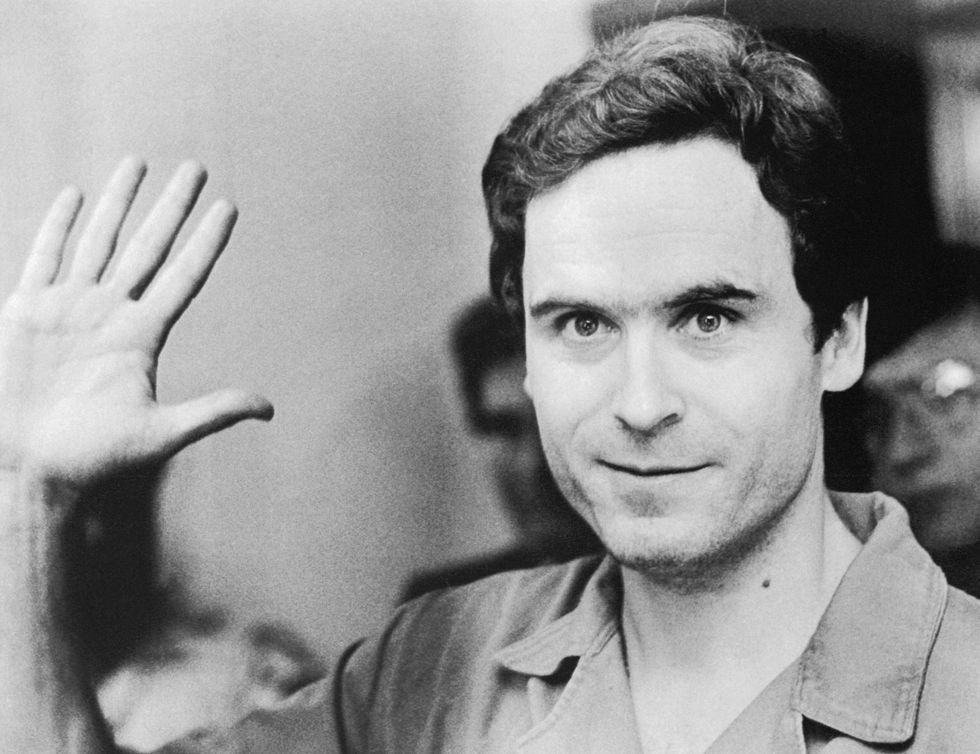
The series does not beg the question of his conviction, but does highlight the fact that his widely-publicised trial marked a shift in the prosecutorial system – the ramifications of which are still being felt today.
Anyone that previously tuned in for Netflix's docu-series The Ted Bundy Tapes will already be aware that a key piece of evidence used at his trial was his teeth impressions. In fact, his crooked incisors were such an important part of the case against him that Hollywood actor Zac Efron had to wear fakes in order to portray him in the Joe Berlinger-directed film, Extremely Wicked, Shockingly Evil and Vile.

Related: One big criticism of the Ted Bundy Tapes, according to former FBI agent John Douglas
In what has become known as the Chi Omega murders, Bundy broke into a sorority house at Florida State University and murdered Lisa Levy and Margaret Bowman. Disturbingly, Bundy left his mark behind – having bitten Levy, there were visible imprints on her body.
"A forensic odontologist would be able to match those bite marks to a suspect's teeth as precisely as a fingerprint expert could identify the loops and whorls of a suspect's fingers," Ann Rule, author of the book The Stranger Beside Me: The True Crime Story of Ted Bundy, wrote in the 1980s.
It had been Richard Souviron that did this forensic work in Ted Bundy's case, using impressions of the very distinctive and uneven serial killer's teeth (taken after his arrest) to compare with the markings on Levy. Souviron featured in The Innocence Files, revisiting his work in the Bundy trial and discussing the way in which bite mark evidence boomed in popularity after prosecutors across the United States saw it successfully secure convictions against Bundy.

But Ann Rule's words were their own mark of that time, as many are now of the opinion that this so-called science has been debunked.
All these years later, those in the field are undecided on its validity. In 1999, a study by a member of the American Board of Forensic Odontology found a 63% rate of false identification using the technique (via New York Times), and a 2009 study by the National Academy of Sciences, described by The Innocence Project as "groundbreaking", debunked its use as a means of positively identifying perpetrators of crimes. What's more, in 2016 it was declared by the President's Council of Advisors on Science and Technology that bite-mark analysis had no scientific validity.
As with some other forms of forensic science – such as microscopic hair comparison – its use in the courtroom does not necessarily mean that it has been scientifically proven to be reliable, or scrutinised by an independent body. This is something that The Innocence Project has fought against, and is now bringing to a wider audience through this new Netflix series.

The Innocence Files makes a comment about how evidence – even forensic science – can be open to interpretation, and might not necessarily be as accurate as the general population, who make up the jury in criminal trials, might believe.
The specific question mark over bite-mark evidence was demonstrated by a number of cases that The Innocence Project had worked on. In each specific case that was detailed in the docu-series, all were eventually found to have been wrongfully convicted.
While Richard Souviron defended the expert opinion he used at the Bundy trial during a filmed debate for the Just Science podcast (arguing that "with that kind of bite" there would be no question), he did later admit that his approach to odontology has changed in recent years.
Looking back at another case he worked on, Souviron admitted that his bite-mark testimony would have been different after 30 years more experience working in that field. "I've become a lot more conservative in my opinions now," he said.

Dr Michael West is another proponent of forensic dentistry, and he was incredibly vocal about his own credentials through The Innocence Files, defiantly arguing against those that criticise it as a science. According to The Innocence Project, his analysis of bite-mark evidence has contributed to the wrongful conviction of at least half a dozen people – including Levon Brooks and Kennedy Brewer, whose cases were featured in the documentary.
In the case of Ted Bundy, many have argued that he may not have been convicted without the bite-mark evidence, as there wasn't much else in the way of physical evidence to link him to his crimes. An unsettling thought, of course.

Related: Are we right to have an obsession with true crime?
But if his trial were taking place today (ie, with the most up-to-date scientific knowledge), there'd most likely be strong DNA evidence to take its place.
Despite the widespread concerns and a pattern of wrongful convictions in its wake, Forensic Odontology is still accepted worldwide. But as scientific developments continue to push forward, it is surely of utmost importance that the criminal justice system keeps up.
And the problem is, as of right now, there isn't an ironclad process to ensure that this is the case.
The Innocence Files is available to stream on Netflix.
Digital Spy now has a newsletter – sign up to get it sent straight to your inbox.
Looking for more TV recommendations and discussion? Head over to ourFacebook Group to see new picks every day, and chat with other readers about what they're watching right now.
TV Editor, Digital Spy Laura has been watching television for over 30 years and professionally writing about entertainment for almost 10 of those. Previously at LOOK and now heading up the TV desk at the UK's biggest TV and movies site Digital Spy, Laura has helped steer conversations around some of the most popular shows on the box. Laura has appeared on Channel 5 News and radio to talk viewing habits and TV recommendations. As well as putting her nerd-level Buffy knowledge to good use during an IRL meet with Sarah Michelle Gellar, Laura also once had afternoon tea with One Direction, has sat around the fire pit of the Love Island villa, spoken to Sir David Attenborough about the world's oceans and even interviewed Rylan from inside the Big Brother house (housemate status, forever pending).


