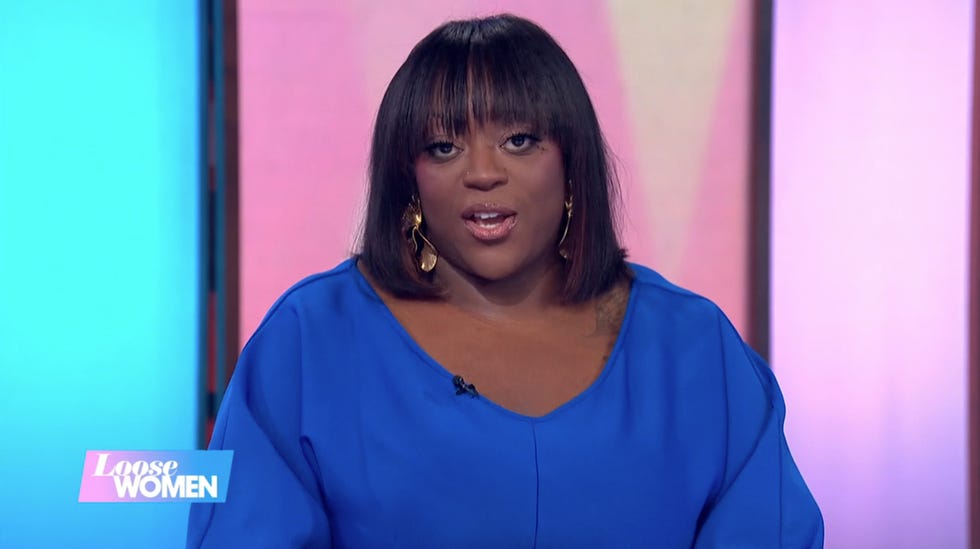
Loose Women star Judi Love has got candid about living with endometriosis, saying the condition has "unbearable" effects on her physical and mental health.
The comedian recalled a similar journey to that of some women and people with uteruses who have endometriosis, as she explained it took years before she could receive a diagnosis.
"It took me about five years to get a diagnosis, and the average time is even longer – as long as nine years," she told the Mirror.
Related: Loose Women's Judi Love responds to viral BAFTAs moment with Lorraine
"For women, our pain is often not always taken seriously, so symptoms are just put down to having 'bad periods'. At the time, it wasn't spoken about much, so when I received my diagnosis I honestly didn't really know what it was, but the effect on my life, my physical and mental health, was sometimes unbearable."
Endometriosis is a condition that causes tissue similar to that growing in the lining of the womb to grow in places such as the ovaries and the fallopian tubes, having a significant impact on someone's life.
What to Read Next
Symptoms include severe period pains and heavy periods as well as fatigue and pain during or after sex. There is no cure for endometriosis at present, but treatment can help manage the condition.

Related: Loose Women's Judi Love praises co-stars following feud rumours
"I think it's so important that people are starting to have more open conversations about endometriosis and the impact it can have, as well as pushing for diagnoses, because not having that pain recognised or acknowledged is really difficult," Love continued.
For the new year, the presenter said she'll keep being active, sharing a love of boxing.
"It makes me feel good," she said.
Loose Women airs on weekdays at 12.30pm on ITV1 and streams on ITVX.
Read more Loose Women news on our dedicated homepage
Reporter, Digital Spy
Stefania is a freelance writer specialising in TV and movies. After graduating from City University, London, she covered LGBTQ+ news and pursued a career in entertainment journalism, with her work appearing in outlets including Little White Lies, The Skinny, Radio Times and Digital Spy.
Her beats are horror films and period dramas, especially if fronted by queer women. She can argue why Scream is the best slasher in four languages (and a half).