Dan Da Dan episodes 1-3 spoilers follow, but they're minor.
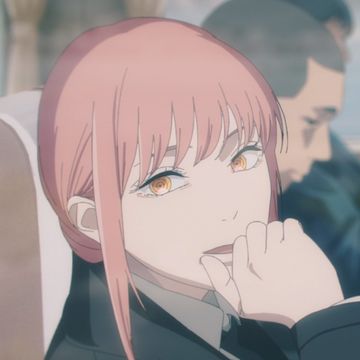
When Chainsaw Man roared into life in the pages of Weekly Shōnen Jump, who knew that not one but two genre-defining anime were born that year in 2018?
Four years after Tatsuki Fujimoto began writing his manga, Chainsaw Man became the breakout anime hit of the season in 2022, and now, two years on, the same is true of Dan Da Dan, the highly anticipated adaptation created by Yukinobu Tatsu, who worked as an assistant for Fujimoto back in the day.
Both shows are extremely violent gore-fests that blend genre like a chainsaw deep in a demon's guts, and both star unhinged teen protagonists who develop bizarre gifts in the fight against evil, but Dan Da Dan is anything but a mere copy.
In fact, the story of Ayase (Shion Wakayama), a brash tomboy with an occult background, and Okarun (Natsuki Hanae), a shy loner obsessed with aliens, couldn't be more different than Chainsaw Man's horny demon-hunting hero.

Related: Best anime on Netflix
What to Read Next
While Chainsaw Man is goofy and brutal yet still reminiscent of other recent hits like Jujutsu Kaisen, Dan Da Dan is far more singular in its amalgamation of sci-fi and the supernatural.
When we meet Ayase and Okarun at their school, Dan Da Dan very quickly establishes their odd couple dynamic, revealing Ayase's obsession with the actor Ken Takakura and Okarun's desperate need for alien friends. The pair clash immediately, but it's through this dynamic that the writing succinctly makes them both feel so rounded without dragging the pace down through too much exposition.
In fact, Dan Da Dan takes great delight in throwing us as hard and fast as it can into the chaos, which is rather apt given what the ghouls and aliens we quickly encounter want to do with these poor kids.

Desperate to prove there's no such thing as ghosts, Okarun ventures into a supposedly haunted tunnel where he encounters the horniest dead grandma you'll ever lay eyes upon. Turbo Granny, as she's known, tells Okarun how much she wants to "gobble his weiner," suggesting a "suckle of her teats" in exchange. And no, she didn't offer to buy him dinner first.
Meanwhile, Ayase isn't faring much better when her quest to disprove extraterrestrial life runs her smack dab into the middle of a Serpo alien invasion.
This so-called "friendly" race has evolved past conflict and even emotions because of how the males reproduce using clone technology. Yet they still remain curious about human anatomy, so they do what any curious alien might do in this situation and force Ayase to get horny through the power of psychokinesis.

Related: Chainsaw Man announces new movie in place of season 2
Chainsaw Man loves to cop an inappropriate feel as much as the next pervy protagonist, but Turbo Granny and the Serpoian aliens put Denji to shame. As does that spike one of the aliens wields as a penis.
If that sounds absolutely horrifying, actually seeing it animated on screen is even worse. Dan Da Dan revels in how unsettling it can be, deconstructing and reimagining traditional Japanese lore to unnerving effect. The character design is reminiscent of video games like Persona in that regard, but the show's approach is still uniquely its own, evoking a genuine horror as we fear for our young, maladjusted faves.
Because the danger hits so early on, Ayase and Okarun bond quickly despite their differences, and in turn, we fall in love with them even quicker too. The push and pull between their constant bickering and their shared passion for otherworldly phenomena drives the show forward with a dysfunctional charm that grounds each hellish encounter.
And that's vital because the visuals are anything but grounded, pulling you in with animation that's out of this world in every way possible. Honestly, what Science SARU (Inu-Oh, Devilman Crybaby, Scott Pilgrim Takes Off) has pulled off here is nothing short of a masterpiece.
The way light and colour and the camera's movement combine to kaleidoscopic effect sets Dan Da Dan apart from just about anything else on TV right now, anime or otherwise. So much thought and consideration has gone into the composition of every singular frame, you're left wondering how Dan Da Dan was even made without a helping hand from supernatural or extraterrestrial forces.
Even the simplest of scenes, just a simple conversation or a touching flashback, is dynamic in ways other anime can't match in even the most heated of battles. 2D and CG animation combine to bring an otherworldly amount of energy to every aesthetic, every motion, but the effect isn't tiring or too overwhelming to take in.
It's this balance that's key, not just between the two leads or their respective worlds, but even in the emotional intensity of each fight, which is juxtaposed with the emotional heft of each character's backstory.
Whatever the moment requires, music by Kensuke Ushio (of Chainsaw Man fame) perfectly complements the mood, lending even more energy to every scene. Ushio's involvement furthers those inevitable Chainsaw Man comparisons too, although if we were forced to choose another anime more similar in tone, there is a case to be made for Dorohedoro or perhaps Mob Psycho 100.
Either way, we're just grateful that Dan Da Dan creator Tatsu got the start he needed alongside Tatsuki Fujimoto. Because if not, we wouldn't have what could very well turn out to be an even bigger hit than Chainsaw Man, an industry-defining show that showcases the very best of anime's potential and what the medium has to offer.
Dan Da Dan is available on Netflix.



After teaching in England and South Korea, David turned to writing in Germany, where he covered everything from superhero movies to the Berlin Film Festival.
In 2019, David moved to London to join Digital Spy, where he could indulge his love of comics, horror and LGBTQ+ storytelling as Deputy TV Editor, and later, as Acting TV Editor.
David has spoken on numerous LGBTQ+ panels to discuss queer representation and in 2020, he created the Rainbow Crew interview series, which celebrates LGBTQ+ talent on both sides of the camera via video content and longform reads.
Beyond that, David has interviewed all your faves, including Henry Cavill, Pedro Pascal, Olivia Colman, Patrick Stewart, Ncuti Gatwa, Jamie Dornan, Regina King, and more — not to mention countless Drag Race legends.
As a freelance entertainment journalist, David has bylines across a range of publications including Empire Online, Radio Times, INTO, Highsnobiety, Den of Geek, The Digital Fix and Sight & Sound.