Jujutsu Kaisen season two kicked off its much anticipated Shibuya Incident Arc last week.
Alongside a new intro that got manga readers very excited, the episode also set up an epic fight that took the show in an entirely new direction.
Jujutsu Kaisen season 2, episode 7 picked things up immediately, completing the show's transformation into an all-punching, all-blasting homage to the greats of mecha anime.
What to Read Next
The episode revolved around a confrontation between archvillains Geto and Mahito, and Kyoto Jujutsu High student Mechamaru – a sorcerer whose cursed technique allows him to control various 'puppets' and who we've mainly seen operating a human-sized Iron Man suit.
Jujutsu Kaisen's previous episode saw Mechamaru emerge from beneath a lake in the cockpit of an absolutely gargantuan mech suit, one which bears a striking resemblance to Neon Genesis Evangelion's Eva Unit 01.
Viewers and Twitter users were quick to point out the similarities in design between 'Ultimate Mecha Maru' and one of anime's most feared/beloved giant robots.

The similarity really pops in the opening of episode 7, when Ultimate Mecha Maru lifts its head back and screams before slouching forward, echoing Unit 01's terrifying beserker mode – only with fewer mommy issues.
Later in the episode we also get another iconic mecha anime call back to 2007's Gurren Lagann, but the comparisons are most clearly seen in motion, so take a look at the tweet below.
Jujutsu Kaisen's use of motion, bright colours, and bursting lasers in this episode are notably different from the palette of the rest of the series, and really only make sense as an intentional reference to that show.
Gurren Lagann won over fans thanks to its truly absurd scale, and also the way it was centred on interpersonal relationships and friendships. In this way, Jujutsu Kaisen's most recent episode also captured the spirit of Gainax's show.
Throughout episode seven we learn that Mechamaru's true motivation is his desire to regain control of his body and spend time with his friends; specifically potential love interest Miwa. Oh and also drills. Gurren Lagann is about giant drills.
Beyond clear visual callbacks though, Jujutsu Kaisen's most recent episode tapped into a wider theme that permeates mecha fiction, anime and otherwise.
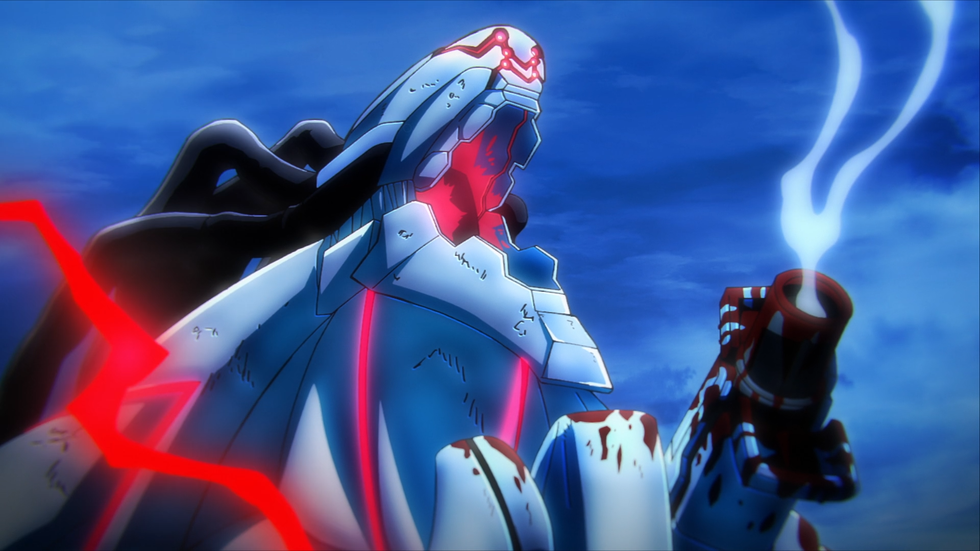
At its core, this episode was about bodies and bodily autonomy. We see how Mechamaru uses special techniques to harness technology and assisted devices that accommodate for his physical conditions.
In the same way, archvillain Mahito (who he's fighting) uses special powers that allow him to reshape and reform his body at will.
More often than not science fiction equates the use of technology, through things like cybernetics or mechanical implants, with 'losing' your humanity. It's an idea that runs, for instance, through various Star Wars films and shows - i.e. Anakin Skywalker's transformation to the evil Darth Vader is symbolised by his new, mechanical body.
This risk here is that, in the real world, lots of people with different medical conditions and needs are able to use machines and technology to vastly improve their ways of life. Jujutsu Kaisen avoids these tropes by allowing both its heroes and villains to determine and expand their own physical limitations.
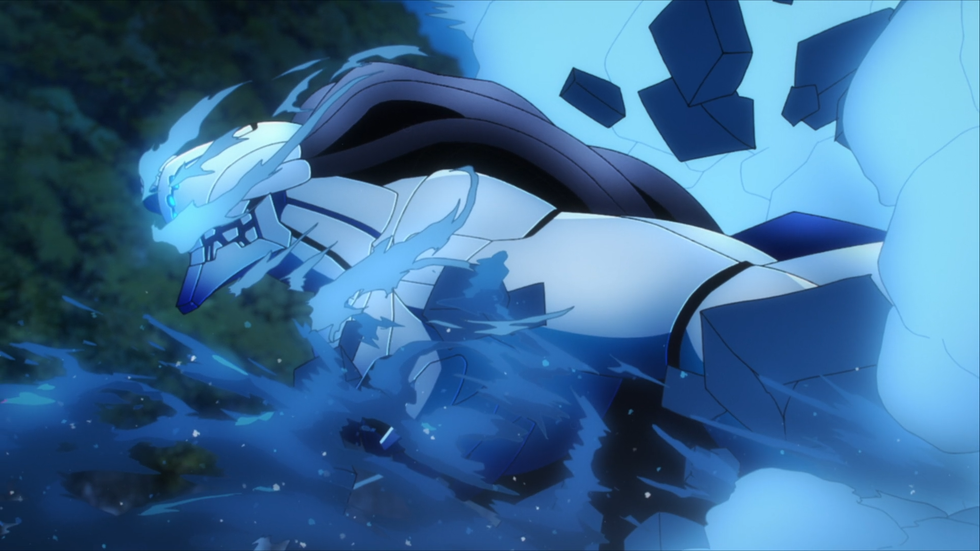
In the same way, themes around the nature of bodies, and how our physical selves manifest in the technology we create are core to mecha stories.
'Real robot' fiction, like the iconic Mobile Suit Gundam anime franchise, often uses mecha suits as heightened versions of the human body – especially in the context of combat and war.
These stories literally enlarge the bodies of their protagonists (the pilots) in order to show the impact that violence can have both physically and mentally.
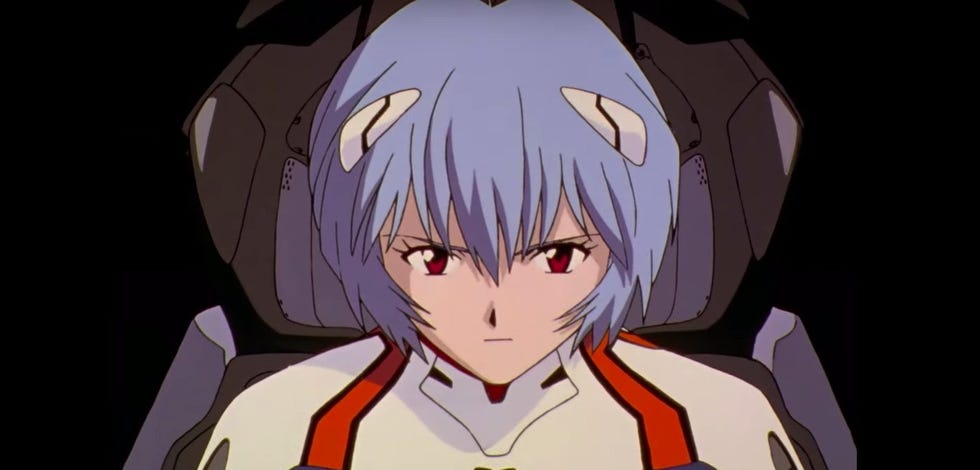
This is certainly true of Neon Genesis Evangelion, a show which is massively preoccupied with the psychology of its characters as they experience trauma – which is then externalised through their giant robot bodies, rendering visible something that is normally purely internal.
All this doesn't necessarily mean that Jujutsu Kaisen was intended to invite these deeper comparisons, but it's noteworthy for a show that has made a name for itself not only with its incredible action and worldbuilding – but also its willingness to engage with and subvert anime tropes across genres.
Jujutsu Kaisen is available to watch on Crunchyroll and Funimation.
Ali is Hearst UK's deputy social strategy director. He has been covering TV and movies for more than six years, all while wrangling Digital Spy's social media and video channels - for which he received a PPA 30 Under 30 award. He specializes in writing about anime, LGBTQ+ representation, science fiction, and comic book adaptations. Recently he's begun collecting Star Wars interviews like Infinity Stones and has spoken with The Mandalorian's Pedro Pascal, Andor showrunner Tony Gilroy and the creative team behind The Bad Batch. Dave Filoni, you're next.