We earn a commission for products purchased through some links in this article.
11 best fitness trackers for fine-tuning your training
Chase down your fitness goals with our tried-and-tested top picks.

While we can all do without a drill sergeant screaming in our ear during workouts, a little bit of extra motivation is always appreciated. Up step, the fitness tracker. These wrist-worn supercomputers have boomed in popularity since Fitbit first burst onto the scene in 2014, and tech innovations mean they are now capable of more than ever before.
As well as helping you hit the heralded 10,000 step mark and upping your daily calorie burn, they'll also keep a watchful eye on your heart rate, distance covered, sleeping habits and, in some cases, even stress levels to make sure you're a picture of health.
But, what makes a great fitness tracker? We asked our resident health expert to test some of the best products on the market before delivering a list of their top picks.
Our health-conscious (and gadget-mad) editors also got in on the action, sharing their own personal favourites.
What is the best fitness tracker?
Tried and tested:
- Best fitness tracker: Fitbit Charge 4
- Best for charging: Huawei Watch Fit Elegant
- Best for runners: Polaroid Ignite 2
- Best for the great outdoors: Amazfit T-Rex Pro
- Best looking: Withings Steel HR
- Best for the gym: Garmin Vivosmart 4
- Best for the pool: Honor Band 5
Editors' picks:
What should I consider when buying a fitness tracker?
Health stats - Perhaps it goes without staying, but stats are the most important thing when it comes to picking a fitness tracker. All models should do the basics: steps, distance covered, heart rate, estimated calorie burn and sleep. However, some go further. Top trackers can tell you how much light, heavy or rapid-eye movement (REM) sleep you're getting each night, which heart rate zones you were in during different phases of your workout and additional data such as your oxygen saturation or VO2 max – the maximum rate at which your heart, lungs and muscles can effectively use oxygen.
Water resistance - If you're more likely to turn to breaststroke than a barbell for your fitness fix, make sure your tracker can be used in the pool. Most will list whether they are water resistant, and the maximum depth they can be used at. Some will just track your heart rate and estimated calorie burn, while others can record distance covered and number of lengths. The (refreshingly affordable) Honor Band 5 can also automatically recognise which stroke you're using.
Battery life - Most last seven days or more on a full tank nowadays while, in some cases, a select few will give you an impressive three weeks of use. The Huawei Watch Fit Elegant also has a unique quick-charging feature, which allows it to survive for an entire day after just five minutes on charge.
Smartphone notifications - A buzzing phone can be a major buzzkill during a workout, causing our minds to wonder from the task at hand. Fortunately, many fitness trackers can display notifications from a synched-up smartphone, with some like the Garmin Vivosmart 4 allowing wearers to respond to calls and messages from their wrists.
Apps - If you want to view your health metrics on a bigger screen, brands now have their own apps that can be synced to their wearable tech. In some cases, these provide extra features like the option of logging your meals and calorie consumption.
Fitbit also has the option of Fitbit Premium, which it describes as a personal resource that can "help you stay active, sleep well, manage stress and more" through personalised programmes. It usually costs £7.99 per month, but you'll get 12 months free when you buy any of the Fitbit bands on this list.
Why is the calorie burn only an estimate?
While we demand our fitness trackers are accurate in almost all areas, step-count and distance covered included, we accept that the calorie-burn figure can only be an estimate. This is because calculating an exact figure would rely on tracking an inordinate number of variables – more than any of these pieces of wearable tech are able. Instead, they use stats such as the wearer's height, weight and movement levels to give a rough figure.
How we test
Our expert took more than 30 of the top fitness trackers on the market and put them through a series of rigorous tests. The accuracy of each one was assessed during everyday activities, as well as all sorts of sports – from Crossfit to dancing to cycling.
Charging time, looks, comfort and performance were all considered before they settled on their final list.
These eight were their favourites:
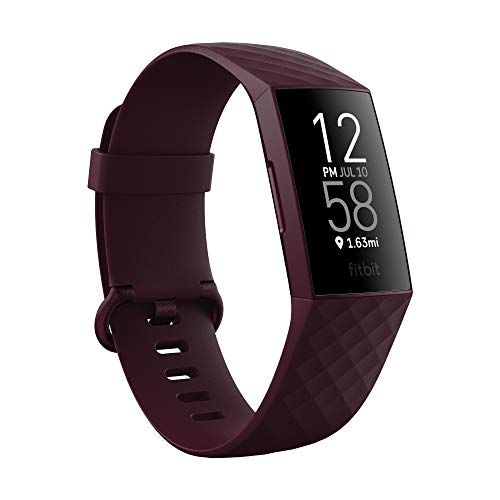
Finding fault with this tracker was harder than playing hide and seek with a spy. It tracked our steps, distance travelled, sleep and a range of different exercises with amazing accuracy, promptly displayed our phone notifications and has an in-built GPS. This means you can leave your mobile at home and still map your favoured running or riding route.
Regular reminders to move if you've been sitting still for too long earn it further points. It only has a black and white screen, but you can see your stats in all their colourful glory on the app.
Key specifications
Screen size: 1.57 inch
Works with: Apple and Android
Strap material: Elastomer
GPS: Yes
Weight: 28g
Number of exercises tracked: 20

As previously mentioned, the Watch Fit's power-saving algorithm allows it to last for a whole day after just a five minute charge, while a full tank will keep it going for 10 days. This isn't its only party trick, however.
It's a great looking bit of kit, with a fully customisable colour screen that allows you to display the data that is most important to you. Steps, calories burned, even the weather – you decide. We found the tracking was accurate for steps, sleep and more, while the in-built GPS worked perfectly when monitoring distance covered and pace on runs.
Key specifications
Screen size: 1.64 inch
Works with: Apple and Android
Strap material: Silicone
GPS: Yes
Weight: 21g
Number of exercises tracked: 96

The Polar Ignite 2 can provide detailed feedback on your sleep, showing you how long you spent in different phases and helping you understand your habits between the sheets. And, after our workouts, it showed us which heart rate zones we had been in and when, so you can see which exercises or sections of your run really had your pulse racing.
It can also log 130 different exercises – the highest figure on test. Yet, despite this avalanche of useful stats, the clear instructions meant it was still simple to set up and use.
Key specifications
Screen size: 1.7 inch
Works with: Apple and Android
Strap material: Silicone with stainless steel buckle
GPS: Yes
Weight: 35g
Number of exercises tracked: 130
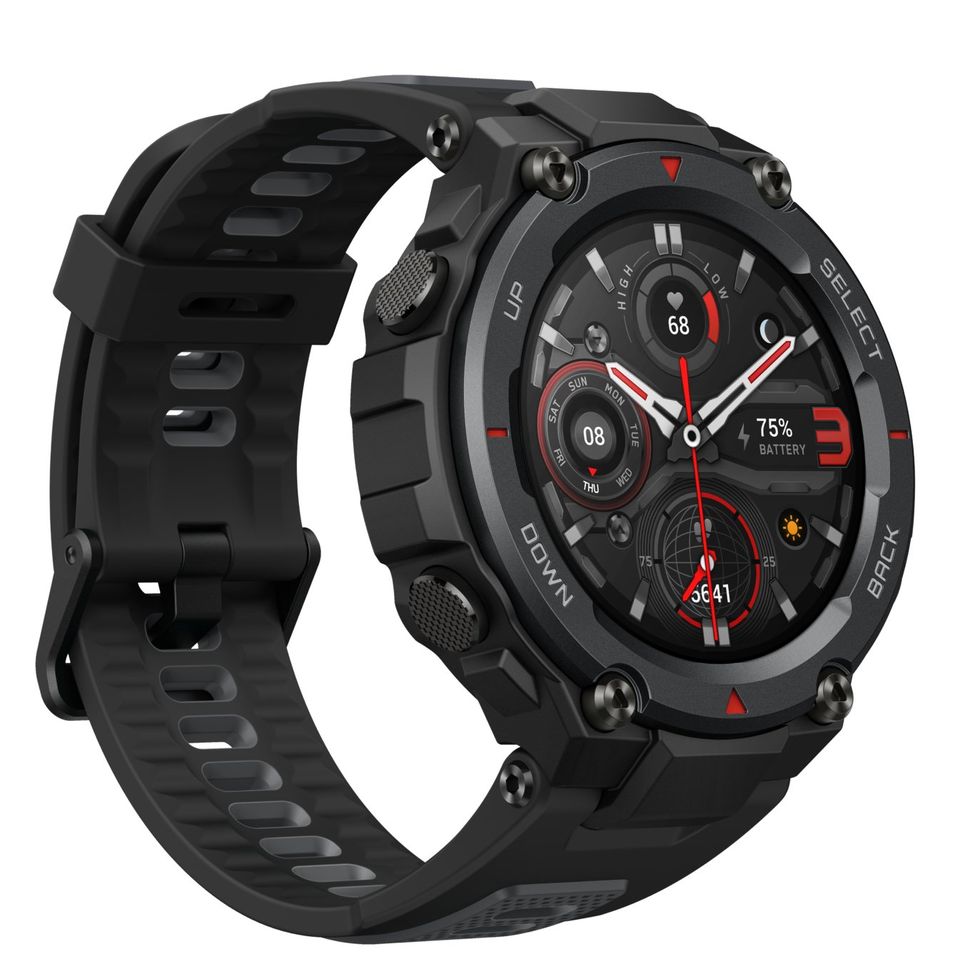
Amazfit wasn't messing around when it made the T-Rex Pro. The robust timepiece turned tracker has everything you need for an outdoor adventure, with a sunrise and sunset monitor, current moon phase display, 18-day battery life, a compass and a barometric altimeter (try saying that five times fast).
It also has more than 100 sports modes and can tell you your VO2 max and oxygen saturation. We found the distance tracking sometimes came up a bit short, and the GPS failed a couple of times, but it’s the top option for natural-born adventurers.
Key specifications
Screen size: 1.3 inch
Works with: Apple and Android
Strap material: Silicone rubber
GPS: Yes
Weight: 59.4g
Number of exercises tracked: 100+

We challenge you to find a more stylish fitness tracker than the Withings Steel HR. The metallic finish and traditional watch face mean it looks just as good as part of a three-piece ensemble as it does with a tank top.
But, behind the classic aesthetic lies some impressive tech. It handles basic tracking duties with ease, and can automatically recognise 10 activities including football, running and dancing – saving you having to set up recording manually. It's also fine to take in the pool and will last a whopping 25 days on a full tank. It lacks bonus features like move reminders, but does everything a tracker should while looking gorgeous.
Key specifications
Screen size: 1.42 inch
Works with: Apple and Android
Strap material: Elastomer
GPS: No
Weight: 41g
Number of exercises tracked: 30

We sometimes feel like we could do with our very own Master Yoda, perched on our back to walk us through workouts. And, while we're not saying the Vivosmart 4 will teach you the ways of the Force, it can certainly help develop your skills (and biceps) in the gym.
Unlike any other entry on this list, it can count your reps, leaving you to concentrate on form and technique. Alongside tracking all the expected metrics, it monitors your stress levels based on heart-rate variability (when your heart doesn't beat in a regular rhythm) and offers a breathing exercise to counter mounting pressure. It can also be used to control music from your phone, and can respond to incoming calls as well as displaying notifications.
Key specifications
Screen size: 0.39 inch
Works with: Apple and Android
Strap material: Elastomer
GPS: Yes, via phone
Weight: 17g
Number of exercises tracked: 9

If you can often be found in the pool, this is the tracker for you. And, even if swimming isn't your idea of a good time, we'd still recommend considering this tracker given its incredible value for money.
The Band 5's six-axis sensor can automatically recognise which stroke you're doing, and will record your speed, distance, calories burned and "SWOLF score" – this is an abbreviation for swim golf, and is calculated using the number of strokes used each length and the time taken to complete each length. Move reminders, smartphone notifications and 'find my phone' are further handy features.
Key specifications
Screen size: 0.95 inch
Works with: Apple and Android
Strap material: Elastomer
GPS: No
Weight: 22.7g
Number of exercises tracked: 9
Editors' Picks


Garmin is the smartwatch for those who are super active and do more than just run or cycle – this is for those who take their exercise seriously.
It's designed for people who hike, swim, train, and push themselves to the limit, with features to help track dozens of activities, and your progress, in easy charts and graphs through the app.
One of the most useful – or scary depending how you look at it – features is it will work out your "fitness age" based on how active you are, your heart-rate, and your recovery.
Don't blame us if our fitness age is more than double our actual age.

Honor is not normally a brand you'd think of when considering smartwatches, but the plucky device easily stands up among the big boys and delivers impressive features that might tempt you to pick one up.
The battery life is obscenely long (14 days), and it's fully waterproof so you can take it swimming or in the rain with no worries.
It is also great for helping you reduce stress and calm yourself down with the stress monitoring system and breathing exercises.
The watch will monitor spikes in your heart rate and remind you to take time for yourself, either through relaxing breathing sessions or to just step away from your situation.

So, for all your Android users out there, you might consider the Samsung series of smartwatches for their fitness fidelity and prowess.
The Galaxy Watch Active 2 is a wonderful device for managing all sorts of activities, from yoga and running to boxing, and even fencing, should you wish to monitor your progress in a duel of blades.
It looks effortlessly suave and sophisticated (easily the best-looking watch on the list) and probably has one of the longest battery lives out of all the options.

Fitbit's response to the smartwatch/fitness tracker conundrum, the Versa 2 is a monstrously good smartwatch that straddles that fine line between stylish watch and useful training coach with ease.
The usual features like Spotify connection, GPS tracking, heart rate monitoring and even managing how you sleep and helping to get a better rest all sit in a larger watch-face that is easy to use.
It might be a smidge on the expensive side, but it does a lot more than many of the other Fitbit options, and will easily rival some of the bigger devices in the market.

Best Marvel Lego sets and deals in 2026

LEGO unveils first-ever Shrek sets

Where to buy Cat Deeley's outfits on This Morning

How to get a Disney Plus free trial in the UK