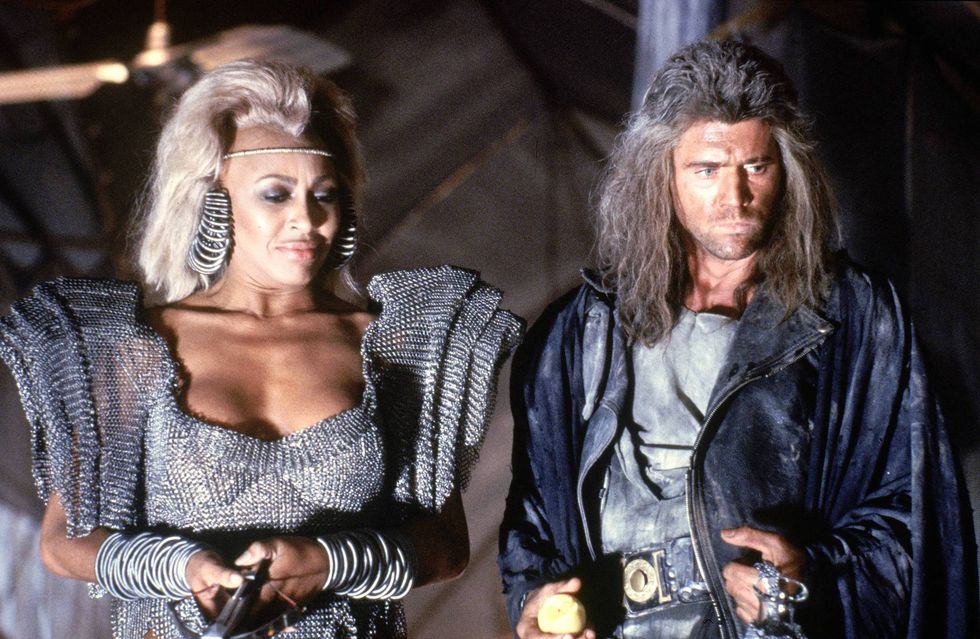

From the moment you hear Tina Turner's powerful wailing over the opening credits, you know Mad Max Beyond Thunderdome is going to be a very different proposition to its glorious predecessors. Could that offbeat, anarchic energy be successfully retained for a film clearly designed for mass market appeal? Not quite.
The plot is an uninvolving mishmash of ideas and characters that never feel fully formed or realised. Max is thrust into the dangerous realms of Bartertown, a skewed remnant of society that's superbly well designed. After agreeing a deal with Turner's crooked ruler Aunty Entity, he faces a fight to the death in a steel cage called the Thunderdome.
A similar narrative structure to franchise revival Fury Road then ensues, albeit with less success, as Max is exiled but returns to his former place of incarceration with a determined group of warriors, intent on liberating the masses from tyranny. In this instance, the freedom fighters are a tribe of children rather than women – but sadly they come across like stage school brats rather than the fascinating 'Feral Kid' we encounter in Mad Max 2. It feels like a wasted opportunity to creatively answer that question of 'what happens to the children?' amidst the ruins of a crumbled civilisation.


After the recent release of Fury Road, several cast members commented that there wasn't much of a script in place while shooting the movie. Instead, they had to trust director George Miller's vision. Perhaps this is where Mad Max Beyond Thunderdome became unstuck, for Miller was understandably too grief-stricken to be hands on for filming given the tragic loss of his producer Byron Kennedy in a helicopter crash while location scouting for the movie. George Ogilvie had to step in to co-direct the project to ensure its completion, possibly resulting in the lack of the unique vision that made the other Mad Max films so distinct.
There are enough moments of visual splendour and creative flair to ensure the third Mad Max movie wasn't a total betrayal of its roots - and it creditably seeks to develop and expand the world instead of merely retreading the same plot as before. But the end result makes it hard to form a connection and invest in the fate of its leading man and the children who seek to deify him. Perhaps we did need another hero, as the one on display in this movie feels like a different figure to the one we've previously rooted for.
Max has gone from a broken, brooding figure to someone who appears to have modeled himself on Indiana Jones. This is apparent from the beginning, when he's accosted by a knife-wielding opponent and decides to calmly whip out his gun and fire a warning shot in his direction. Intended as an iconic hero moment, reflecting the global star Mel Gibson had become by 1985, it feels tonally at odds with the world depicted before, which was closer to movies like Straw Dogs and A Clockwork Orange than Spielbergian family blockbusters.
The casting of Tina Turner as Max's nemesis Aunty Entity is only partially successful. It's very much a performance that relies on her star presence and commanding costume to maintain interest, as we're not given a real sense of her true nature or motivations. Her personal clash with Max has a refreshing payoff in the end, but their conflict isn't established well enough to muster any sustained dramatic impact beforehand.
What to Read Next
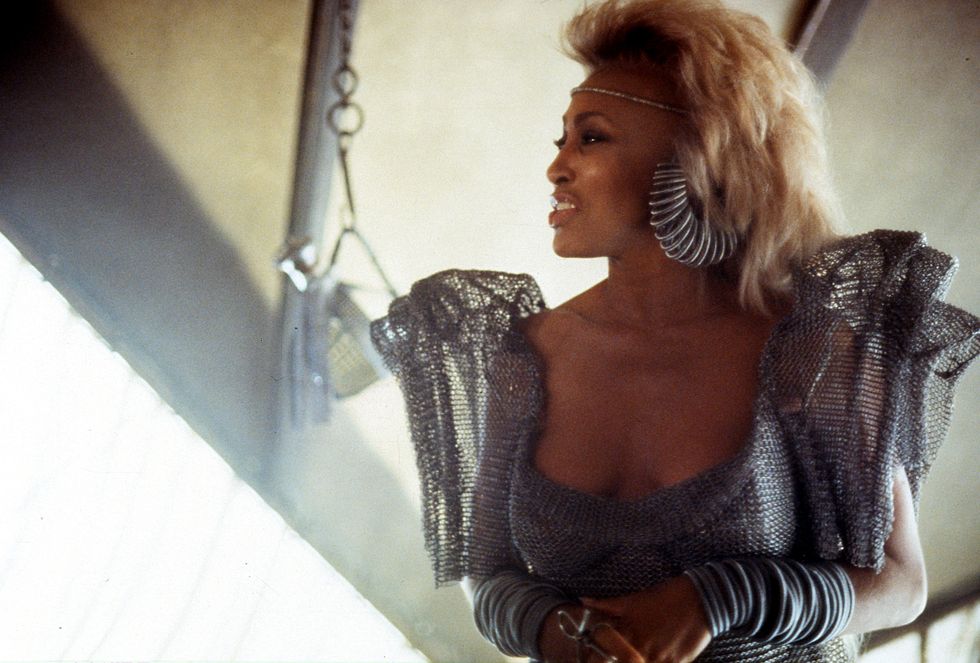

Yet Turner, frequently filmed with low angle shots to reinforce her star power, cackles and screeches with such infectious vigour that one can't help but be entranced. Three decades before Charlize Theron's Furiosa revved up her engine, writer/co-director George Miller positioned a strong and striking female figure at the heart of an action movie - a traditionally masculine terrain.
We shouldn't overlook how impressive the Thunderdome itself must have looked in 1985, with its vast metal cage surrounded by baying masses that watch two figures battle to the death while gliding in the air on harnesses. The chants of "TWO MEN ENTER! ONE MAN LEAVES!" provide an unnerving glimpse of what the future holds in terms of Reality TV. The stunning setting was also the inspiration for rapper Tupac's classic 'California Love' video.

.
One scene inside the Thunderdome delivers the movie's most effective moment, harking back to the grim shocks from the previous two instalments. For when Max defeats his seemingly invincible opponent Blaster in the cage, he removes his mask and sees a childlike face looking back at him. The horrified look in the superb Gibson's eyes says it all, as his humanity instantly pumps back through his ragged veins.
It's a shame the movie lacks more affecting revelations like this. The macabre elements and visceral horrors have been toned down, often replaced by awkward moments of farce. At times, it feels like Carry On Max. You half expect Kenneth Williams to poke his head through the Thunderdome and yell out, "Dying tonight!"


While the budget for Gibson's mullet maintenance in Mad Max 3 probably dwarfed the entire cost of making the first movie, it's put to good use elsewhere. The vast desert landscapes are beautifully shot, complemented by Maurice Jarre's score, while the climactic train-based chase manages to up the ante in terms of visual scale (if not emotional investment) from anything we've previously witnessed in the series.
Despite all of its flaws, Mad Max Beyond Thunderdome does deliver a poignant, uplifting end to the series as Max performs a heroic act of self-sacrifice that allows the children to escape from the evil clutches of Entity and repopulate a dilapidated city. It's like a bright green shoot sprouting through the contaminated dirt of the wastelands.
In many ways, it makes sense for the events of Fury Road to take place before Thunderdome, as Max has come full circle. He's reconnected with his humanity and his actions have propelled civilisation back on the right track for future prosperity. He's transitioned from a loner to a leader, an educator of the innocent masses, if just for a brief spell before hitting the road alone again.
The box office takings and reception for Mad Max Beyond Thunderdome were rather muted upon its release in July 1985. It remains one of those movies with an accompanying music video and song that's far superior and more cohesive than the movie it spawned, with 'We Don't Need Another Hero (Thunderdome)' deservedly scooping an Ivor Novello award and Golden Globe nomination. Its evocative lyrics capture the post-apocalyptic environment that Max Rockatansky roams in to perfection... with the arguable exception of a mandatory '80s sax solo.


