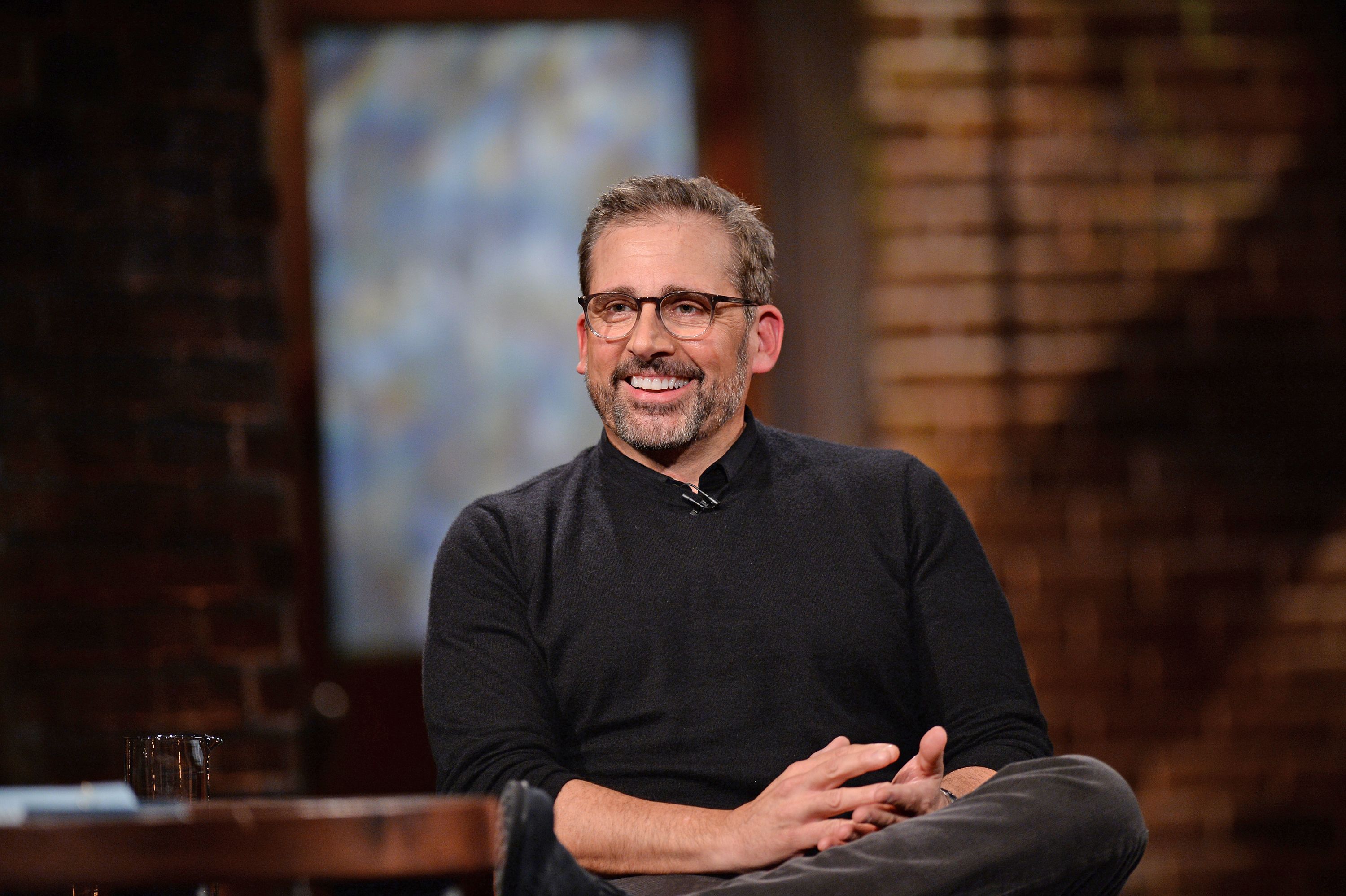
In comedy drama-cum-financial disaster movie The Big Short, Steve Carell plays Mark Baum (based on Steve Eisman), one of the few people who bet against the financial crisis in 2008.
As you might have guessed, it's not another Brick-like role - this is a nuanced analysis of what it was like to suddenly discover that the financial apocalypse was around the corner.
What to Read Next
And by "nuanced", we don't mean "not fun" - this is from Adam McKay, Carell's Anchorman director, so there's plenty of off-the-wall moments and a lot of humour.
If you haven't already, take a look at the trailer below, then read what Carell himself has to say about the almost-unbelievable real-life story.

How did you first hear about it?
Adam McKay sent me the script and asked if I wanted to play Mark. I read the script, then I read the book and I was completely in.
Did it feel very quickly that this was a bit bigger than your average gig?
Oh for sure. And different. Especially with Adam at the wheel I felt like this had the potential to be something very unique. You never know what a movie is going to turn out to be like and this script was funny and inventive and absurd and devastatingly honest and scary.
But I think more importantly it felt like it was about something. This movie feels like it's about something and I think that's why everybody signed on so quickly.
Do you think tackling it through this comic lens is what makes it so special?
Well I think there are different ways of approaching it. I think this was a really smart way of doing it, especially given the subject matter because it's so complicated and dense that it needs to be made accessible.
People need to understand what's going on before they can understand the impact of it. The way in which Adam breaks the fourth wall and brings in pop culture icons to explain very complicated financial terms I think it's not only entertaining but it invited the audience in. It makes it accessible, it makes it relatable. In that way the audience doesn't feel like they're being talked down to.
Your character is a very complicated person. Was it really tricky to get into him, to get inside his head?
Tricky? I don't know. I guess I don't think of it that way. I think he's a very interesting guy. The real person who this character is based on is very intelligent and very brash, opinionated, self-confident and also vulnerable and human.
So there's a lot going on and it's one of the things that drew me to the script in the first place. I thought these characters all had complexities to them that made them interesting.
How long did it take for you to fully get your head around what actually happened with the financial crisis in the real world?
It was stunning to find out what happened. I don't think most people know. I didn't. I knew there was a collapse. I knew there was a bail out. I knew people millions of people were affected.
I had people in my family and friends who were affected but I didn't know anything about what was actually happening internally with these banks and it's terrifying.
Have you watched a room of people see the film? What did you make of their reactions?
We did a test screening in Orange County. The first time I saw the movie they were doing a test screening in southern California at a mall – one of these theatres. So the recruited audience were mostly 20-somethings that were at the mall that day and they did a focus group.
I sat at the back listening to it and it was really interesting to hear the comments, and most of them were about how they were entertained, they thought it was funny... character moments that they loved, that sort of thing.
But what really struck me is that they followed the story, as complicated as it is, and as complicated as the language is, they followed it. I remember at the end a bunch of them were saying that they learned something.
Imagine that!
Yeah! And then they added, '...but not in a bad way', as if that would've been a horrible thing to have been taught. That's a hard way to sell a movie because you don't want to say 'You should see this because you'll learn something.'
It's not that and I don't think Adam goes out of his way to teach anyone anything, he wants his audience to be informed. He wants them to understand what happened and then they can draw their own conclusions about it. And generally speaking the conclusions are terror and horror. I mean that's what people are bringing away.


Is this the most terrifying comedy you'll watch this year?
It's kind of a horror movie because through the eyes of these characters – and certainly the guy that I play – the more he learns, the more he discovers… it's like the tip of the iceberg.
And he's a savvy guy! Here's a guy who understands the world. These are concepts of a level of fraud that he didn't know were even possible. The fact that this is true, that this is all based on fact, makes it that much more terrifying. I think people feel punched in the gut.
With this being based on real people and real events, was there room on the set to tweak the script or change it on the fly?
Oh sure yeah. Surprisingly, it was about as loose as we wanted it to be. Adam likes to work that way. With Anchorman you could pretty much say anything and it didn't even have to relate to your character or the story – it could be a complete non-sequitur and that was fair game. The improvisation on this movie was definitely more within character, on point, on story.
Once you'd see the film for the first time, did you feel like it was going to get the attention it's been getting awards-wise ?
Not necessarily. I rarely think about movies in terms of that sort of thing.
You just have to let them be?
Yeah. You use yourself as a barometer but you never know how someone else is going to interpret it. I watched it and it affected me and I'm really proud to be in it because it's a movie about something. But you never know how other people will interpret it or whether it'll have a similar impact on anyone else but it seems as though it is having an effect on people.
I have to say that it's exciting that there are conversations stemming from the movie – that people are standing in the lobby afterwards and discussing it. That's rare. That's exciting to be involved with something like that. Ultimately it's just a movie, it's entertainment and you can't set your goals too high for something like that.
You can't have an expectation that this is going to change the world or it's going to completely point the financial institutes in a different direction, BUT if it even starts a conversation – any incremental movement of awareness? That's a big deal.
The world at large still thinks of you as a comic actor. Do you delight in people being surprised when you do these dramatic roles?
It's funny to me because in the last five or six years, I think I've actually done more things that are dramatic in nature. But not because I'm trying to impress anything upon anyone… I really don't have a point to prove.
I don't really think much abut how I'm perceived and I think to take a role or to sign on to do something because I feel like it'll change people's perceptions of me is a slippery slope - because then you're in it for all the wrong reasons.
I've been lucky to be offered some pretty cool stuff recently, and that's really what it is. It's luck of the draw. I'm an actor for hire so if I get hired to do something that ends up being good or dramatic or different that's fine with me.
The Big Short is out in the UK on January 22.


