Remote Patrol: Are Breaking Bad creator Vince Gilligan's new shows any good?


There will never be another Breaking Bad. Let's just start there. Just like there will never be another Wire or another Sopranos. So put those expectations out of your mind or you're bound to be disappointed in Vince Gilligan's new shows, Better Call Saul and Battle Creek, like many people were let down by David Simon's Treme and David Chase's Not Fade Away.
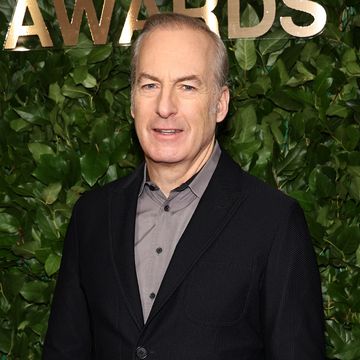
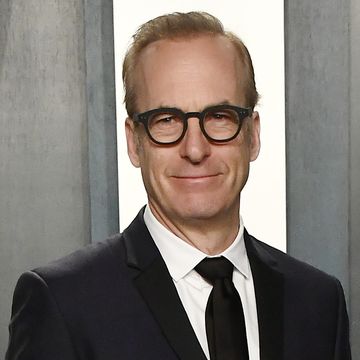
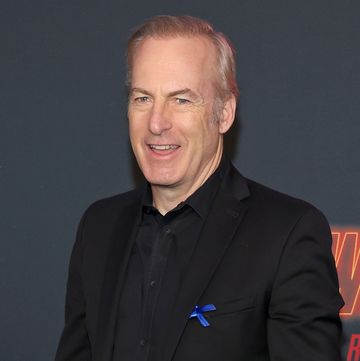
A better question to ask about Saul is: Is it the next Frasier - or the next Joey? That is, can lovably sleazy Albuquerque ambulance chaser Saul Goodman (Bob Odenkirk) sustain his own spinoff, like Kelsey Grammer's Dr. Crane did in Seattle? Or does he seem lost without his old friends, for lack of a better word, just as Matt LeBlanc's dumbbell actor did?
The answer, after having seen the first three episodes of Saul, is neither... yet. The hour-long AMC drama gets off to a slow start, with a black-and-white prologue that finds Saul, aka Jimmy McGill, aka Gene, managing a Cinnabon in Omaha, Nebraska. (It's weirdly reminiscent of the film Nebraska, in which Odenkirk co-starred.)


In one of several seemingly needless stylistic touches, each episode opens with a scene involving food - salsa and cucumber water in episodes 2 and 3, respectively. A flash forward takes us to the still-not-yet-called-Saul starting out his legal career in New Mexico. He's much less confident than he'd become in his Bad days - and he's much more ethical, insisting he's not "in the game".
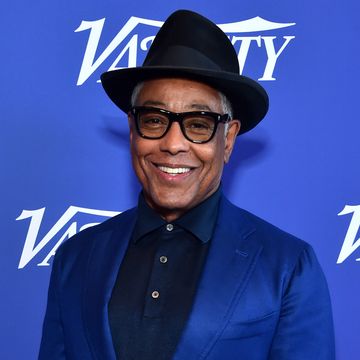
So perhaps a better title for this show would be Breaking Goodman. Or Making Goodman. In any case, it's hard to keep a Goodman down, and Odenkirk's work remains highly entertaining. He's matched in quality by Michael McKean as his mysteriously ill brother and Jonathan Banks as Mike Ehrmentraut. When we meet Saul's future fixer Mike, he's a courthouse parking-lot attendant who's a stickler for validation stickers - "You're like a troll under a bridge!" Saul groans.
What to Read Next


Mike isn't the only Bad character who's back from the dead for the prequel. Another familiar face appears at the end of the first episode and returns for the second, and it triggers a black-comedic situation akin to one of Bad's mini-Coen-Brothers-movie type of episodes.
Saul runs into a pair of skateboarders who are not unlike Badger and Skinny Pete. After they cross a bad guy, he negotiates their punishment down from Colombian neckties to one broken leg each.
Sitting through Saul is considerably less painful, even if it won't give you quite the buzz you might be hoping for. Surprisingly, Gilligan's other new series, the CBS buddy-cop dramedy Battle Creek, is more immediately enjoyable, albeit formulaic.


Dean Winters, who's played both sides of the law on Oz and Law & Order: Special Victims Unit, stars as a Michigan detective toiling in an underfunded, understaffed, underequipped department.
Into the picture rides Josh Duhamel as a straight-shooting FBI guy who's so good-looking, it's kind of distracting (as one of the squad's quirky employees notes). Yes, it's the old good cop, bad cop scenario, but both actors are well-cast. Meanwhile, Oscar nominee Janet McTeer (Albert Nobbs) puts a new spin on the physically intimidating police-supervisor role.


Battle Creek tweaks cop-show conventions even as it embraces them. "Magnum gets double homicides, Rockford gets double homicides, we don't get double homicides," Winters's Russ Agnew says of his medium-sized city. Yet in the pilot, they're tracking a multiple murderer as well as a drug dealer who smokes more meth than he sells.
The difference between Better Call Saul and Battle Creek is the difference between a cable show and a network show. The latter is less subtle but also less meandering - it cuts to the chase, quite literally. But when it comes to reviewing each of these new series, unlike Walter White, I won't be the one who knocks them.
Bruce Fretts is a veteran of both Entertainment Weekly and TV Guide Magazine, where he penned the wildly popular 'Cheers & Jeers' column for ten years.