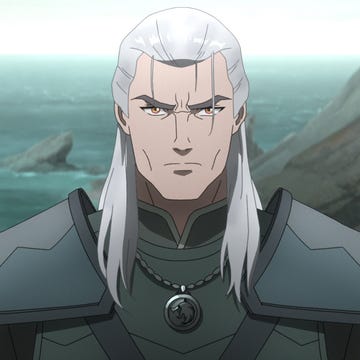
The Witcher season 2 spoilers follow.
If you identify as a heterosexual man and Geralt's bathtub scene didn't turn you gay, then the sight of him casually hefting a giant boar over his brawny shoulders might be what does it for you in season two. If so, then welcome to life as a queer fan of The Witcher.
It's not always an easy one though, particularly when it comes to this show's curious track record with all things LGBTQ+. Sure, The Witcher is no stranger to male or female nudity. In fact, it's a full-blown valley of plenty when it comes to eye candy. But unfortunately, meaningful queer representation is still lacking here, something that's particularly surprising given how progressive both seasons are when it comes to ethnic diversity.
In terms of casting, The Witcher was one of the first shows to push back against the sheer caucacity of the fantasy genre, and since then, everything from Wheel of Time to Shadow and Bone has helped redefine what a fantasy series can – and should – look like on screen.

But two seasons in we're yet to meet a canonically queer character in The Witcher (unlike both of those aforementioned shows, we might add). Although, if like us, you've trained since childhood to look for queer subtext in everything you watch, then you might be wondering what on earth we're talking about... because Jaskier is super queer, right? Like, painfully so.
Sure, The Witcher never states that Joey Batey's character is bisexual, or pansexual, outright, but how do you explain him tossing all those longing looks at his Witcher?
What to Read Next
Throughout season one, Jaskier followed Geralt around like a lost puppy, and at one point, he even said the line, "Oh, you usually just let strangers rub chamomile onto your lovely bottom?" Seriously. He actually said that to Geralt. I mean, he's not wrong, but still. That's not exactly a typical exchange between two straight men. Then of course there's also Jaskier's jealous disapproval of Yennefer, who he clearly sees as a rival for Geralt's attention.

Surprisingly enough, season two actually doubles down on this queer subtext even more. When we're reunited with the bard for the first time in two years, he's singing a break-up song about his burning love for Geralt. "When I wrote it, it did come from the heart, perhaps a broken one..." he even admits at one point.
And of course, Jaskier sings this heartbreak anthem in a snazzy new outfit, complete with an extravagant hat that screams glow-up. Because what else do you do when your heart's been broken? You remind the other person what they're missing out on.
And what does Jaskier do when he's finally reunited with Geralt in episode seven? Why, he takes his top off the first chance he gets, parading those abs around Geralt like a bird showing off his plumage with a not-so-subtle-mating dance. Short of dyeing his hair blond, Jaskier is in full gay-crisis mode here.
But despite all of this overwhelming evidence, the character's queerness is never confirmed on screen. And in fact, the people working on this show actually go out of their way to deny it.

When asked about his character's relationship with Geralt, Joey Batey recently told Digital Spy: "It's really important to say that their relationship is entirely platonic. They are friends. When you lose a friend, it can feel like a breakup, and sometimes it can feel worse. I've lost friends in my life, and I've gone through the same stages of grief as I have when I've lost somebody. And I think that is what he's definitely going through."
There's definitely some merit to this. After all, Joey isn't wrong when he points out that losing friends can be painful too. But at the same time, it's a shame to remove even the possibility of something more, something queer, when it comes Jaskier's character in particular. It's certainly an idea that many, many fans have latched onto, and by hinting at it without any confirmation, The Witcher veers dangerously close here to the realm of queer-baiting.
But what does The Witcher showrunner have to say on this? Perhaps Lauren S Hissrich always intended for there to be some queer subtext, some extra nuance, that not even Batey might be aware of.
When we asked Lauren directly about the homoerotic undertones of Jaskier's relationship with Geralt, she too said that there aren't any.
"It's a side of male friendship that we don't talk about a lot, right?" she said. "I don't think there are any homoerotic undertones for those characters, but I do think that when you talk about girlfriends, people have no problem saying, 'I love my girlfriend' or 'I would do anything for her', or 'If we got into a fight, and she didn't want to see me anymore, my heart would be broken'.
"It was important for me to take that same sense and apply it to a male friendship. To be able to say, 'Oh, that kind of friendship can exist between men as well'."

To be fair, Hissrich does account somewhat for the idea that others might read something more into the "friendship".
"I love to talk about what people get from that, because I also think there are, of course, a lot of things you can read into it. But in terms of writing it, I think that song 'Burn' is Jaskier's heartbreak, and I think that's a very, very accurate reading of that. But it's his heart broken as a friend. This is someone that he loved and trusted."
It's hard to argue with the showrunner herself when it comes to her own work, and doing so can lead into tricky territory. But still, it's unfortunate that those involved in Jaskier's portrayal could not at least be more open to the idea that there's something else going on here, particularly as the show is devoid of queer characters outside of this subtext.
Outside of Luka, a gay character who barely registers as such in Nightmare of the Wolf, LGBTQ+ identities don't seem to exist in this franchise at all (that we've noticed, anyway).
Hopefully, that will start to change in season three though, and Hissrich confirmed as much during our exclusive chat.
"It's a season that starts to delve more into relations, and just talking about how relationships can be different. We have Phillippa, who I would say is a queer icon for book readers. We delve into her character. It's not something we shy away from."
And then of course there's Ciri too, someone who many fans have long considered to be bisexual. Will her arc start to explore this potential queerness in season three?
"With Ciri, that's something that I would say is hinted at in the books, but you never really get into what is her sexuality. We start to delve into that more as well. All of that is coming down the horizon, and it's fun."

Whether this actually plays out properly on screen remains to be seen, but Lauren does seem committed to moving these queer themes out of subtext and into the actual text.
"I found, historically, that a lot of fantasy was written by men, for men. So it was really interesting coming into this world as a woman, and saying, 'OK, we have these amazing books that have these really strong female characters or queer characters'. It's like: how can we make sure that they're showing up on screen too, so more and more people can watch, and say, 'Hey, this is for me as well' in a world that has been historically kind of gatekept?"
And it's not just The Witcher that can potentially open these gates now. With multiple new spinoffs currently in production, the Witcherverse could soon truly embrace meaningful LGBTQ+ representation. Just don't hold your breath when it comes to Jaskier, who still remains a canonically straight character in season two. Or so we've been told.
The Witcher season 2 is now streaming worldwide on Netflix.

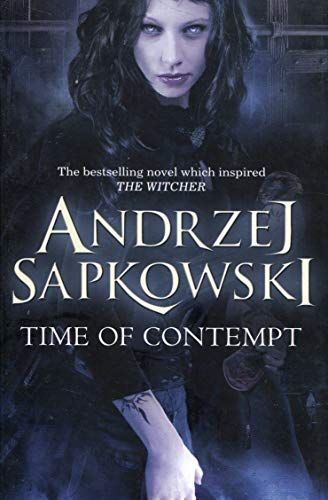
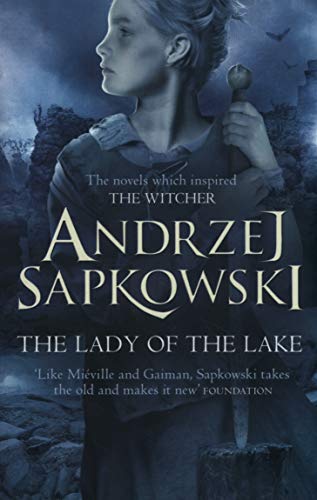
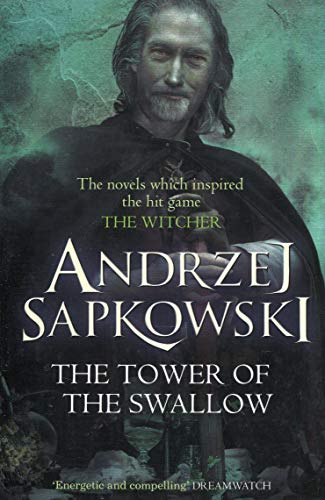
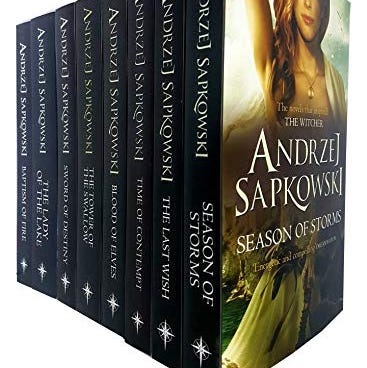
The Last Wish: Introducing the Witcher
Sword of Destiny: Witcher 2
The Witcher 3 Wild Hunt Complete Edition (Nintendo Switch)
After teaching in England and South Korea, David turned to writing in Germany, where he covered everything from superhero movies to the Berlin Film Festival.
In 2019, David moved to London to join Digital Spy, where he could indulge his love of comics, horror and LGBTQ+ storytelling as Deputy TV Editor, and later, as Acting TV Editor.
David has spoken on numerous LGBTQ+ panels to discuss queer representation and in 2020, he created the Rainbow Crew interview series, which celebrates LGBTQ+ talent on both sides of the camera via video content and longform reads.
Beyond that, David has interviewed all your faves, including Henry Cavill, Pedro Pascal, Olivia Colman, Patrick Stewart, Ncuti Gatwa, Jamie Dornan, Regina King, and more — not to mention countless Drag Race legends.
As a freelance entertainment journalist, David has bylines across a range of publications including Empire Online, Radio Times, INTO, Highsnobiety, Den of Geek, The Digital Fix and Sight & Sound.