
Early in the first episode of Naomi Osaka, the eponymous subject of the three-part Netflix documentary tells us that she used to consider herself a "counterpunching" player, but now believes she imposes her game on others.
This is unsurprising, because in every other way Osaka is portrayed as a more reactive, thoughtful person than the instinctive, dominating character she is on court. If anything, she seems quite timid, especially in the opening episode. She speaks softly, with a questioning inflection to downplay any semblance of authority.
In her new home, where she's living alone for the first time, she discusses missing family and the fact she couldn't sleep the first two nights there as she "was scared".
Of course, we can't ignore the generational-talent elephant in the room. Osaka has four slam wins already, with a 100 percent record in slam finals. In fact, every slam she's made it past the round of 16, she's won.
In her first US Open win, somewhat marred by a dispute with the umpire by her opponent Serena Williams that's conspicuously absent from the documentary (an absence you feel Osaka had a hand in deciding), she dropped one set the entire tournament.
As her coach Wim Fissette put it before the 2020 Australian Open, "Naomi is only happy if she's going to win." Watching the various clips of her play in the series, you get the feeling on-court Naomi Osaka would sleep like a baby in her new home.
What to Read Next

This off/on-court duality is at the heart of this beautifully shot docu-series, and in many ways indicative of Osaka in other ways. Over the course of the three episodes, we see the superstar confront and close all sorts of contradictions in her personality and life, from coming to terms with her status as a sporting great and spokesperson for all kinds of issues despite an inherent shyness, to getting to grips with her disparate ethnic and social heritage. The series handles these topics with grace and sensitivity, while not being too preachy. It also puts minority faces to the forefront – something Osaka makes clear is important to her.
Director Garrett Bradley gets the cinematography spot on, with a few neat tricks to make the two and a bit hour long series fly by. He also seems to truly appreciate the transformation of Osaka that he documents so beautifully, stating, "[Osaka's] unapologetic honesty allows her to navigate outdated cultural binaries, which… is a true representation of both [her] beauty and forward-thinking nature."
And we do see Osaka coming out of her shell in a narratively satisfying manner, while getting a good glimpse into the star's world.

Related: New on Netflix this week: All the new TV shows available to watch right now
Of course, sports documentaries of this nature are always hagiographical. Netflix's ultra-successful The Last Dance was as entertaining as it was an exercise in laundering the reputation of Michael Jordan.
However, unlike Jordan – retired and known for his 'bullying' demeanour – Osaka is at the beginning of her career, and by all accounts a pleasure to be around. A cynic would think this documentary is a money-grab by the most marketable sportswoman on the planet.
However, it seems the reality is that Osaka, after years of being projected onto as a perfect representation of the long-deceased "American Dream", or a beacon for social justice, or the pride of her mother's Japan, or one of any other of a million things, is finally speaking up for herself.
This all points to why this docu-series, as choreographed as it undoubtedly is, feels like an honest portrayal. Yes, we see Osaka at emotional extremes, like after the death of friend and mentor Kobe Bryant, and this adds to the authenticity.
And yes, we can also see the depression that being alone at the top has left her with – a depression that led to her withdrawal from this year's French Open. But it's seeing Osaka come out of her shell and be herself, especially with regards to sensitive topics like racism, that drives this documentary.
There is meaning weaved entirely throughout the doc, a perfect example being the series ending in her father's native Haiti, the only former slave nation to win their freedom, punished with decades of French loan-sharking and a brutal, unstable US-backed dictator.

Related: Netflix testing new crackdown on password sharing for multiple users
You don't have to be a fan of Osaka, or even sport, to enjoy this documentary. Like all good pieces of art, it captures its subject well, although that's mostly because all we've really had so far of Osaka is what we wanted to ascribe to her.
As she said herself: "I feel like the platform that I have right now is something that I used to take for granted… I feel like I should be using it for something… you have to make your own path."
Osaka is certainly forging her own path, both on and off the court, and this docu-series is a testament to that.
Naomi Osaka is available now on Netflix.

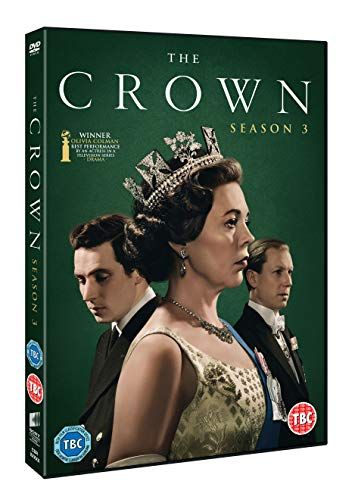
Netflix/Left Bank Pictures The Crown season 3 with Amazon exclusive box artwork



Blockbusters are back – and the latest edition of Digital Spy Magazine has got everything you need to know about the summer's biggest box office arrivals. Read every issue now with a 1-month free trial, only on Apple News+.
Interested in Digital Spy's weekly newsletter? Sign up to get it sent straight to your inbox – and don't forget to join our Watch This Facebook Group for daily TV recommendations and discussions with other readers.


