Disengage the hetero rockets! Fire the gay ray! It's time to take a trip in the TARDIS to see if they've finally got LGBTQ+ visibility in Doctor Who right after 55 years...
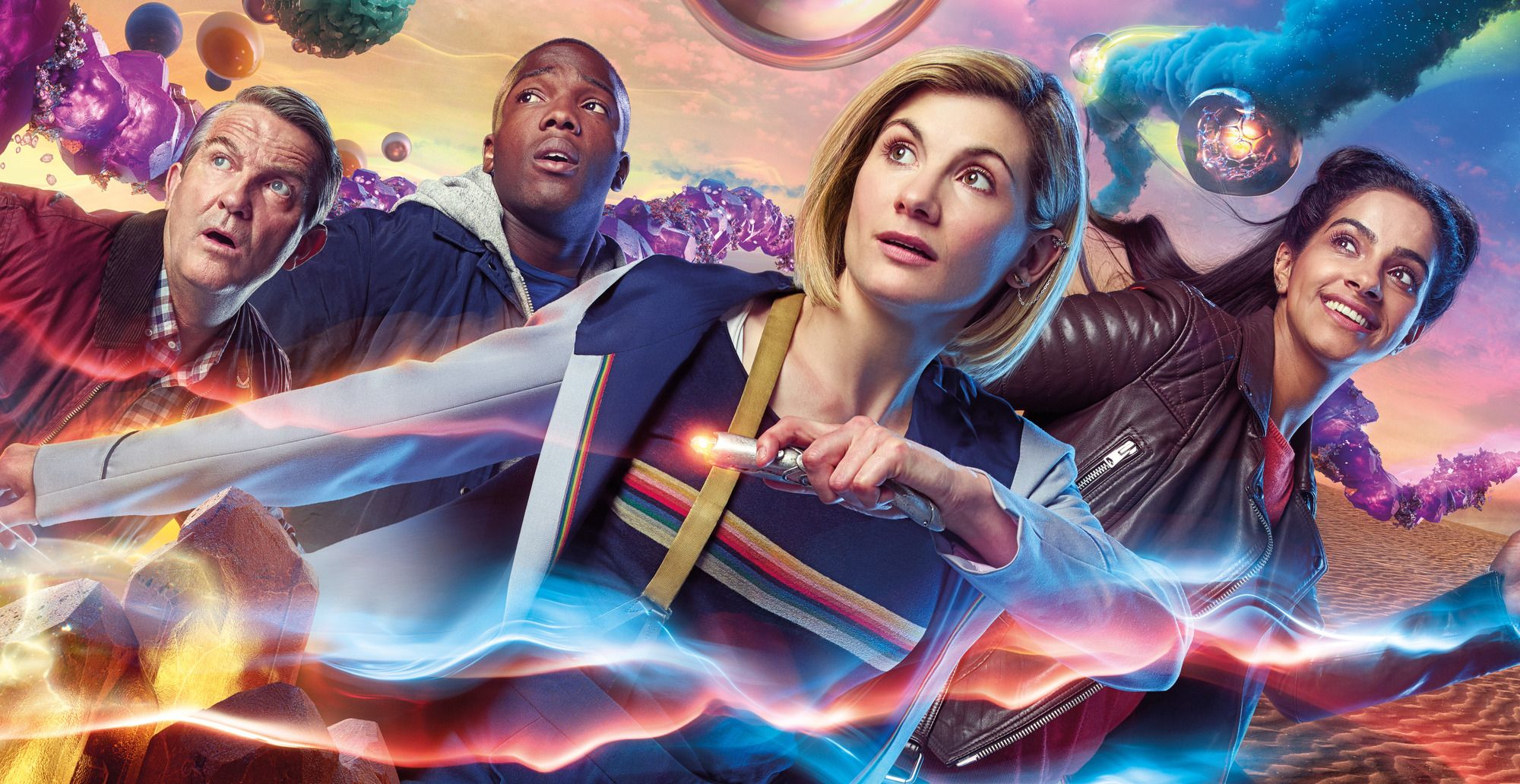
During interviews for series 11 of Doctor Who – Jodie Whittaker's first as the Time Lord – new showrunner Chris Chibnall and executive producer Matt Strevens were asked about LGBTQ+ representation in the long-running sci-fi show.
Both replied in the positive, saying that the LGBTQ+ community would – as long established by former showrunner Russell T Davies – continue to see themselves in their favourite programme.
But… that's only going back as far as 2005 (yes, it's been that long, no, we don't know where the timey-wimey has gone), when the series triumphantly returned to the BBC after a 16-year absence – give or take a TV special and web adventure.
So where was the LGBTQ+ representation in classic Who? Put simply, there wasn't any.
Now, don't go getting your Tom Baker underpants in a twist – because heterosexual love interests didn't get much of a look in either. Except for when a female assistant hastily needed to be written out in the most unconvincing 'love story' – but that's a whole other argument for a different time and space.
What to Read Next
Doctor Who in its original run is, largely, sexless. Even the relationship between original companions Ian and Barbara is only implied. Jump forward to 2011 and River Song is being conceived in the TARDIS. In bunk beds, no less!


Related: Jodie Whittaker reveals why she was "really nervous" about signing up for Doctor Who
From the very first thing spoken in Doctor Who, in 1963's 'An Unearthly Child' (directed by a gay man, thank you very much) where a somewhat... flamboyant schoolboy leans over two girls and gives a large 'Ooooh!', through to the extremely sparse lesbian undertones between Ace and Kara in 1989's then-final story 'Survival', things are far more subtle.
Representation of 'the gays' – or indeed anything else – just wasn't a thing at the time of original transmission. Like it or not, Doctor Who was intended as a children's programme and there was to be "no hanky panky in the TARDIS".
There are, of course, many Doctor Who stories that while containing no explicitly LGBTQ+ characters are the gayest thing ever. Sylvester McCoy's debut, 'Time and the Rani' arguably takes the (baked by willing caterers) gay cake in this category, with Kate O'Mara swanning around a quarry in knee-high boots wearing a beauty spot she takes time out to re-apply, the TARDIS landing in a rainbow on a planet with a pink sky and Bonnie Langford being shot over a cliff in a Christmas bauble.


There's a whole other discussion to be had about whether 'The Happiness Patrol' has a gay subtext. 25 years after it was broadcast, the writer, Graeme Curry, claimed that element wasn't intentional, though the mocking of then-Prime Minister Margaret Thatcher most definitely was. (Aside from everything else in 'The Happiness Patrol' – and we really do mean everything else – Joseph C leaves his wife, Helen A, to fly off with Gilbert M at the end. Well, really.)
There must be something about the McCoy era, given the relationship between Commander Millington and Dr Judson that 'The Curse of Fenric' writer Ian Briggs intended. (It never made the screen, but is implied in the novelisation.)
In fact, it's in the subsequent book spin-offs – The New Adventures, released from 1991 following the series being taken off air – that we first 'officially' get a gay character. The novel Tragedy Day was released in 1994 and written by future new Who scribe Gareth Roberts, who decided to put Forgwyn in the action after a previous book played out a tragic dead gay character 'off-screen'.
By the time we got round to Russell T Davies' Damaged Goods (1996), the Doctor's buff male companion Cwej gets frisky with a guy in the back of a taxi. And because he's from the future, the encounter means he inadvertently cures AIDS. (You probably won't be seeing that in Chris Chibnall's version of the show.)
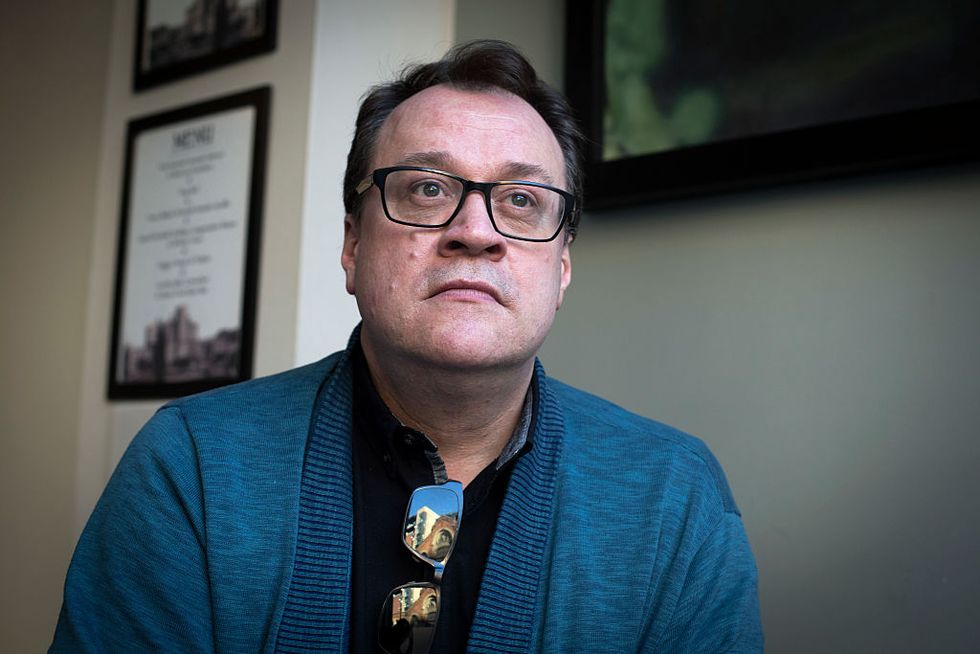

Above: Russell T Davies, Doctor Who showrunner from 2005-2010
From feast to famine – going from classic Who to new Who, you can't move for us gays. Whether it's mature cat women who've lived together for ages, inter-species same-sex marriage or lesbian space puddles, we're finally represented. But then, so are the heterosexuals, doing whatever it is they do, all over time and space. Get a room already!
It's a long journey, but it takes from the opening credits in 1963 to 'The Empty Child' in 2005 for on-screen Doctor Who to have its very first explicitly non-heterosexual character. Well, not including the father and the butcher in the same story... But boy, does he make up for all that lost time.
Captain Jack Harkness is bisexual – even causing a bit of stir in the first series by kissing the Doctor on the lips in 'The Parting of the Ways'. (And don't get us started on his relationship with Ianto Jones, because we're still not over it, OK?)


Related: Doctor Who star Jodie Whittaker thinks she'll be the first of many female Doctors
Modern-day Doctor Who isn't just limited to Saturday – or Sunday – night BBC One adventures of course. Big Finish, a company who releases official Doctor Who audio adventures, brings a modern-spin to the classic eras of Who which allows it to include characters – and stories – that are 'too big for the screen'.
In the case of companion Oliver Harper, he was on the run for "engaging in homosexual practices" in 1966 – a time when it was still illegal in the UK – when a new life in the TARDIS with the First Doctor and Steven beckoned.
Over in The Sarah Jane Adventures, Sarah's son Luke was planned to come out as gay had the series continued. As for Torchwood... well, they never stopped really, did they?
And who could forget Class? Now, now, pipe down those of you who replied "everyone". From what we recall of it, the two male leads barely got out of their bed to prevent alien invasion at Coal Hill School, such was the ferocity of their being visibly out and proud.
But we'd argue that the visibility of LGBTQ+ characters in the Doctor Who universe is already as life itself should be – it's handled like it shouldn't be a 'thing', that it shouldn't matter. And it's just as prevalent as all those heterosexual relationships we're suddenly also seeing treated properly in the series.


The references are there, things are mentioned if relevant – like those heterosexual characters, it's no different. People in Doctor Who talk about their relationships now, their wants and desires – but at the heart, Doctor Who is stories about those people first, and who they find attractive is largely irrelevant when you're staring down the barrel of a Cyber-gun.
Look at Bill Potts (Pearl Mackie) in series 10 – a fantastic companion, great character, brilliant story arc. And she was gay too. Wonderful.
Now, if we can just get Chris Chibnall and co to bring back the Rani...
Doctor Who returns this Sunday (October 7) at 6.45pm on BBC One.
Want up-to-the-minute entertainment news and features? Just hit 'Like' on our Digital Spy Facebook page and 'Follow' on our @digitalspy Instagram and Twitter account.