Bridgerton season 3 part 1 spoilers follow.
Gentle reader, you might be wondering why the Ton is being split into two separate engagements this season. The reasons for that are many, and yes, we shall be addressing all that momentarily.
But if we are to be so bold, we'd venture that none of these reasons could ever possibly make up for the fact that such a decision is misguided at best. And at worst? Well, the ramifications are too dire to even consider. Yet consider we shall, because 'tis the season to gossip, after all. And that's what we do best.
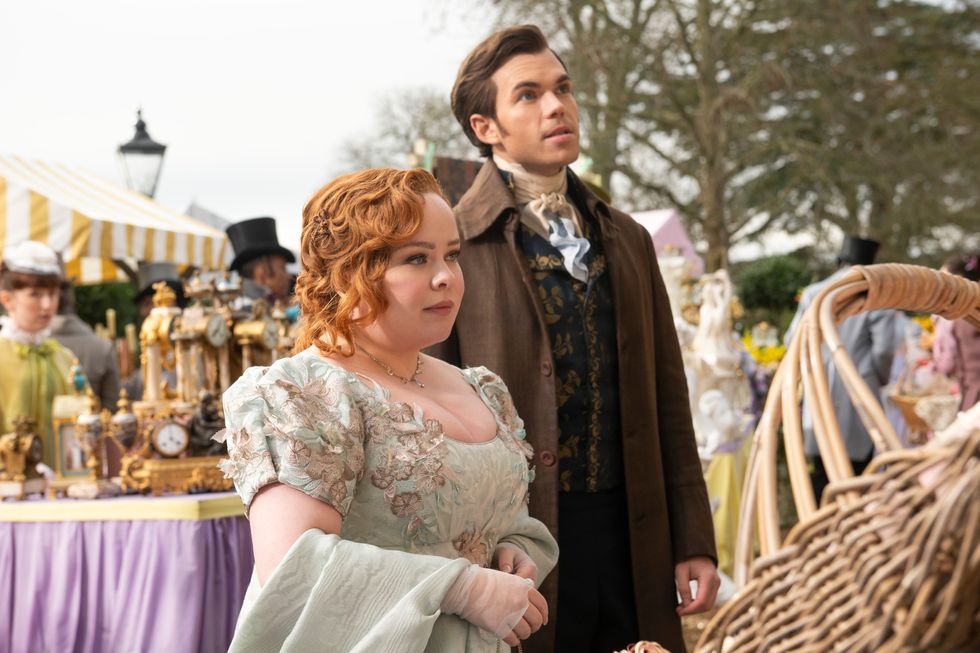
Unlike the previous two seasons — or the Queen Charlotte spinoff for that matter too — Bridgerton season three has been split into two separate parts. The first four episodes dropped on May 16, and we have to wait until June 13 for the second half.
This isn't the first time that Netflix has played around with different kinds of release schedules.
Reality TV is often released weekly, or in batches, on Netflix, while Korean dramas and Japanese anime regularly arrive weekly on the platform too (although those latter shows usually do this because they're restricted by the regular release pattern they go by in their native countries).
What to Read Next
Over the last couple of years, Netflix has begun experimenting with split seasons for some of its own heavy hitters including The Witcher and Stranger Things. Both seem to have benefited from this strategy, drawing in high viewing numbers across both parts.
With more and more shows – take Cobra Kai and now Emily in Paris – set to follow in their footsteps, it looks like Netflix won't chill anytime soon when it comes to the split-season model.
We assume it's the streamer's way of prolonging the conversation that surrounds its shows beyond the initial launch weekend, without straying too far from the binge approach that it's become known for.
But Netflix has been so preoccupied with whether or not it could, that it didn't stop to think if it should. And that's a problem, especially when it comes to a show like Bridgerton.
It's always hard to judge a whole season without watching every episode first. That's a particular bugbear for TV journalists, who are often asked to review an incomplete story before finding out how it ends and whether or not it sticks the landing. But this can also be an issue for regular viewers watching at home too.
Across the first four episodes of season three, Bridgerton fans watch as Colin and Penelope fight and flirt their way through their will they/won't they attraction for each another. The love they clearly share feels inevitable and then yep, lo and behold, (spoiler alert!) the pair finally get it on at the end of part one.
It's a predictable cliffhanger to end on, and it's one that doesn't promise much drama moving forward either. That's because the thrust of these first four episodes, and that ending in particular, prioritised the romance above all else. Now that #Polin have earned the happy ending we were rooting for, it's almost as if the season is already over, halfway through.

In hindsight, that wouldn't be so much of an issue if Bridgerton had stuck to the binge model for season three.
The real drama of the second half will most likely come from the moment when Colin discovers that Penelope is actually Lady Whistledown, but the writers haven't foregrounded that much beyond one outburst from Colin. That's because they (presumably) write the story as a whole, with little knowledge or regard for how each episode might later be divvied up on Netflix.
It doesn't help that very little else of note actually transpires in these first four episodes. At least if the entire season had been dropped all at once, that might not have been so noticeable. But taken as it is, this first half is severely lacking in more ways than one.
It's easy to see why Netflix didn't really take any of this into account when planning this release, though.
Not only has the streamer proven that this model can work in terms of viewing figures, but the split season approach prolongs interest without Netflix having to juggle promotion for the many, many other originals it produces weekly.
Throw in all the major delays happening as a result of last year's historic Hollywood strikes and it's honestly surprising that Netflix isn't splitting more of its originals in half to ensure there's enough content to go around.
Brand new shows such as Baby Reindeer and The Night Agent aren't established in the same way as a series like Bridgerton, making the notion of splitting the release of those a far riskier proposal.
In contrast, the binge model actually helped the likes of Baby Reindeer – still charting number one in the UK a whole month after its initial release – become bigger talking points through word of mouth.
But as this proves, different shows require different kinds of release strategies.
When The Crown split its sixth and final season, it wasn't ideal, sure, but it wasn't as painful. In many ways, each episode of the royal drama acts as a standalone mini-film to some degree anyway.
Young Royals was very consciously split into two uneven halves for its own final season, forcing fans to wait a week for the final episode to see if Wilhelm and Simon would actually end up together. This was a genius move for once because everything hinged on that finale, so holding off on an answer only intensified the anticipation further.
The opposite is true for Bridgerton.
With the way part one ended, there's very little to actually anticipate now beyond the pleasure of simply knowing we get to spend more time in the Ton. And that, dearest gentle reader, does a disservice to both the show and fans alike, who deserve something far better from a series held in such high regard by all and sundry.
Bridgerton airs on Netflix.
You Might Like...


After teaching in England and South Korea, David turned to writing in Germany, where he covered everything from superhero movies to the Berlin Film Festival.
In 2019, David moved to London to join Digital Spy, where he could indulge his love of comics, horror and LGBTQ+ storytelling as Deputy TV Editor, and later, as Acting TV Editor.
David has spoken on numerous LGBTQ+ panels to discuss queer representation and in 2020, he created the Rainbow Crew interview series, which celebrates LGBTQ+ talent on both sides of the camera via video content and longform reads.
Beyond that, David has interviewed all your faves, including Henry Cavill, Pedro Pascal, Olivia Colman, Patrick Stewart, Ncuti Gatwa, Jamie Dornan, Regina King, and more — not to mention countless Drag Race legends.
As a freelance entertainment journalist, David has bylines across a range of publications including Empire Online, Radio Times, INTO, Highsnobiety, Den of Geek, The Digital Fix and Sight & Sound.


