
One Day's Emma Morley is your quintessential romantic heroine. A tongue-in-cheek, fiercely talented and beautiful woman who completely captures the heart of the dashing – if somewhat messy – male protagonist, Dexter Mayhew.
It's no surprise that this chemistry-filled, best-friends-turned-lovers story has charmed countless fans since David Nicholls' acclaimed novel first hit shelves 15 years ago, as it follows Emma and Dexter's will-they-won't-they romance over twenty years, pivoting around one fateful day: July 15.
In the 2011 film adaptation, Anne Hathaway effortlessly brought Emma to life opposite Jim Sturgess.
What to Read Next
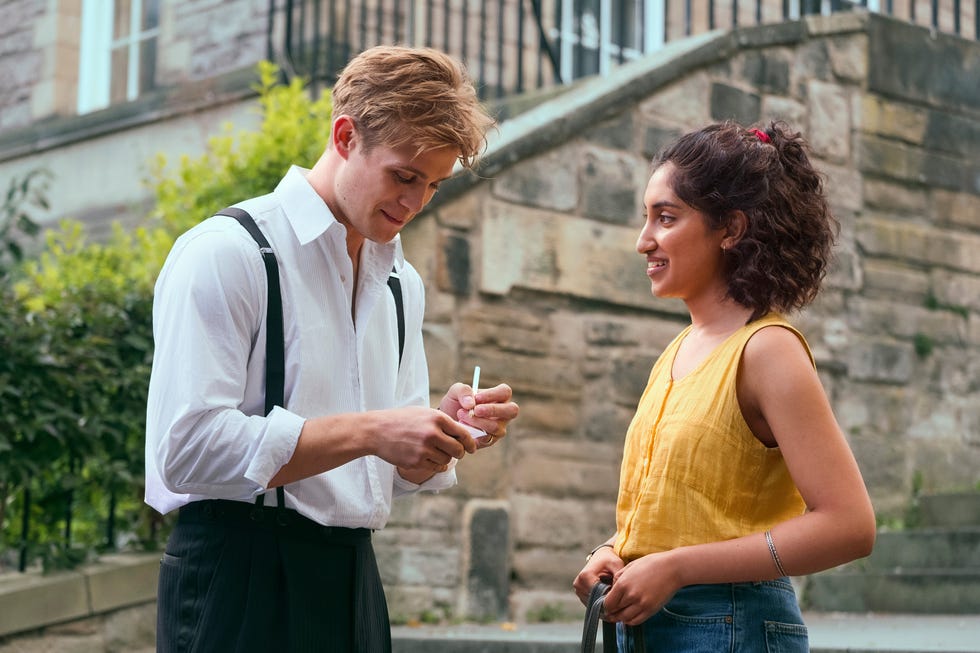
But nothing could have prepared me for the surprise (quickly followed by joy) I felt when I saw that, for Netflix's latest series adaptation, it was not another Hollywood-bound white actress but rather rising star Ambika Mod who had clinched the coveted lead role.
Related: One Day's ending misses the chance to correct a fatal mistake
For those growing up as South Asian women, Hollywood has rarely seemed to make space for brown women as the charming heroine (a far cry from Bollywood, which has forged huge names in the acting industry, including Deepika Padukone and Priyanka Chopra Jonas).
In Western media, if we appeared at all, our side roles often pigeonholed us as glasses-and-slightly-bushy-eyebrows bookish kids, supporting the white leads on their journey to a happy ending.
This feeling that South Asian women do not belong in archetypal romantic roles permeates throughout an entire generation, not least to 29-year-old Mod, who rose to prominence after her praised turn in BBC's This Is Going to Hurt.
In an interview on Radio 4's Woman's Hour, she told presenter Anita Rani that she initially felt compelled to turn down the role of Emma in One Day.
"I honestly just didn't see myself playing a romantic lead," she said. "You don't see a lot of brown women on screen being the romantic lead. You never see women like that, in that position."
Related: Netflix's One Day series is even better than the film
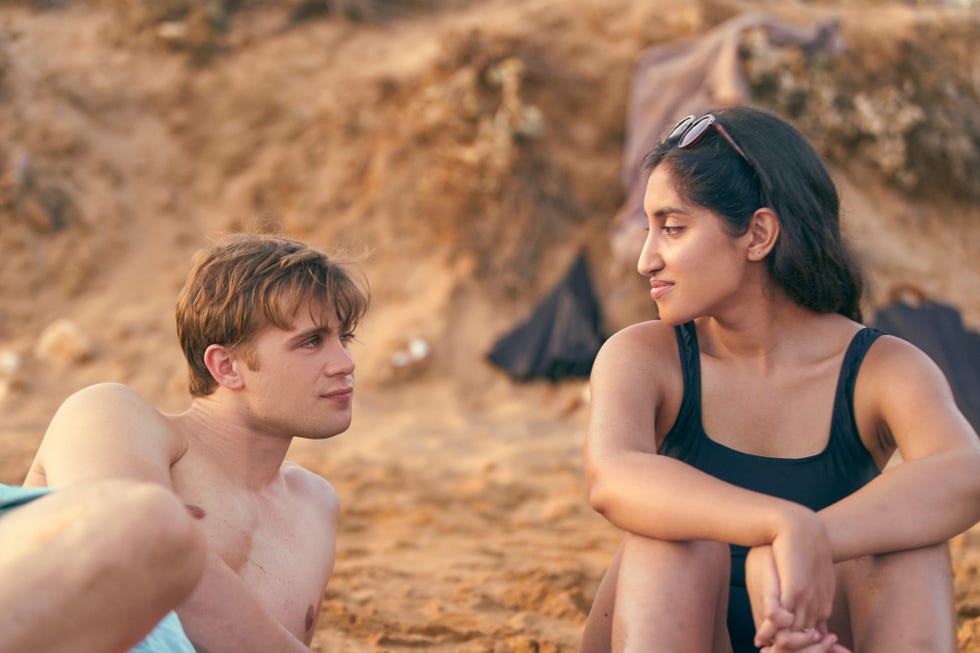
For Mod, it took weeks of filming to properly settle into Emma's shoes and accept that not only could she play this beloved role but even relate to it, despite following in the footsteps of a caucasian-female-coded book character and, of course, Hathaway herself.
It's why 2002 hit Bend It Like Beckham has become a treasured classic for diaspora kids everywhere as we watched football fanatic Jess (Parminder Nagra) get her fairytale ending. (Although notably, it was co-star Keira Knightley who ended up getting her breakout moment and going on to a flourishing, romantic-lead career in Pirates of the Caribbean, Love Actually and beyond.)
Megastars such as Mindy Kaling started charting a path for South Asian women to want more for themselves on screen after making the leap from The Office's Kelly Kapoor to starring as the lead in several projects like The Mindy Project.
In fact, the recent Kaling-produced Netflix series Never Have I Ever saw Devi (Maitreyi Ramakrishnan) embrace her leading-lady power as she navigated a high-school love triangle throughout four seasons.

Meanwhile, Bridgerton season two caused a stir when Simone Ashley and Charithra Chandran starred as the Sharma sisters. Similarly to Emma, Ashley's character Kate is described as "pale and blonde" in the book series the show is based on. Luckily, the casting proved a success, with rave reactions from critics and fans alike.
This year alone, Avantika Vandanapu brilliantly made her mark as Karen in the Mean Girls movie musical (a character originally played by Amanda Seyfried in the wildly popular 2004 adaptation), and the aforementioned Priyanka Chopra Jonas led Prime Video spy romance Citadel.
All this to say, the tide is incrementally turning. And Mod's casting reassures me that the trend of South Asian women in roles traditionally prescribed to white women is not going away any time soon.
But now is not the time to grow complacent. The Indian subcontinent is made up of almost two billion people, not to mention the millions of South Asian diaspora scattered across the world, all with their own unique mix of countries, cultures, religious backgrounds, languages and upbringings.
From a half lapsed-Catholic, half-Hindu Edinburgh student to a South Indian heiress and far, far, beyond.

While there is definitely a growing corpus of TV shows and films celebrating nuanced South Asian lives (see Nida Manzoor's Polite Society and We Are Lady Parts), those in power within the industry must urgently realise that contrary to being one homogenous group, there is a rich landscape of South Asian heroines just waiting for their moment in the spotlight.
Who knows, maybe one day young South Asian girls will imagine themselves in any role, without hesitation, and break free of the stereotypes that have been held over our heads for so long.
One Day is available on Netflix.
You Might Like...


Asyia is an entertainment reporter covering TV, film, theatre, music, books and general showbiz.
She was previously a freelance reporter who has written for publications including Glamour, gal-dem, Metro and Bustle.
She has a gold-standard NCTJ diploma from News Associates. Asyia has covered industry events such as the London Film Festival and BFI Flare and has a specialist interest in analysing LGBTQ+ issues, race and identity within the cultural landscape.
LinkedIn


