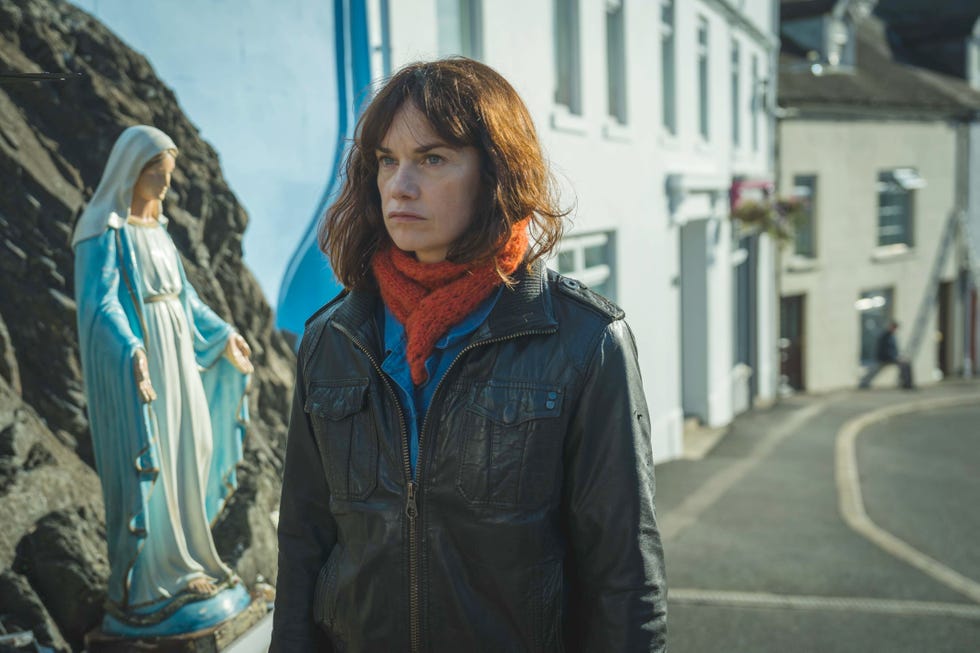
The BBC's new drama The Woman in the Wall follows Lorna Brady (Ruth Wilson) as she reckons with her past, while a mysterious murder investigation unfolds in her sleepy west Ireland town.
While the crime at the centre of the new six-part drama is fiction, the horrific story of abuse underpinning it is based on a notorious true story that Ireland is still reckoning with.
Part of the BBC drama sees a group of women come together in an attempt to get the so-called convent they were kept in through their adolescence officially recognised as a Magdalene laundry, which were prison-like institutions for young women.
Those behind the scenes on The Woman in the Wall spoke with Magdalene laundry survivors as part of the extensive research for the show and they also consulted a representative from Justice for Magdalenes, an advocacy group involved in bringing about the Irish state's official apology in 2013.
Show creator Joe Murtagh has spoken about his decade-long desire to tell the story of the 'mother and baby homes' after first watching The Magdalene Sisters in film school. He told Digital Spy and other press ahead of the show's premiere: "I knew nothing about the Magdalene laundries until I saw that film. That was my introduction.
"It was an eye-opening experience realising how this this horrific thing had happened. The thing that was more horrifying was to realise that I hadn't known about this and every single person that I mentioned this to had never heard of this and that's still true today outside of Ireland."
What to Read Next
Murtagh went on to describe his "peak frustration" at the fact there still isn't widespread knowledge of the institutions, particularly given the revelations that have emerged in the intervening years.
Referencing the Tuam care home scandal, which saw a mass grave of nearly 800 children and babies discovered in 2014 on the site of a former Magdalene laundry, he added: "It's horrific when you read into it. It was things like that definitely inspired me to just get that story out."
The Magdalene Laundries explained
The first Magdalene laundry opened in 1765 and it was not until 1996 that the last closed its doors, largely – it's grotesque to say – due to the rise of household washing machines. Established with the intention of housing "fallen women", the laundries became home to women and girls who had had sex before marriage.
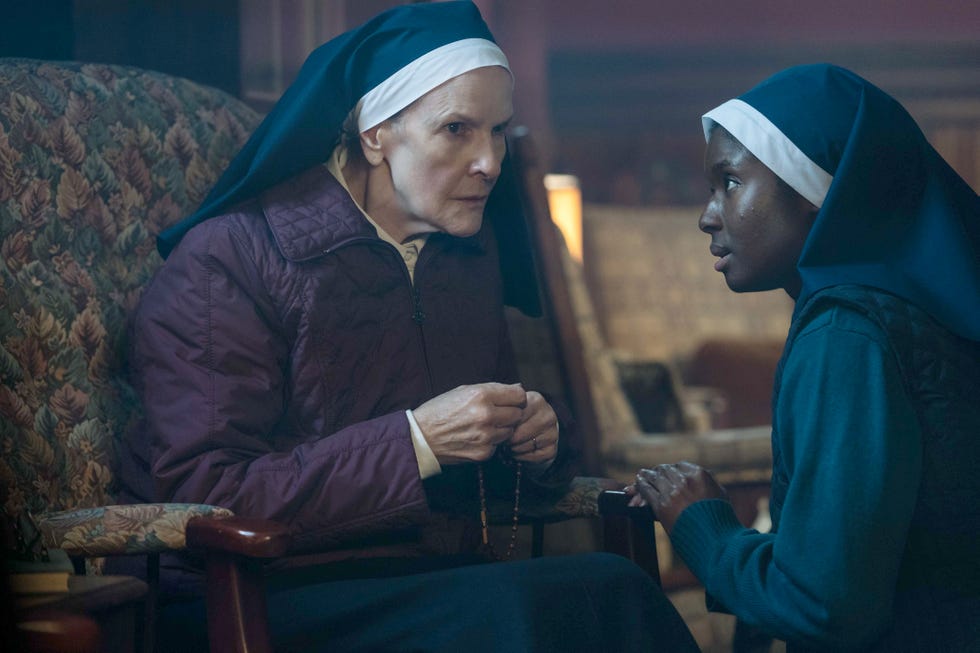
These young women were placed under the strict supervision of nuns, living in terrible conditions and forced to complete hours of unpaid labour – needlework, laundry, lace making – under the pretence of penance.
The nature of the laundries changed over time and by the 1920s they doubled as orphanages and adoption agencies and had become a for-profit system run almost entirely by Catholic nuns. They became institutions for women rejected by society: victims of rape and sexual assault, women deemed too flirtatious, women with disabilities or special needs.
The Magdalene laundries, named for Mary Magdalene, soon became places that parents sent their daughters in order to hide out-of-wedlock pregnancies – as is the case with Lorna in The Woman in the Wall.

Pregnant women were taken to the so-called 'mother and baby homes' to deliver their children, who were usually then taken from them and given to adoptive parents (as depicted in the Judi Dench-starring Philomena). They were also prone to shocking levels of infant mortality, as the Tuam scandal showed.
A judicial investigation into the home published in 2021 estimated that 9,000 children died, with neglect, poor food and extreme austerity all contributing factors. The report said the homes "significantly reduced their prospects of survival".
The estimates for how many women went through the Magdalene laundries system have varied, with up to 30,000 women thought to have been placed in the laundries in total. Of those, about 10,000 were admitted after Ireland's independence in 1922.
Yet in spite of the huge numbers affected by the harrowing abuse at the laundries, it was only in the 1990s that rumblings against them began, following the discovery of mass unmarked graves with no corresponding death certificates.
It took until 2013 for the Irish government, which helped to bankroll the institutions in exchange for laundry services, to issue an official apology.
As awareness of the cruelty of the laundries began to spread in Ireland, the UN urged the Vatican to investigate the matter, saying that the girls at the institutions "were deprived of their identity, of education and often of food and essential medicines and were imposed with an obligation of silence and prohibited from having any contact with the outside world."

Philippa Dune, who plays a Niamh in The Woman in the Wall – a character advocating for the survivors of the local laundry to seek justice – said she's "proud" to be part of a storyline shedding light on what happened in the mother-and-baby homes.
"We shouldn't let the dust settle on what happened," she said. "We should keep talking about it until everyone knows what the Magdalene laundries were. I obviously grew up hearing about it. I assumed everyone else had heard something about it. But more people need to know."
Murtagh described how when writing the show, he looked for opportunities to remind the viewers how recent the Magdalene laundries were still in operation. "It's just one of the most shocking aspects of it," he said. "That it was allowed to continue for that long and the way that it sort of fizzled out rather than came to an abrupt end. No one stepped in."
The Woman in the Wall is on BBC One and iPlayer on August 27.
..Previously Deputy TV Editor at Digital Spy and, before that, a TV Reporter at The Mirror, Rebecca can now be found crafting expert analysis of the TV landscape, when she's not talking on the BBC or Times Radio about everything from the latest season of Bridgerton or The White Lotus to whatever chaos is unfolding in the various Love Island villas. When she's not bingeing a boxset, in-the-wild sightings of Rebecca have included stints on the National TV Awards and BAFTAs red carpets, and post-match video explainers of the reality TV we're all watching.


