
Alice in Borderland finale spoilers follow.
Alice in Borderland's second season has dropped on Netflix, with all the extreme violence, acid showers, car chases and meteor strikes you could hope for.
For 16 episodes, we've followed slacker Arisu and his friends (living, dead, miraculously revived and flashbacked) as they've battled their way through a series of sadistic games in an apparently virtual Tokyo full of traps, killers and nudist rockstars.
What to Read Next
At the end of season two, it's revealed that the games have been a way for Arisu to find purpose in his life, that purpose being friendship, love and community.
The final episode suggested at first that the games were a fugue state conjured in Arisu's mind as a way of coping with the guilt of killing his friends on the traffic crossing in the first episode, but later scenes showed a flashback in which Tokyo – and all the games' combatants – were hit by a meteorite.
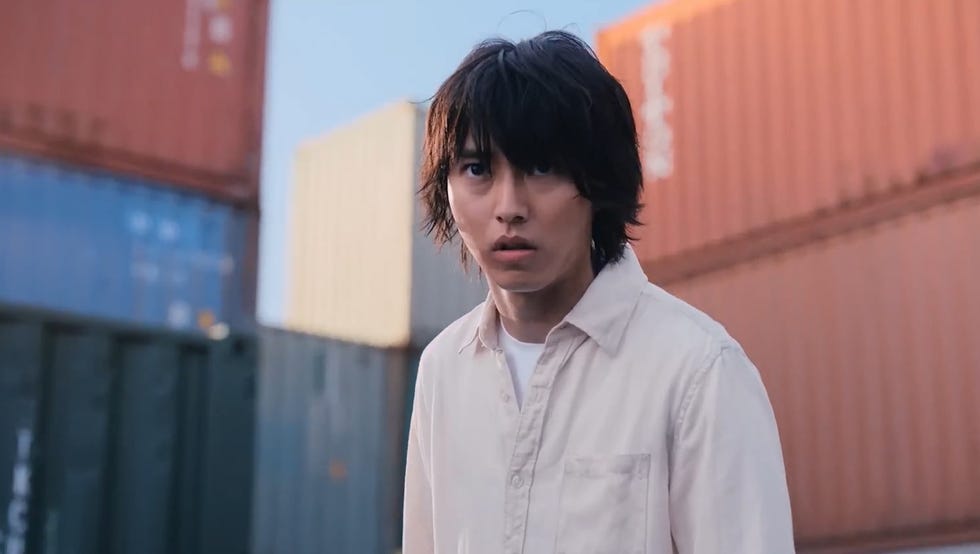
All our favourites seem to have had near-death experiences, including Arisu, who was dead for a minute, during which time he experienced all the events of the last two seasons, though he forgot them on waking.
(It's a dubious explanation – they were in the "borderlands" between life and death is only a whisper away from 'it was all a dream' – but we're glad they at least ruled out future-people living in a virtual-reality game, and aliens using humans as lab rats in behavioural experiments.)
The show – as the title suggests – is heavily influenced by Lewis Carroll's Alice in Wonderland and Through the Looking Glass. Just like Alice, our heroes have had a surreal and dangerous experience in a frightening netherworld dominated by living playing cards and packed with riddles that twist reality inside out.
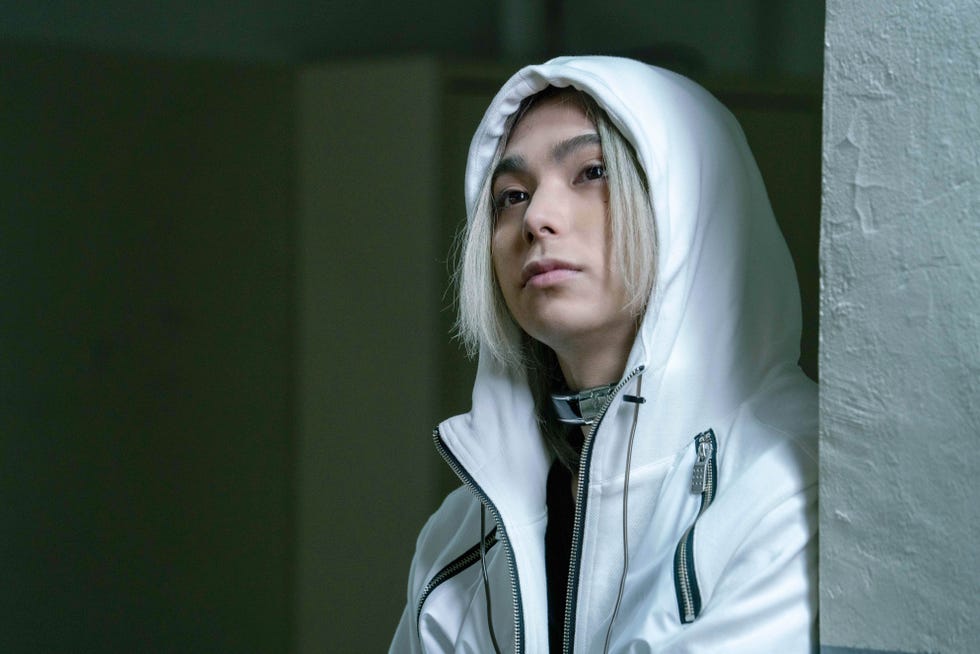
But there were other parallels that you may have missed. To explain them, we're going to have to briefly talk about the Japanese alphabet(s). (Not for long, stick with us.)
Unlike European languages, Japanese letters are mostly full syllables: ba-, ki-, -tsu and so on, and the "l" sound is rendered as "r", which is why many English words come out sounding a little different when spoke by Japanese people. Some English sounds just don't work in Japanese.
"Beer" is rendered as "biiru", "English" is "Igirisu" and so on.
Now let's take another look at some of our heroes' names, starting with the head honcho, Arisu.
If you say "Alice" in Japanese, it comes out as "Arisu". That was an easy one.
What about his athletic would-be girlfriend, Usagi? "Usagi" is Japanese for "rabbit", like the White Rabbit Alice follows down the rabbit-hole.
And who do we know who always has an enigmatic smile on his face, like the Cheshire Cat? That would be Chashiru, wouldn't it? Chashiru/Cheshire.
There's more: for example, Kuina, the dreadlocked fight expert = 'Queen' and Mira = 'Mirror' (or looking-glass, if you prefer). There are doubtless many more that we're not sharp enough to spot.
With the final shot of the season being a wild card, it's not beyond possibility that we'd see a return to the Borderlands, so here's hoping for more Lewis Carroll references in the future.
Alice in Borderlands season one and two are available to stream on Netflix.
Best Entertainment and Tech Deals
Coronation Street X Joanie - Gilroy Retro Newton And Ridley Sweatshirt




Editor, Digital Spy Chris has over 25 years' experience as a writer and editor, having worked as a journalist covering TV and movies since the '90s. Starting out as a TV listings editor at the Press Association, he was quickly hired by the nascent Heat magazine, where he rose to become Senior Editor, interviewing the likes of Simon Cowell, Boris Johnson and Paris Hilton. Over the years he has written about entertainment with clarity and wit for Heat, Elle, Q, The Telegraph and of course Digital Spy, and has served many times as a judge in the Royal Television Society awards. He has written and recorded a novelty single with Lord Lloyd-Webber, written scripts for the National TV Awards, made Noel Edmonds cry, accidentally punched an Inbetweener and stolen a small piece of rubble from the Battle of Hogwarts movie set. (They can't have it back.) LinkedIn


