HTC is a company pretty well known for its approach to design. The One M8 is easily the nicest Android smartphone available on the market today.
As such, it has big boots to fill with the Desire Eye, its new mid-tier camera focussed handset. Thankfully though, the Desire Eye is a package that doesn't disappoint.
First impressions appear positive, although we have to point out we have only spent a brief period of time with the Eye and are far from ready to deliver a final verdict.
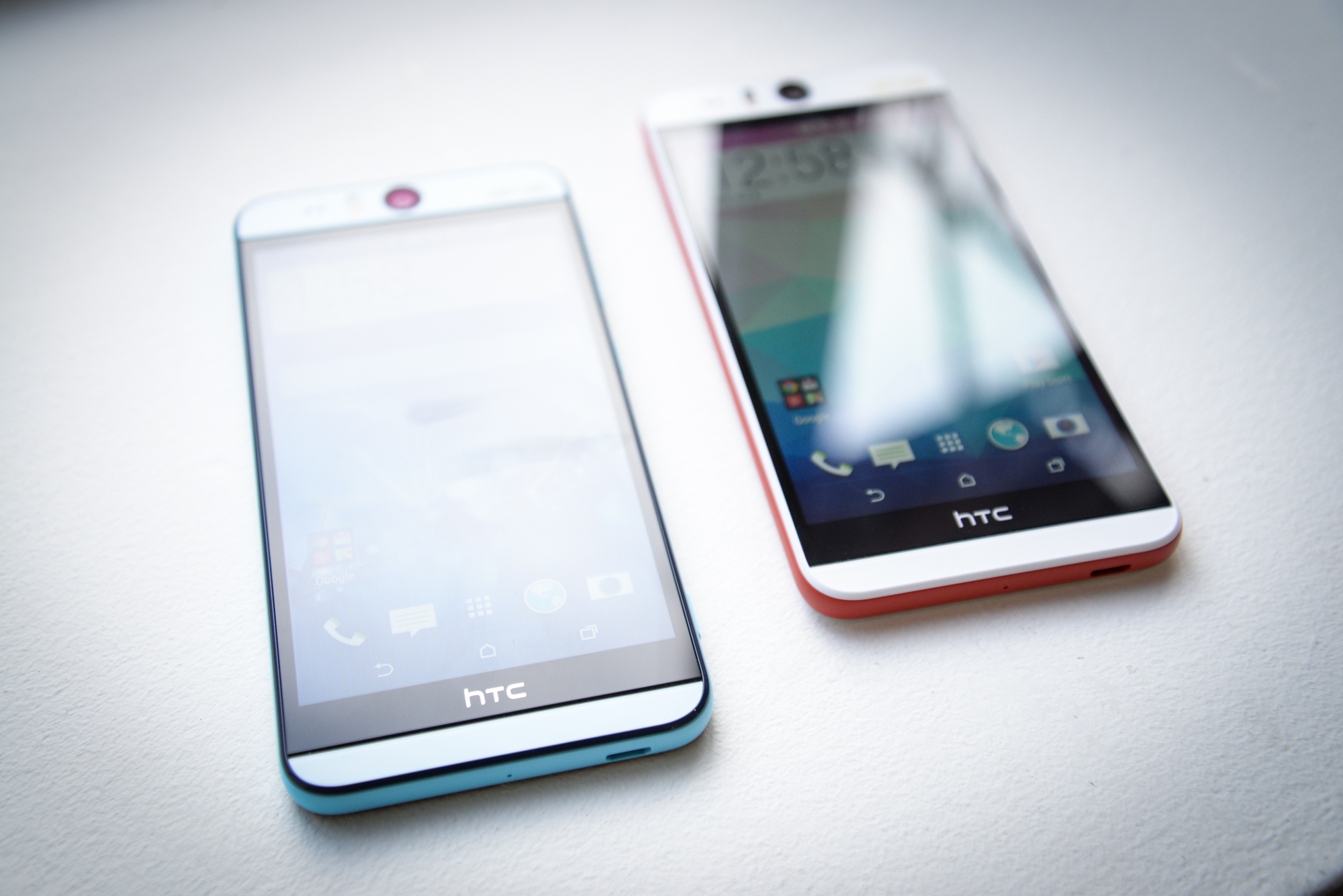
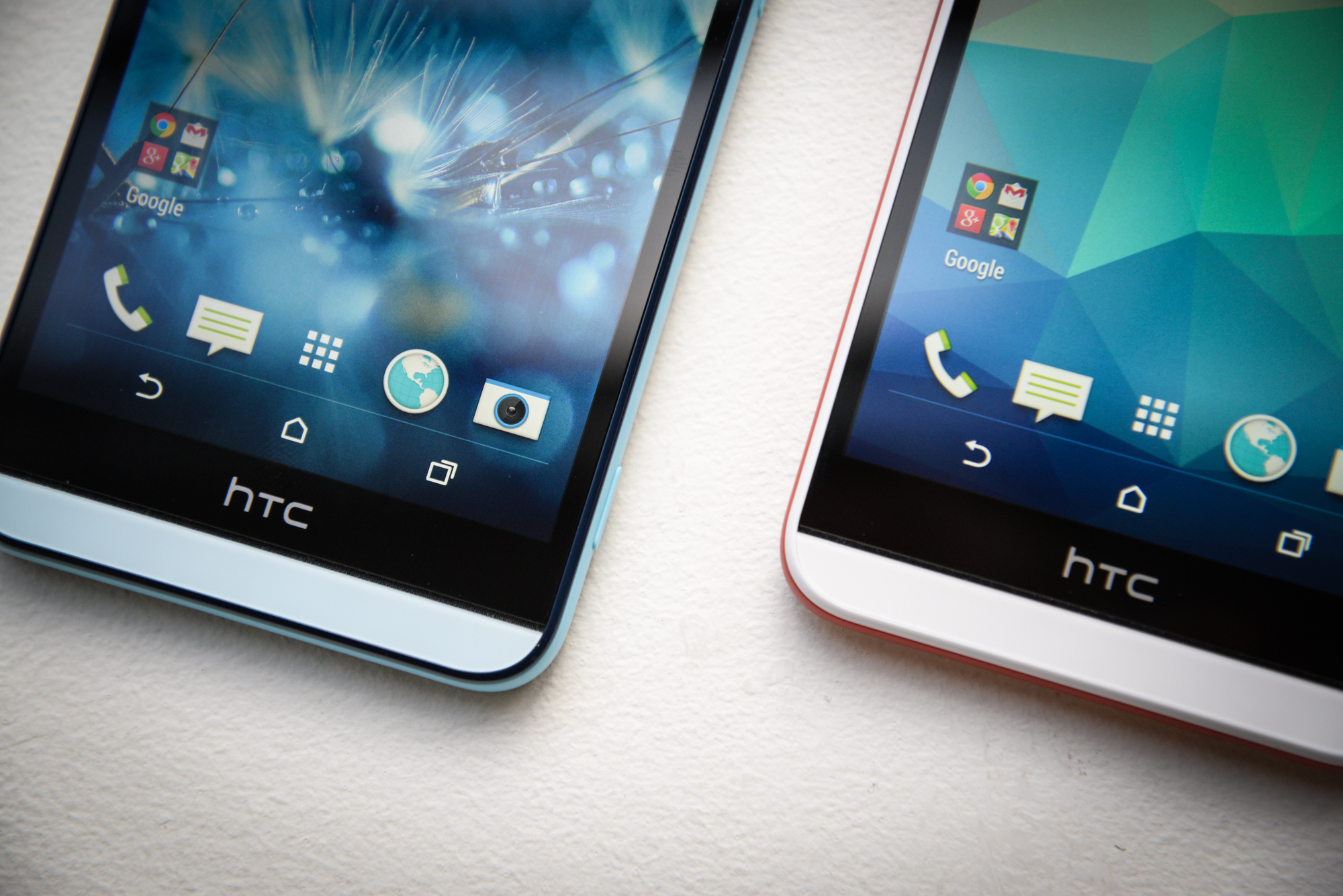
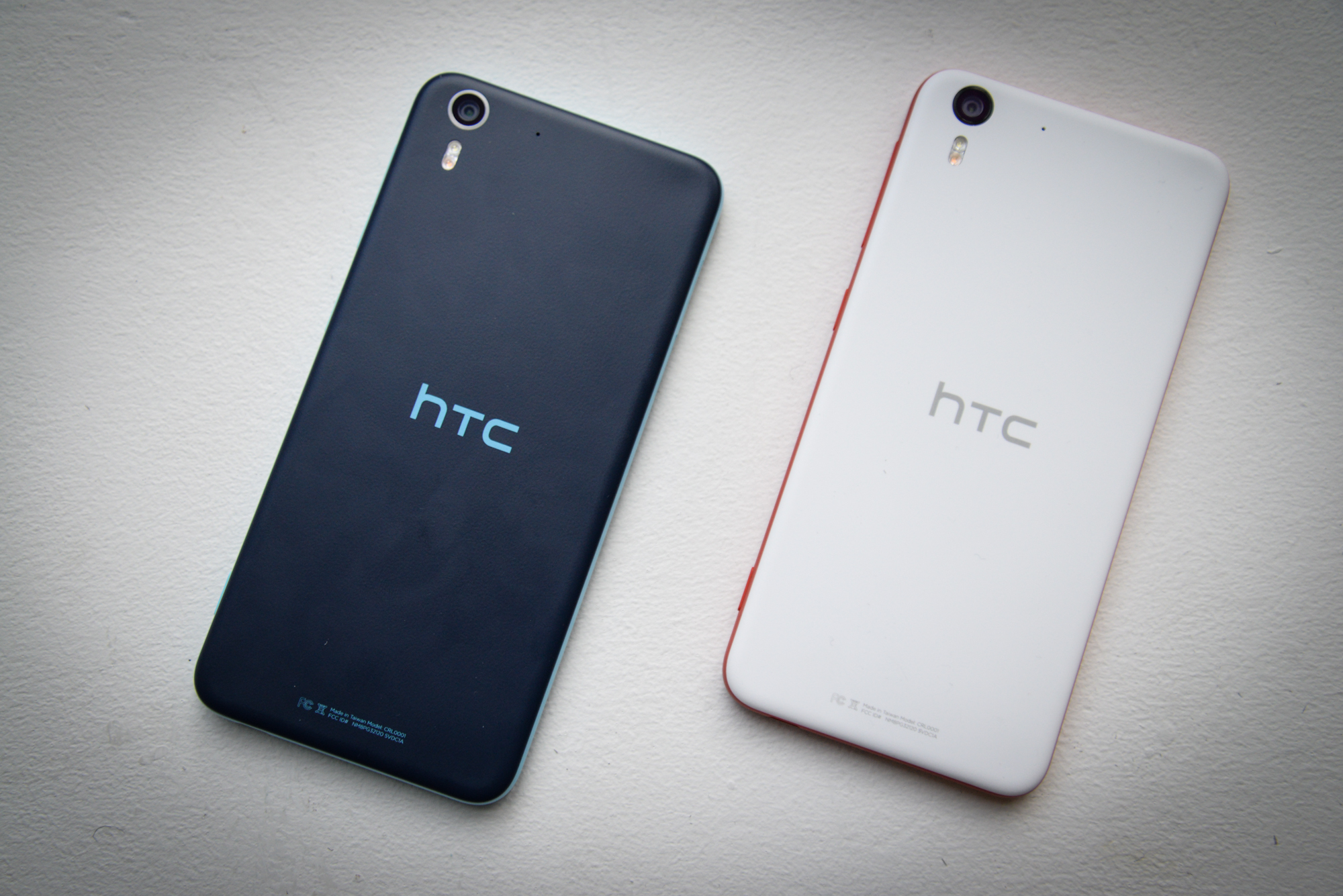
So what do you get? First up, the phone itself is a single piece of cleverly died polycarbonate, with a soft touch effect on the back and a different coloured beam that wraps the whole way around the edges of the devices.
In the hand, it feels lovely. Both the blue and white colour schemes shown to us also appear so different to anything else out there, that the Desire Eye never felt 'too Nokia or too Apple'.
The blue model in particular, which has a sky blue-coloured band that sits above and below the display, as well as around the edges of the device, is very unique-looking.
What to Read Next
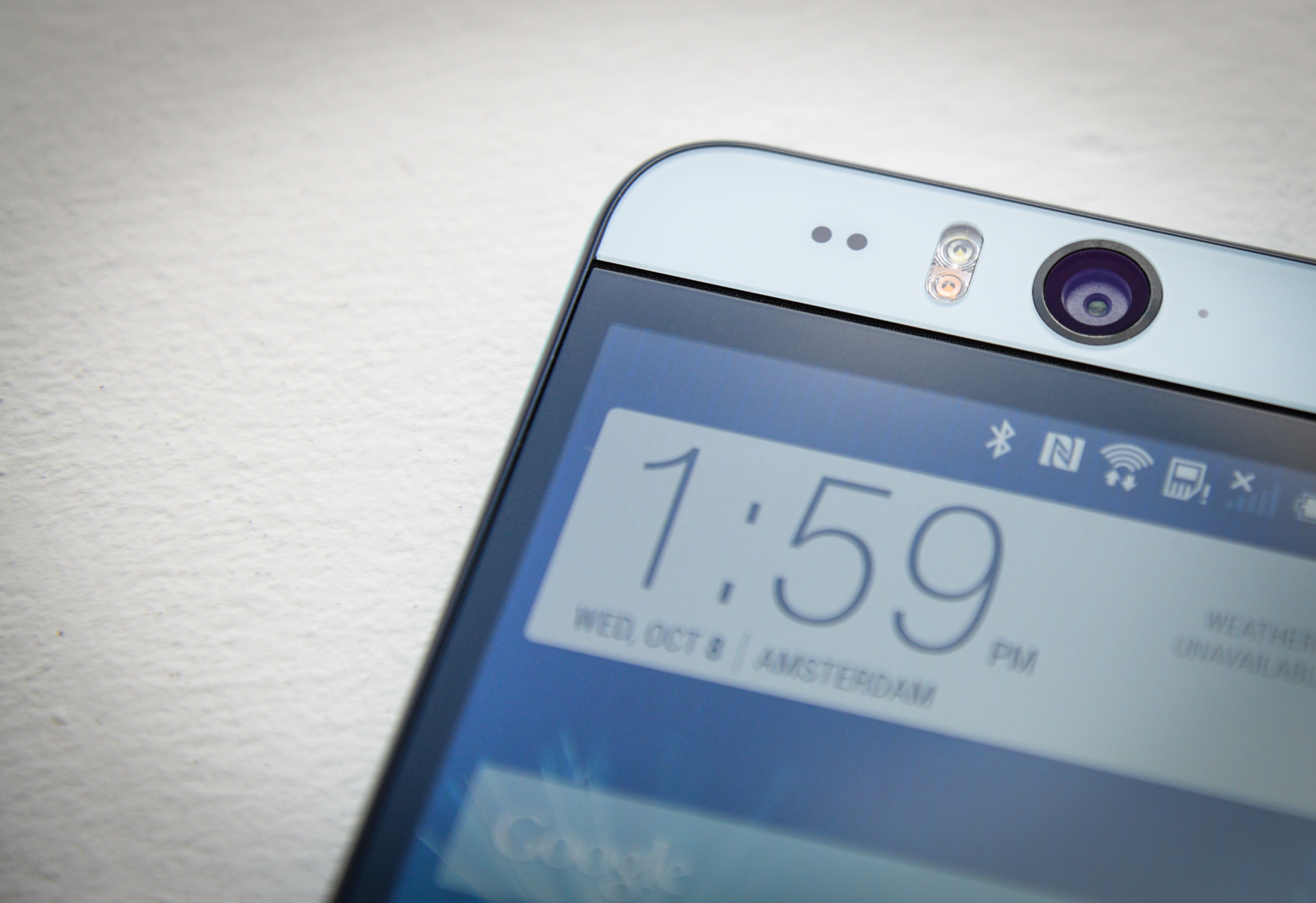
Obviously the thing that really stands out with the Desire Eye however is the massive camera on its front. Sat above the big bright Full HD 5.2-inch screen is a 13-megapixel sensor.
It mirrors the one on the rear of the handset, alongside the LED flash. That means shots on both back and front are identical. For the selfie-obsessed, it's a boon.
HTC however has opted to do more with it than just flood Instagram with high resolution duckface snaps. Instead, the camera has multiple unique features that leverage that extra power.
Video calling for example, via both Skype and Google Hangouts, now has a Kinect-style face tracking feature which will zoom into up to four people's faces without you needing to move the Desire Eye to face them. We've tested it and it definitely works.
Other features include the ability to do face swaps, take selfies via voice and even use words like 'rolling' with the camera app open, to get video to start recording. It's all very logical and clearly HTC has been careful to make sure both cameras have genuine use cases rather than just high megapixel counts. As for image quality itself, we need to spend more time with the device to make a decision there.
In terms of pure specifications, the Desire Eye is pretty much like for like inline with the Samsung Galaxy S5. That means a 2.2 GHz Qualcomm 801 processor, 2GB of RAM, the 5.2-inch Full HD display and 16GB of internal storage with microSD expansion.
The screen definitely isn't as nice as the one found on the M8, but it's certainly big and bright. Sharp too and when you consider the same resolution can be found in the much more expensive iPhone 6 Plus, also seems like a bit of a bargain.
Another talking point of the Desire Eye is the decision to make it waterproof. IP67 rating means you can forget about an accidental drop of the device in the sink. It isn't however the sort of phone you can go swimming with.
Really though, our favourite part of the Desire Eye was its design. The move to hide the impressive 'Boom sound' tech better on the front of the phone means the big speaker grilles found on the M8 are now gone.
Shifting away from the trend towards metal also makes a difference, as the handset feels premium but different. Obviously the camera is going to be the biggest talking point here and for the most part, we can see why, but perhaps the mid-tier super specs package could finally be what brings HTC back to the fore.
We will have a full review of the Desire Eye the moment we can get our hands on one. In the meantime, why not take a peek at our hands-on review of HTC's just announced RE camera?