
It's difficult to think of a film that has inspired more urban legends than Victor Fleming's 1939 children's classic The Wizard of Oz. Depending on who you believe, Pink Floyd's Dark Side Of The Moon syncs perfectly with the action (not true), the production was cursed with a series of horrendous accidents (true), and the Munchkins were all shag-happy party animals (also untrue, but a favourite talk show gag of star Judy Garland). Perhaps the tall tales have something to do with the hellish shoot, which involved five directors and at least 15 writers, or maybe it's because The Wizard of Oz is watched by a lot of stoned people.
What many don't seem to realise is that The Wizard Of Oz is itself a remake. L Frank Baum's original 1900 novel The Wonderful Wizard Of Oz (the first in a series of more than a dozen books) was filmed several times in the silent era, and his beloved tale is still adapted/appropriated to this day, in the form of Wicked, The Wiz and Oz The Great And Powerful among others.


Shot in gorgeous sepia tones, the opening Kansas scenes are much more interesting – and, at 20 minutes, much longer – than most people remember. We meet young Dorothy Gale (Garland) and her insanely well-trained dog, Toto, on their humble family farm. All the main Oz characters have real-world correlatives played by the same actors, and there's some witty foreshadowing (such as when Mrs Gulch [Margaret Hamilton] is called a "wicked old witch"). It's hard to believe the Oscar-winning 'Over The Rainbow' was almost cut for time, when its heartfelt yearning – combined with the poverty of Kansas life – anchors much of what follows.
Well, you know the story. A (still extraordinary-looking) tornado strikes, Dorothy's knocked unconscious, and she wakes up to find herself transported to Oz, and into giddy Technicolor. Here, with the help of The Scarecrow (Ray Bolger), The Tin Man (Jack Haley) and The Cowardly Lion (Bert Lahr) – and the hindrance of The Wicked Witch Of The West (Hamilton) – she journeys to the Emerald City to seek the eponymous Wizard (Frank Morgan) and find a way home (a common quest in children's fiction, from Hansel And Gretel to TV's Dungeons And Dragons).


You know the story, but do you remember what it's like watching it unfold? To adult ears, the Munchkin section is excruciating – 15 minutes of unnecessarily over-literal, helium-voiced ditties (including 'Ding Dong! The Witch Is Dead' and 'Follow The Yellow Brick Road'). It's no wonder Dorothy's in such a hurry to leave, although the rumour that a suicidal Munchkin can be seen hanging from a tree in a later sequence is nonsense – it's one of the many exotic birds released on set.
Hamilton's Wicked Witch Of The West, however, set the bar for scary crones, with her gleeful vindictiveness: "Well, my little pretty," she cackles, "I can cause accidents too!" This line proved painfully ironic when Hamilton's face was badly burned during her fiery exit. "No more fireworks," the actress insisted once she'd recovered – a wise move as it turned out, her stunt double was hospitalised by an exploding broom. Original Tin Man Buddy Ebsen suffered even more: after an allergic reaction to the aluminium in his make-up, he was placed in an iron lung, then replaced.
What to Read Next
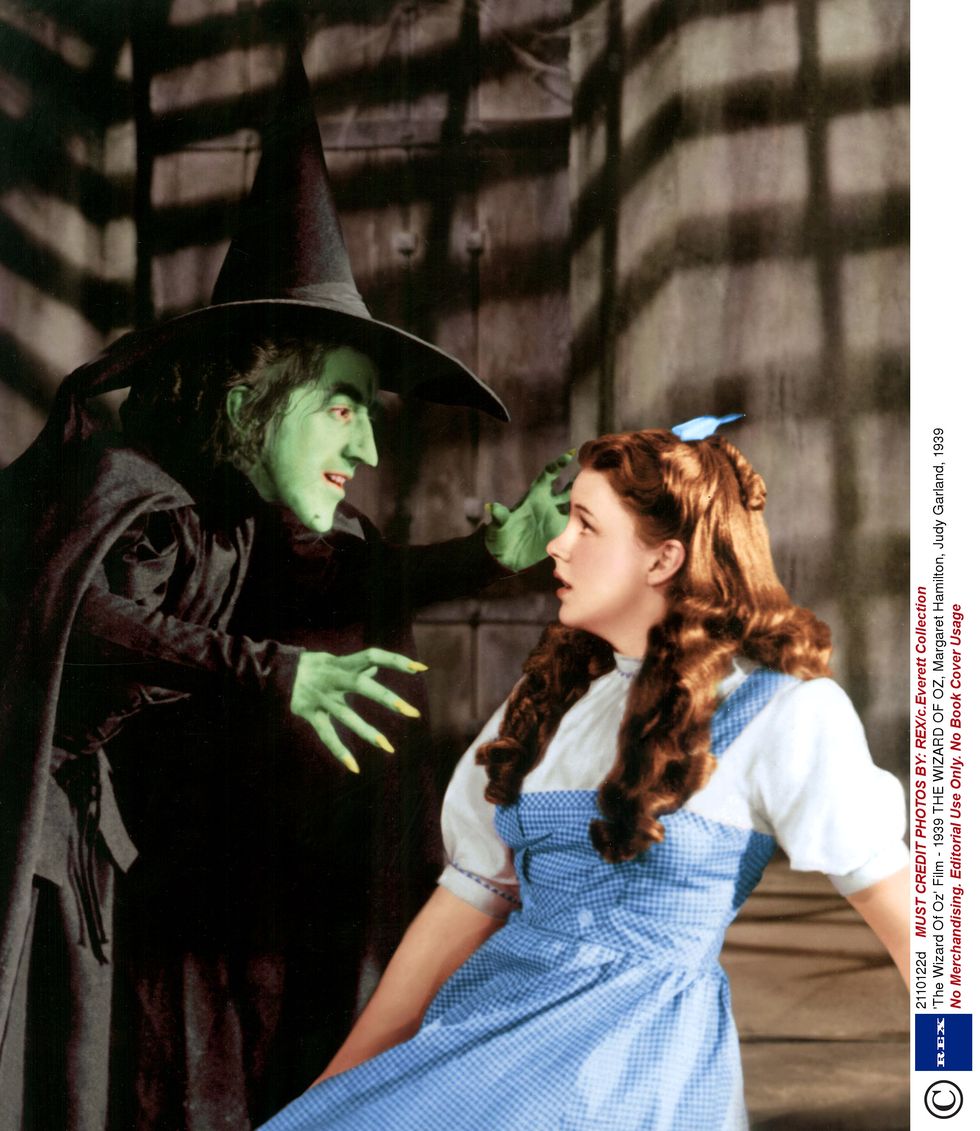

One aspect of the film that can't have been intended, but has ensured its enduring popularity, is how gleefully, stratospherically camp it is. Witness The Scarecrow's fantastically expressive wrists as he tells Dorothy, "Of course, people do go both ways!" Indeed, the phrase "friend of Dorothy" has been LGBT shorthand since WWII, and is thought to originate in this exchange, from The Road To Oz: "You have some queer friends, Dorothy,"/"The queerness doesn't matter, so long as they're friends." Despite its sunny inclusivity, the film doesn't shy away from the darkness either: see the sinister, swooping monkeys and the Wicked Witch Of The West's protracted death-by-melting.
Somehow Dorothy manages to kill two dictators (the Witches) and expose the Wizard as a false idol. It's hard to know how much is Baum's subversive politics, and how much is BS, but the film seems to espouse revolutionary action, repeatedly showing oppressed masses (the Munchkins, the Emerald Citizens, the Witch's guards) rejoicing in freedoms new (chiefly by singing) once their leaders have been overthrown and/or flattened. The message – if there is one – gets a little muddled when Dorothy wakes back in Kansas, her adventurous spirit sated, but what's a good ol' fashioned farm girl to do?


Because it's essentially a wild goose chase (Dorothy's magic slippers could have got her home immediately), the film decreases in interest as it goes along. But you sense it's the sets, the performances, the strangeness that have beguiled generations, rather than the story – is this why most of Baum's Oz books have still not been adapted? However fantastical, the film remains admirably committed to its own world, and the many authorial hands at work have fashioned something that couldn't – or wouldn't – have been created alone. Perhaps that's why everyone's got a Wizard Of Oz story of their own, true or not.
The Wizard of Oz is re-released in 3D in IMAX sites across the UK on Friday, September 12.


