The Beast is not only one of the best movies of 2024, but also one of the most thrillingly unexpected.
Bertrand Bonello's outstanding ability to marry genres, build bridges between past and present and combine dense philosophical explorations with a soul-touching love story makes it a must-see movie this year.
It's a bold, romantic sci-fi epic that defies categorisation. It's also quite long, demanding, and at times even bonkers, but it's worth every single minute.
Inspired by Henry James's 1903 novella The Beast in the Jungle, the movie follows fated lovers Gabrielle (a magnificent Léa Seydoux) and Louis (1917's George MacKay) through their diverse reincarnations in 1910, 2014 and 2044.
Their connection survives, even if the memories of their past lives have long been forgotten, as they navigate an ever-changing world that always seems to be on the verge of disaster.
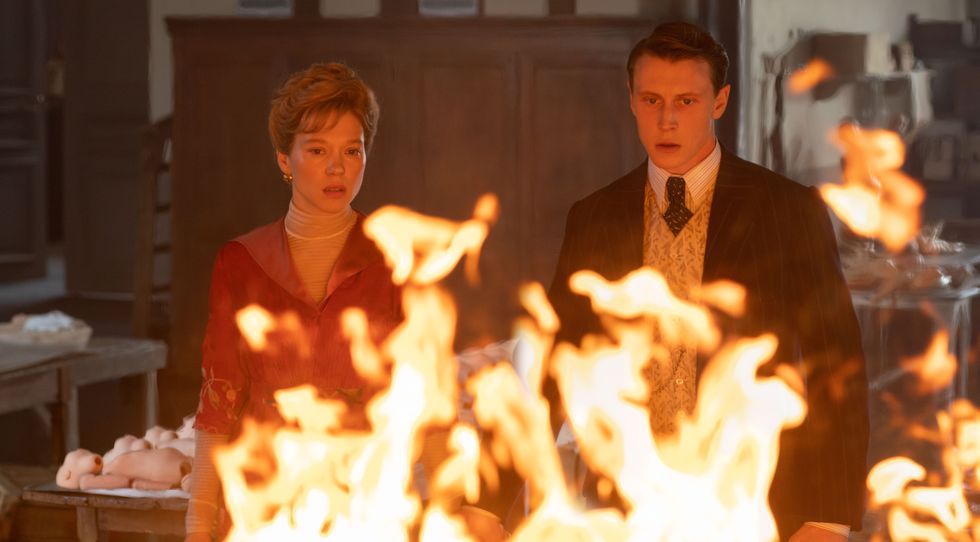
The futuristic setting (2044) is dominant, placed in a dystopian France where AI controls every aspect of human life. Here, there's a common procedure to purify one's DNA in order to be more efficient at work. That is, to remove all emotions and remnants of the past in order to achieve the ideal of a productive individual in a tech-dominated and painfully lifeless society.
What to Read Next
Gabrielle is not entirely sold on the idea.
In Henry James' The Beast in the Jungle, the main character ruins his chances of love and marriage because of his obsession with an impending catastrophe, which he calls a "beast", that lies in wait for him. By the end, he will learn that his fatalist view got in the way of his happiness, as he was never able to love freely.
The similarities with The Beast are evident beyond the shortened title, but Bonello expands it in time, amplifies the scale and delivers thought-provoking ideas in his best movie to date.
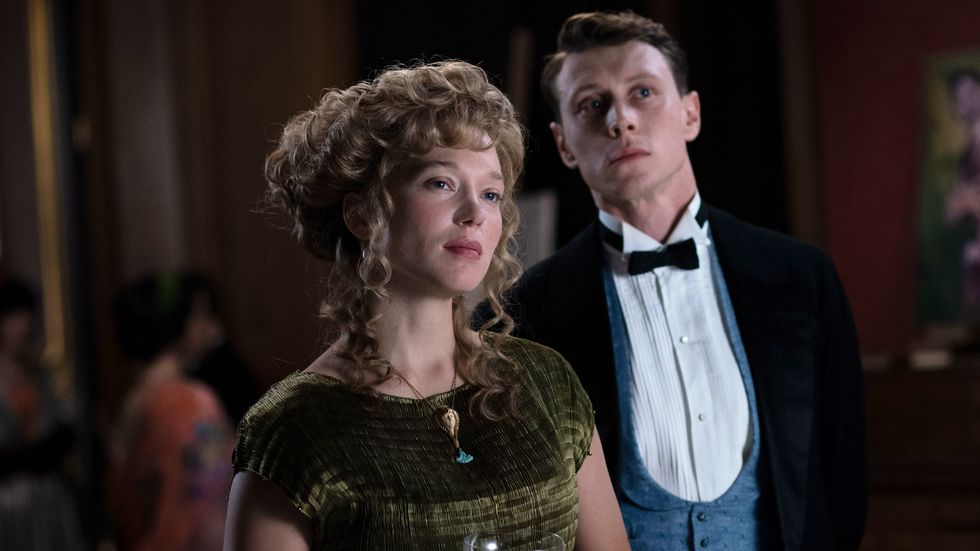
The French director also makes that haunting disaster (or "beast") more tangible while playing with different settings and movie genres.
Chronologically, the story starts during Paris' Belle Époque in the early 1900s. Gabrielle and Louis meet and fall in love shortly before 1910's Great Flood, which sank the French capital under the Seine's waters. This setting is delicate and melancholic, a period romance in the likes of The Age of Innocence.
In the second time period, the same characters are living in modern-day Los Angeles, with Gabrielle now struggling as an aspiring actor and Louis revealing himself as a dangerous incel who is stalking her. Bonello was inspired by real-life American mass murderer Elliot Rodger, even including lines from his infamous misogynist manifesto.
This too-close-for-comfort part of the movie feels at times like a slasher, while the third location (a futuristic Paris) taps into the dystopian sci-fi tradition.
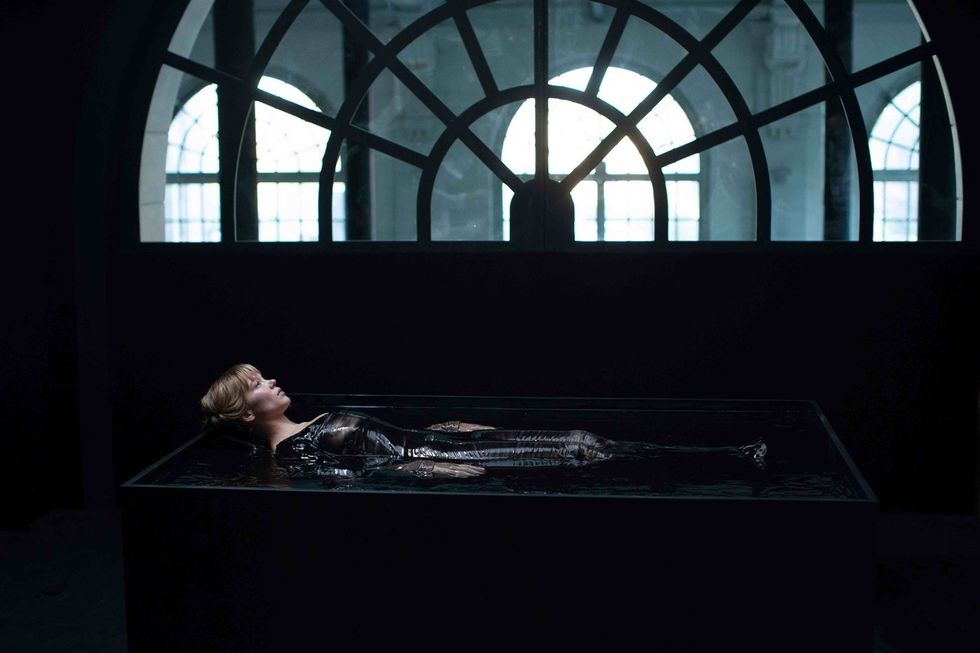
Each period represented in the movie contains both society's collective traumas and the character's personal nightmares — tech anxieties and inescapable loneliness, toxic masculinity and frustrated desires, environmental disasters and the impossibility of love.
At the heart of all of them is the unease of how to find happiness when the world is a dark place to live. It's about how fate is a double-edged sword, too.
As is obvious by this point, The Beast is a beast of a movie, packed with all kinds of different elements that, honestly, shouldn't work at all. But it does, and in a stunning way, mainly because the movie never forgets about the characters' emotions. After all, there is one more movie genre Bonello is playing with: the melodrama.
For all the complexities we can find in The Beast, its message is simple — embracing our fears, anxieties and vulnerability is the only way to embrace love.

The Beast is now out in UK cinemas.
You Might Like...


Mireia (she/her) has been working as a movie and TV journalist for over eight years. Based in the UK, she is a former deputy movies editor at Digital Spy, and previously worked for the Spanish magazine Fotogramas. Mireia's work has been published in other outlets such as Esquire and Elle in Spain, and WeLoveCinema and GamesRadar+ in the UK. She is also a published author, having written the essay Biblioteca Studio Ghibli: Nicky, la aprendiz de bruja about Hayao Miyazaki's Kiki's Delivery Service.
During her years as a freelance journalist and film critic, Mireia has covered festivals around the world and has interviewed high-profile talents such as Kristen Stewart, Ryan Gosling, Jake Gyllenhaal and many more. She's also taken part in juries such as the FIPRESCI jury at Venice Film Festival and the short film jury at Kingston International Film Festival in London. LinkedIn


