Dev Patel bites off a guy's nose in Monkey Man, and that's not even the most unhinged moment of the film.
Debuting both as a director and as an action star, Patel has managed to create a story indebted to an array of predecessors (from Bruce Lee's martial arts legacy to Korea's brutal action films and Bollywood's over-the-top settings) and at the same time utterly unique in today's cinema landscape.
It's a movie that breathes enthusiasm and passion, touched by an electric sense of self and ambitious vision. It's a hungry attempt by the British actor to create the kind of film nobody else was willing to, and it paid off in the best way possible.
Gloriously overwhelming to the senses, it's a tale of revenge that morphs into a political call to arms.
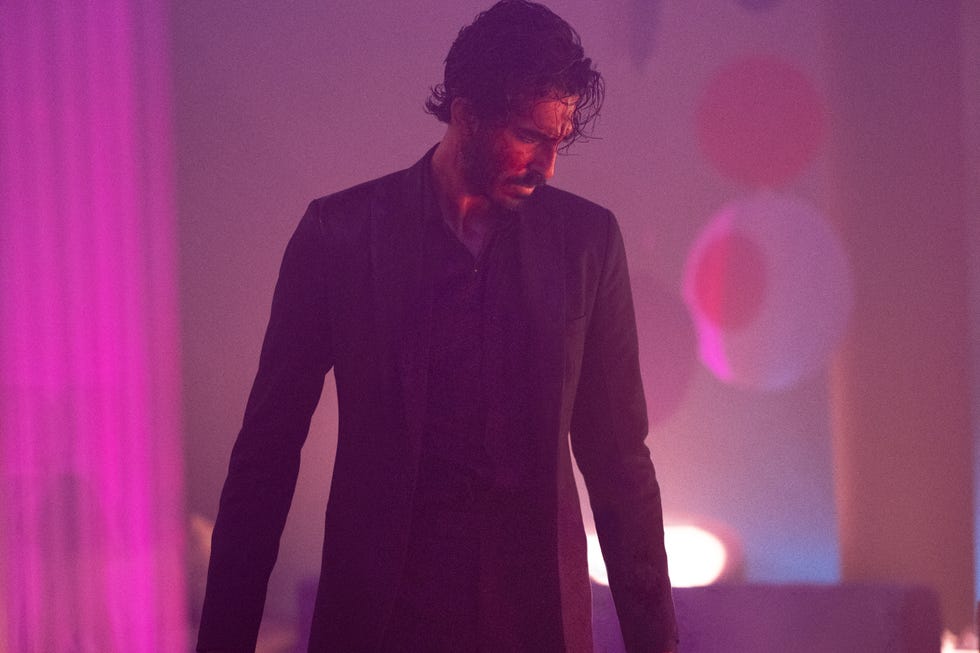
Inspired by Indian mythology and current politics, Monkey Man follows a young man (Patel) desperate to avenge his mother, who was killed when he was a child during a brutal police attack on their community.
While earning some bucks in clandestine fights, he makes his way up the ladder in order to reach the people responsible for his family trauma.
What to Read Next
In the meantime, the movie offers a portrait of the bustling fictional city of Yatana (heavily inspired by Mumbai) addressing class division and inequality, as well as religious disputes, police brutality and political extremism.
Taking place with elections on the horizon and building up to Diwali (a festival that symbolises the victory of light over darkness), the story makes a case against authoritarian leaders and false prophets, as it seeks to empower the powerless.
As political as the movie is, it's also an electrifying action movie in the vein of John Wick, Oldboy and The Raid — that is, the kind of action flick with insane amounts of fake blood, impressive martial arts choreography and the most imaginative use of everyday tools to obliterate bad guys.

Almost like a video game, the hero's goal is to level up to reach the big boss, going from the lowest low (ground-floor kitchens) to the highest high (the top floor of a skyscraper). The elevator is key to making this move, as it becomes a not-so-subtle metaphor for class and social gatekeeping.
There is some superhero DNA in the movie, too, with incredibly classic superhero talk (from "It's time you remember who you are" to "Fight not for pain, but for purpose") and a coming-to-power origin story as the driving narrative.
Drawing mainly from the story of Hanuman the Monkey God in Indian mythology, who Patel has compared to Superman and other superheroes he loved as a child, the movie introduces a working-class hero who learns to seek revenge for his people instead of for just himself.
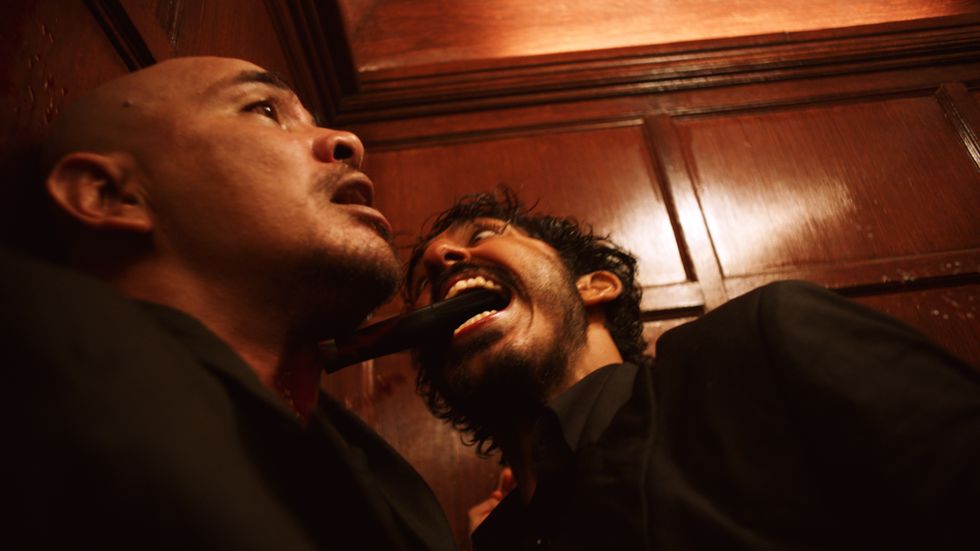
Monkey Man's action scenes are shot with impeccable taste – with a fast-paced rhythm and plenty of manic POV shots, there is a dirty, gritty, chaotic feel to every sequence.
There are so many extraordinary things in this movie that it's a shame how it occasionally falls into long-outdated action-movie sex imagery. Some choices are simply tacky (using a Moulin Rouge-y version of Roxanne as the main character sends a longing look to a gorgeously sorrowful sex worker) and others directly feed into a mindless depiction of sexual abuse victims instead of aiming for a more nuanced, humane portrait.
At times, it's the kind of film where a guy snorts cocaine from the leg of a female sex worker, and extreme violence against women is used to further advance the male hero's plot, which is a shame.

Fortunately, these are isolated cases in the story, which at its core stands behind the victims of abuse, while providing a revenge fantasy for them. That includes a persecuted hijra (third gender) community, who help Patel's hero to embrace his power and his responsibility to his people.
As a directorial debut, Monkey Man is an astonishing accomplishment, a stylish and fervid movie with incredible visuals, political awareness and a sense of fun. It's a rounded experience like very few we get these days.
Patel seems born to do this — on both sides of the camera.

Monkey Man is now out in cinemas.
You Might Like...



Mireia (she/her) has been working as a movie and TV journalist for over eight years. Based in the UK, she is a former deputy movies editor at Digital Spy, and previously worked for the Spanish magazine Fotogramas. Mireia's work has been published in other outlets such as Esquire and Elle in Spain, and WeLoveCinema and GamesRadar+ in the UK. She is also a published author, having written the essay Biblioteca Studio Ghibli: Nicky, la aprendiz de bruja about Hayao Miyazaki's Kiki's Delivery Service.
During her years as a freelance journalist and film critic, Mireia has covered festivals around the world and has interviewed high-profile talents such as Kristen Stewart, Ryan Gosling, Jake Gyllenhaal and many more. She's also taken part in juries such as the FIPRESCI jury at Venice Film Festival and the short film jury at Kingston International Film Festival in London. LinkedIn


