Throughout cinematic history, the disabled community has been saddled with lacklustre or outright offensive, inaccurate depictions in movies. Relying on tired old tropes to define poorly developed disabled characters, movies sideline creativity in favour of paint-by-numbers writing.
They lean into the stereotypes society has built around disabled people for centuries, pulling from the ancient mythologization of certain types of disability, like visual impairments, and the demonization of others, such as invisible disabilities.
In the end, disabled people get left with non-disabled actors "cripping up" to hearty applause or disabled stories focusing on pity, inspiration or trauma, leaving us stuck between invisibility and inaccuracy.
Think about it. Conjure up one of the limited examples of disabled representation on screen, and the struggle begins to find any movie using disabled performers and not based on stereotypes.
The morbid pixie dream girl

Once upon a time, the world thought that the manic pixie dream girl trope – wherein a quirky, desirable yet paper-thin female character exists purely to motivate the male lead – had died. But fear not, this trend has not disappeared.
It’s transformed into something altogether more disturbing — the morbid pixie dream girl.
What to Read Next
This trope crops up consistently in movie history, adding a dash of morbidity to the tried-and-tested formula to tug at the audience's heartstrings. Similar to its inspiration, the trope uses a woman to tell the story of a man's progress into a fully functioning, empathic person.
Except in this case, the female character is not a person, only a dying symbol to be mourned and learned from.
One of the most egregious cases in recent years appeared in the form of Life in a Year, a movie that neglects to provide its female lead, played by Cara Delevigne, with any personality traits. She is merely a blank, sick canvas whose last year on earth is used to evolve the personhood of her love interest, played by Jaden Smith.
Inspiration Porn

The inspiration porn trope applies to both disabled and chronically ill people in real life and on screen.
Anyone who is disabled is expected to maintain a higher standard of moral and mental strength to make up for their other "failings." Their job is to carry on with a stiff upper lip and inspire everyone around them; they must never crumble under the reality of their condition.
Classic examples include Breathe, Rain Man, and My Left Foot. The latter also committed another common movie sin associated with depictions of disabled people – glossing over reality.
To leave audiences on a positive note, My Left Foot ends after the main character, Christy Brown, invites a woman out on a date. In reality, the woman was suspected of abusing Brown throughout his life. He died with numerous mysterious bruises on his body, far from the inspirational tale the writers conjured up.
Inspirational narratives cannot touch reality because then they would allow non-disabled audiences to see disabled folks as people instead of objects of fascination.
In an inspiration-porn narrative, the disabled person is the least important person in the room. Their job is to leave the audience with a heartwarming feeling of superiority and pity, not to offer any authenticity or to be human at all.
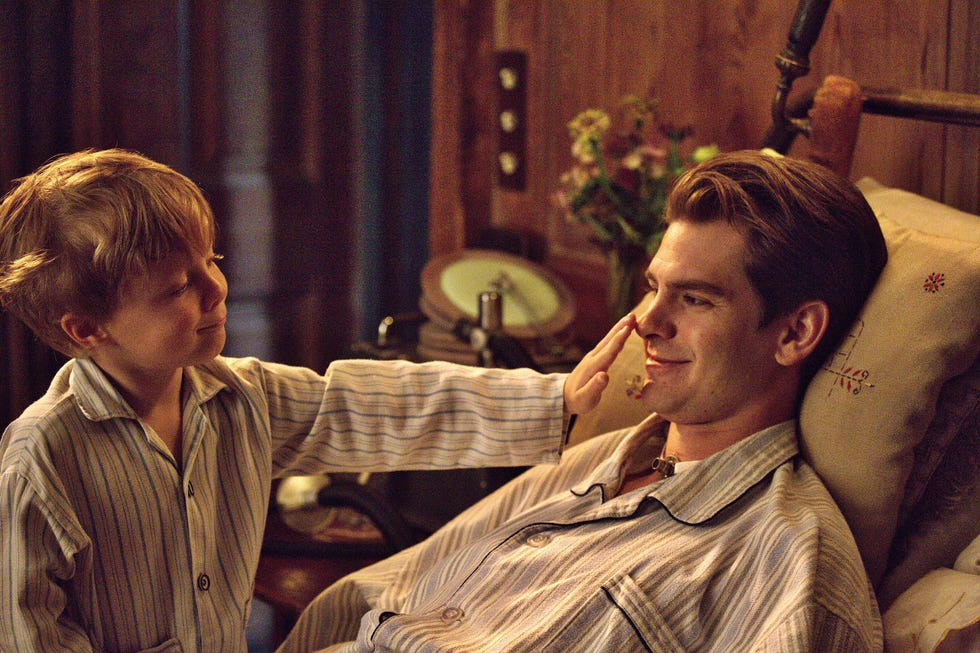
Andrew Garfield's starring role in Breathe is a prime example of this. The movie could have been so good, but it spectacularly failed to humanise Robin Cavendish's story.
Paralysed from the neck down due to polio, Cavendish fought a fiery battle with the medical establishment to live his life away from the confines of a hospital and, alongside his engineer friend Teddy Hall, contributed to the development of a wheelchair with an internal power source.
His refusal to accept the restrictions of his medical team changed the lives of countless people who were once imprisoned inside hospital rooms from the point of diagnosis.
Yet instead of exploring this conflict of wills between a disabled person and those who think they know best, Breathe focuses on Cavendish's inspiring decision to... Wait for it... Choose to live while disabled.
Luckily, a shimmer of gold is at the end of this long, grey rainbow.
TV shows like Special, which was written and created by a man with cerebral palsy, and Sex Education resisted the pull towards inspiration porn with nuanced, multi-layered characters whose entire personality is not reduced to their ability to inspire the masses.
Pitiable Trauma Victim

Manifesting most frequently in the form of characters whose lives cease to be meaningful upon the development of a physical or mental disability, this trope essentially tells audiences that a disabled life is not worth living.
One of the most infamous examples of this trope appeared in Me Before You, a supposedly romantic movie telling the story of an active sportsman who becomes a tetraplegic after an accident. He later travels to Switzerland to end his life, telling his carer-turned-romantic interest that he cannot allow her to live a half-life with him.
This is one of dozens of movies and TV shows that follow this narrative, dispelling the value of a disabled person's life as soon as it becomes "worse than" a non-disabled person's.
Movies and TV shows reliant on this offensive trope contribute to the overall cheapening of disabled life.
Only when a disabled person adapts enough to become an inspiration is their life considered to be of value. Otherwise, their presence is a burden on those around them and their disability is an unbearable weight around the neck of the disabled person at the centre of the narrative.
Disabled/scarred villain trope

Perhaps one of the most ancient tropes: even Shakespeare's hunchbacked Richard III was hardly the first example. Bond movies have, even in recent years, continued the tradition with the likes of Javier Bardem's Silva and Remi Malek's Lyutsifer Safin.
Recently, Russell T Davies made the executive decision to "de-disable" Davros, a villain who historically used a wheelchair, to avoid engaging with the age-old trope. This is something few others seem willing to do.
Game of Thrones also toyed with this trope with Tyrion Lannister, considered a monster by many purely because of his disability. While others villainize him, the audience is slowly charmed by his wit and intelligence, realising that he is no villain, only a misunderstood man.
Another often ignored example popped up in Detective Pikachu, where we met yet another villain determined to take over the world and metamorphose into another body to escape the horrors of being a wheelchair user.
From The Lion King to The Phantom of the Opera, the trope is apparently ubiquitous, proving that few writers are capable of creating an intimidating or terrifying villain without relying on cheap visual cues.
A glimpse of hope for the future?

History has yet to prove that it can move past the exhausting tropes writers pick out of the Rolodex whenever a disabled story rolls around. But there is always a small ray of hope for those willing to look for it.
The best examples of disabled representation often appear in documentaries, like Crip Camp, which tells the story of a groundbreaking summer camp for disabled people, and Code of Freaks, and these should be studied by creators from all backgrounds.
Avoiding tropes is an ongoing struggle for all, not just relating to the depiction of marginalised groups. We still see the same boring story arcs, settings and resolutions appear time and time again. Yet this isn't an excuse to let the trend continue unchecked.
The history of terrible disabled tropes is vividly clear. Now it's time to challenge it by encouraging disabled people to tell their own stories.