
Charlotte Regan's kind of movie is one where you leave the cinema feeling lighter than you entered. Her debut feature, Scrapper, is definitely that kind of movie.
"I love films that take risks and make you laugh," says Regan in an exclusive interview with Digital Spy ahead of the movie's release. "That's the experience I’m chasing when I make films."
In Scrapper, the Londoner follows an incredibly resourceful 12-year-old girl, Georgie (played by newcomer Lola Campbell), who secretly lives on her own after her mother passes away. However, her estranged father (played by Harris Dickinson) returns, much to her annoyance.
What to Read Next
Tired of working-class stories always leaning on tragedy, Regan wanted to focus on joy, telling the story from the whimsical perspective of a rebellious and imaginative child.
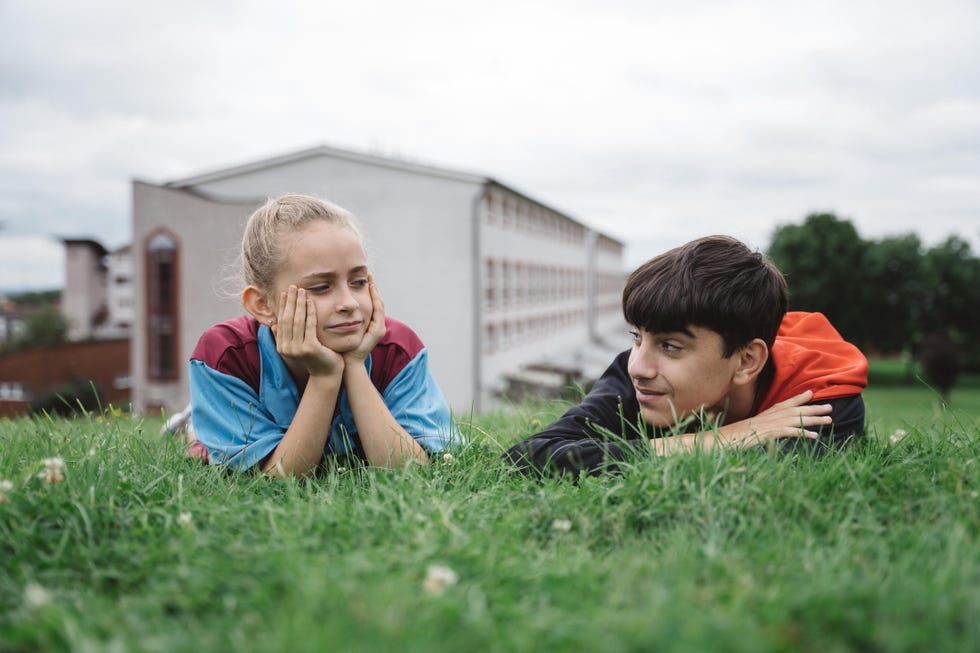
Scrapper joins some recent acclaimed British debuts such as Rye Lane, Polite Society and Charlotte Weil's Aftersun, showcasing the astounding new talents taking over British cinema.
Ahead of Scrapper's UK release next August 25, we talked with Charlotte Regan about her beautifully tender feature debut and discussed how she found the terrific Lola Campbell and what her hopes are for the future.
Where did it all start with Scrapper?
Charlotte Regan: I can't really remember! I think I always wanted to do a working-class film that had joy and humour in it. That is how I remember growing up.
Obviously, everyone has a different experience, but I always remember this world, especially when you're a kid, like the best world you could be in. You live with all your friends, and there's such a sense of community, people looking out for each other. We just wanted to make that reality a bit more joyful and get away from the kind of grey, super sad working-class dramas.
Other than that, I was just looking for an excuse to have a great summer, hang out, film something fun and throw water balloons at kids. There was something selfish in it.
You grew up in Islington, which is actually one of the most unequal places in the UK. Did any personal experience inspire the movie?
It's not based on anything. It's not a biopic or anything like that — that would be mad. It is inspired by the sense of community that I remember. Even when there were difficult times, it would push the community together, would make everyone come closer. I always wanted to see that feeling represented in a working-class film.
Did you ever consider shooting the movie in Islington?
No, I was looking somewhere in particular where we could have control over the location.
I had the feeling that, when I was little, the place I lived in was much bigger than it was. It felt like we needed a more sprawling area, and Limes Farm was incredible because it's its own world. It's really self-contained and feels safe for the kids that live there and play out.

I find that places in London don't have that anymore, because they’ve changed so quickly in the last 20 years. We did look in London — we started with that thought — but everywhere we went was so changed. You stepped onto it, and it was just different. The flats have been sold off, there's such a world divide that it didn't feel like that working-class community that we wanted to capture in this movie.
What was important for you while creating the character of Georgie, the little girl at the centre of the story?
Maybe the complexity of that kind of kid — somebody super resilient, independent and adult on the surface, but who has such a childish wonder on the inside. Kids who, if you were to tell them magic is real, they'll believe you. I love that balance.
Lola [Campbell], who came in to play Georgina, very much always had that. She talked like a grandma. She can have very big discussions with you, she can tell you off for being annoying, but if you give her a pack of Haribos and a water gun, suddenly she's like a normal child, just wanting to run around and go nuts.

Lola is amazing in the movie. How did you find her, and where’s the line that separates her from the character she’s playing?
She sent in an incredible tape where she spoke about Home Bargains and how much she loves a bargain. She didn't answer any of the questions that I asked her to answer in the tape, and right away, I said to my producer Theo [Barrowclough]: It's her!
And she's like an incredible human to be around, probably the best actor I've ever worked with and ever will be. She's so instinctual, and her performance can change so much based on the mood she's in, which I love. If I gave her some chocolate, she was on a high. But if she hadn't eaten a sausage roll for breakfast, she was in a terrible mood. She's incredible.
Did your past directing music videos influence the movie, particularly the bits of magic realism?
For sure. Both my DP Molly [Manning Walker] and I came from music videos, so we both have a music-video sensibility. We'd look at a scene and say, 'How could we make it feel different?'
We wanted the film to feel like it was being made by Georgie, even if that meant moments of it were flawed because we are all flawed and we have highs and lows depending on the day we're having. So we wanted it to feel rough around the edges, like a kid would put it together, rooted in her perspective, which [gave] us a great license to break rules or do things that didn't have to be perfect.
Which filmmakers do you look up to, and you feel inspired this movie?
Whenever someone asks this, I go blank and I have to get into my Letterboxd, which is terrible!
On my top four favourites of Letterboxd is Arrival, Wicker Man, Manchester by the Sea and Monos. In general, I've always loved films that make me leave the cinema lighter than when I went in. I love films that make you laugh and take risks, like The Garden.
I also love Taika Waititi's films, like What We Do in the Shadows, because they make you smile when you leave the cinema. That's the experience I’m chasing when I make films: I want people to have laughed instead of having a sad experience.

How did you see the current situation in British film industry in terms of access to people from all backgrounds?
I think it's better in London, but when you step on to sets out of London in particular, you're reminded how massive that divide is in every regard. It's very much a very middle-class world to be in. Hopefully, it's changing. If any of us had the answer, we would have fixed it, but everybody is having conversations about it and trying to improve it. It's a slow process.
But also it's been an incredible year for British first films, and I hope a year like that really shines a light on how possible it is for this to be a career for everyone. Molly's [Manning Walker] How to Have Sex, Rye Lane, Polite Society… There are so many bangers this year.
How do you see your future as a filmmaker?
I try not to think about it too much. I want to keep making films — hopefully films with working-class characters. I love the James Bonds and the Marvels. I would love to see films like that with working-class characters.
So, hopefully, one day I get a big massive film I can probably ruin or really f**k it up.
Scrapper is released in UK cinemas on August 25.
Mireia (she/her) has been working as a movie and TV journalist for over eight years. Based in the UK, she is a former deputy movies editor at Digital Spy, and previously worked for the Spanish magazine Fotogramas. Mireia's work has been published in other outlets such as Esquire and Elle in Spain, and WeLoveCinema and GamesRadar+ in the UK. She is also a published author, having written the essay Biblioteca Studio Ghibli: Nicky, la aprendiz de bruja about Hayao Miyazaki's Kiki's Delivery Service.
During her years as a freelance journalist and film critic, Mireia has covered festivals around the world and has interviewed high-profile talents such as Kristen Stewart, Ryan Gosling, Jake Gyllenhaal and many more. She's also taken part in juries such as the FIPRESCI jury at Venice Film Festival and the short film jury at Kingston International Film Festival in London. LinkedIn


