
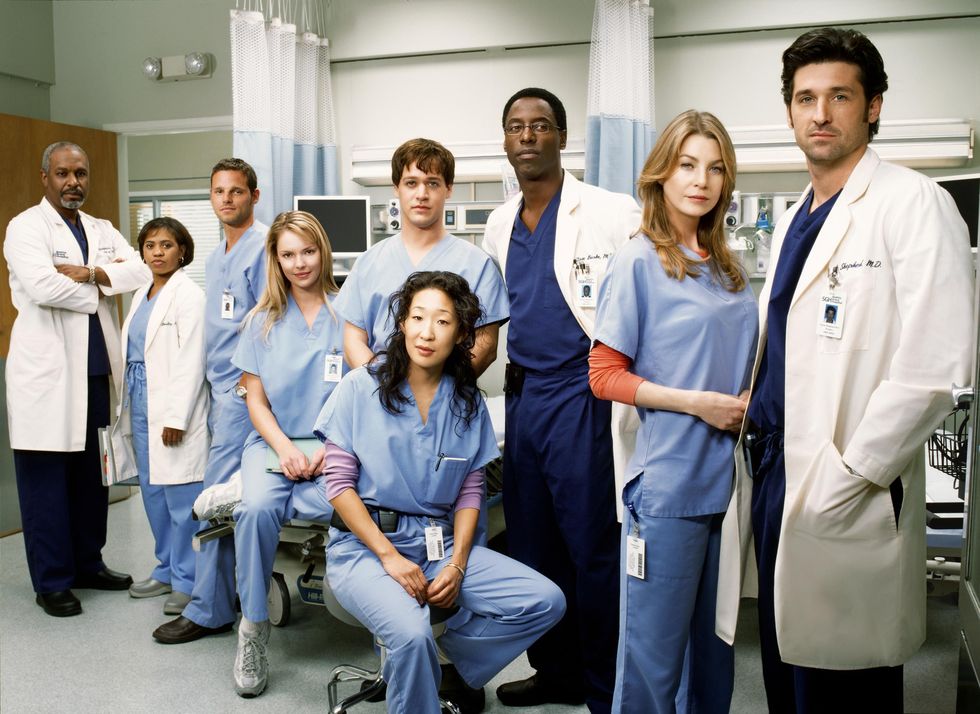
Scott Speedman made his way back to Grey Sloan Memorial Hospital in the last season of Grey's Anatomy, but around the same time, he was filming something very different for David Cronenberg.
Crimes of the Future has finally arrived in UK cinemas after creating much discussion following its Cannes premiere and US release. In it, Speedman plays Lang Dotrice who, following the tragic death of his son, seeks out the help of Saul Tenser (Viggo Mortensen) and his partner Caprice (Léa Seydoux).
They are performance artists in a world where the body undergoes new transformations and mutations as the human species adapts to a synthetic environment. To say more would be the spoil the surprises in store, although if we even tried to explain it, you'd probably come up with a totally different read on the movie.
The difference between the two projects is not lost on Speedman. "I finished this, and three days later I decided to do Grey's," he told Digital Spy.
"My last scene was working on my son's body in Crimes of the Future. Two days later, I was in Burbank, in Hollywood, working on this body on Grey's Anatomy with 100 people and huge lights and just a very different tone. It was an odd kind of thing."
That's probably putting it mildly.
What to Read Next
To mark Crimes of the Future's UK release, Digital Spy sat down with Scott Speedman to talk about David Cronenberg, his preparation for such a unique movie and what the hell it's all about.
It's rare we don't know where to start, but Crimes of the Future is just that kind of movie, what was your first reaction to the script?
I woke up to an email from David and Robert Lantos, the producer, who I'd worked with a couple of times. They said they wanted me to be a part of it, without any process at all.
I didn't know what I expected the movie to be, but I expected the part to be somewhat minimal. So when I first read it, just like any other actor, I was pretty focused on the part that they wanted me to play, and I was sort of overwhelmed.
I was so happy with how cool and interesting and dynamic a part it was – and how much of a lead of the film it was, so I was really excited about that part. And then once I had digested that, I went back and continually read the script over and over and over again to try to understand it as much as possible.
I was amazed that I was getting to do a David Cronenberg movie, but also not one in the vein of Eastern Promises – one of his old-school "body horror" movies. So as somewhat of a film geek, I was super excited.
As a fan, did your expectations of David Cronenberg meet how he actually worked on set?
Yeah, I was blown away with David. You know, in a lot of interviews that we do as actors, it's all very similar, how we talk about how we love everybody, and everybody's amazing, and this, that, and the other. And that's, to be honest, not really the case.
For me, David exceeded all my expectations of getting to work with somebody who's been doing this for a long time. And not just the end result, and not just the process, but him as a man was kind of mind-blowing to me – just how quietly confident he was a director.
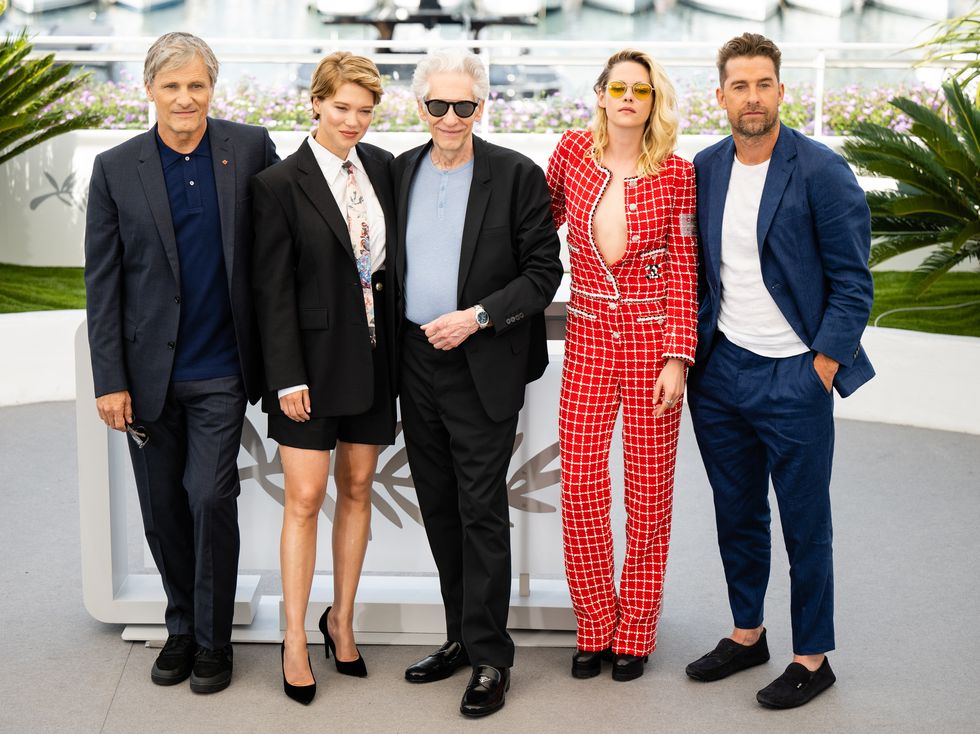
I don't know how to articulate it more than that. He was incredibly at ease. He had a lack of pretension. He was just a pure artist, much more than most times I've ever worked with anybody. So that blew my mind, how sweet and kind and into the work he was.
He wasn't doing it for anything else other than the art, it felt like. So I loved that. That was an incredible experience for me.
You've drawn upon it already about reading the script a few times, but how did you prepare for such a unique role?
Sometimes you're doing jobs where you want to have a light touch with things. You don't want to work on it too much, and that's the work: to not think about it; to not get too in-your-head about things. It's on the page. The more you think about it, the worse your performance is going to be.
And then there are roles like this where... I had to sort of take it down to the studs, and try to go to some place uncomfortable. I've worked with acting coaches and stuff like that. I did that whole thing to get ready for the movie.
It took a couple of months. You go over there, you kind of throw it up, and you see what happens. But that experience of preparation was elemental for me, and that was super fun, too.

It's set in the near future, but explores very timely themes, especially in terms of the environment. Was there a particular theme that resonated for you?
Just that, I would say, was the thing that jumped out to me more. That's where my brain goes.
I think for David – and I don't want to speak too much about it thematically – but there's always the technology aspect of things, and now it's becoming internalised and internalised and internalised, and what that is doing to our bodies.
But the environmental issues is what I hung my hat on in terms of the leader of this movement. Lang Dotrice, he's the leader of this cult-like group. That's where I hung my hat.
I also tend not to work on themes or anything like that. That's really the director's job, and I'm just trying to be of service to the words and the scenes themselves, and trying to make them as dynamic as possible.
In this film, there's plenty of difficult-to-watch scenes, but the moment when Lang discovers his dead son's body is brilliantly performed and one of the hardest to watch. Was that the most challenging for you?
I'm a new dad. My girlfriend was pregnant at the time, so I didn't have exactly that reference. But just to, you know, go with it as much as you can, and to get into that dark headspace and that vulnerable headspace in front of 50 strangers is always a scary thing.
Some things that you wouldn't think are scary, are much scarier than that. It's something that David creates – again, it's a nice space for you to go and work. He doesn't want to beat it to death. He films it in a very easy-going way, which made it easier.
But just trying to get into that headspace is challenging, for sure.

It feels like a very grimy, lived-in world, but how much did you have to imagine and how much was achieved practically?
It was amazingly practical. I think David, like everything he writes – really, his mind is on Toronto, where he lives and cut his teeth in every possible way to do with film. And he still is, today.
Financially, Greece had opportunities for us to make the movie at a bigger budget. I think when David got there and the team got there – not myself but the visual team, the visual departments – it just became apparent that this dilapidated world was obvious.
You could find it in this ancient city. It was going to work really well for us. You could set up a camera but there wasn't much you needed to do to create a near-dystopian future.
And not in a way that we see a lot in television and films these days, which was created CGI-wise. It was nice that it was very practical, and it was 100 degrees at 9pm. That added much of a feeling to this world. That was fun for me.
Crimes of the Future has prompted a lot of discussion since its release over its themes and ambiguous ending, was it something you spoke about with fellow cast or David on set?
No [laughs]. I got on the phone with David very early in the process of me doing this movie. I don't like to talk about a lot of stuff. I just want to do my thing in a certain kind of way. And he in a very nice way – he wasn't rude at all – but you could tell he was like, 'You go do your own thing'.
I think the themes are ambiguous, and what the movie is – that's in the eye of the beholder, of the viewer. I think he would have a different idea. If you talked to him five different times, he might have five different ways of talking about this movie.

I don't think he has an exact idea necessarily of what this means and that means. Maybe he does, but that's not the feeling I got. I think, as a viewer, he creates these worlds that create these feelings in you as a viewer, and I think that's the most important thing to him, maybe.
UK fans have had to wait a while, but now it's finally out here, what are you hoping viewers get from the film?
You hear this a lot these days. These movies are very hard to make. I mean, I think we're very interested in television these days. There's still eight or six episodes over there a lot of the time. Eight episodes, 10 episodes, 12 episodes that are very easy to digest.
But this movie – I think I want viewers to be comfortable in the uncomfortable when they're watching this movie. It's not easy. It shouldn't be easy. You won't totally understand everything.
And it's not the body-horror elements that are uncomfortable. But the whole thing is different, and to accept the uniqueness of the film, and to enjoy that aspect of things.
Crimes of the Future is out now in UK and Irish cinemas. For more information and tickets, head to https://crimesofthefuturefilm.co.uk.
![Grey's Anatomy Season 17 DVD [2021]](https://hips.hearstapps.com/vader-prod.s3.amazonaws.com/1633526218-411ae6H6ofL._SL500_.jpg?crop=1xw:1xh;center,top&resize=980:* "Grey's Anatomy Season 17 DVD [2021]")
Movies Editor, Digital Spy Ian has more than 10 years of movies journalism experience as a writer and editor. Starting out as an intern at trade bible Screen International, he was promoted to report and analyse UK box-office results, as well as carving his own niche with horror movies, attending genre festivals around the world. After moving to Digital Spy, initially as a TV writer, he was nominated for New Digital Talent of the Year at the PPA Digital Awards. He became Movies Editor in 2019, in which role he has interviewed 100s of stars, including Chris Hemsworth, Florence Pugh, Keanu Reeves, Idris Elba and Olivia Colman, become a human encyclopedia for Marvel and appeared as an expert guest on BBC News and on-stage at MCM Comic-Con. Where he can, he continues to push his horror agenda – whether his editor likes it or not.


