
Daisy Edgar-Jones is making the leap from small screen to big with her starring role as Kya in Where the Crawdads Sing, based on the novel of the same name by Delia Owens. Kya is a young girl abandoned by her family to forge a life for herself in the North Carolina marshes.
Reviled by her town, she's called 'Marsh Girl' and treated like a creature rather than a person — and then she's arrested for the murder of town-beloved Chase Andrews (Harris Dickinson). Kya is left with only a few allies: a kind lawyer and her childhood ex-sweetheart Tate (Taylor John Smith) to fight for her innocence against a jury already predisposed to find her guilty.
Ahead of the film's debut, Digital Spy spoke with Edgar-Jones about the challenges of tapping into her wild side and what it was like to film in such a beautiful and unfamiliar landscape.
Despite having read the book, we found watching Kya's journey was still quite an emotional experience. Had you read the book before you started this thing?
I read it when I was auditioning for the part. So, yeah. I read it, really imagining what it would feel like to try and bring her to life.
There were some changes from the book — how was it marrying up those two things?
What to Read Next
I've been a big fan of Lucy Alibar, who was our screenwriter, and she wrote a film called Beasts of the Southern Wild that I'd seen years ago, and I'm such a huge fan of hers. So I was so excited to see how she would bring the book to life.

I think she really captured the tone of the book so well, and it's a very faithful adaptation, I think. Like you said, it's always going to be a wee bit different because you're getting a different angle on the character. You're not in their heads so much; you're watching them.
But I think what's really cool is that Lucy really allowed for so many moments of quiet and silence, which allows an audience to kind of imbue the character with their internal life, which is really cool.
Do you go into this character aware of the outcome?
I think [I play it] in the moment as it happens. And also, because you film out of order as well. You do have to really try and put yourself in that moment, you know, for sure.
There was the scene where she has a confrontation with Chase that was our favourite part of the film. How was that for you as an actress?

That is a moment of wildness that comes out. And what I like about Kya is that she's a multitude of things. She's both wild and strong and very resilient but she's also very gentle and very curious. She's complicated and she's nuanced. I think that was something I always love in a character. And it's important to have female characters who are complicated and real.
So, yeah. I was really lucky because Harris, who plays Chase, is lovely, and it was a really collaborative experience to do that scene, and a real chance to show Kya standing up for herself.
There are moments of vulnerability for him as well, and you get the sense that actually he's seeking something from her that he doesn't get in his life. What was that dynamic like for you?
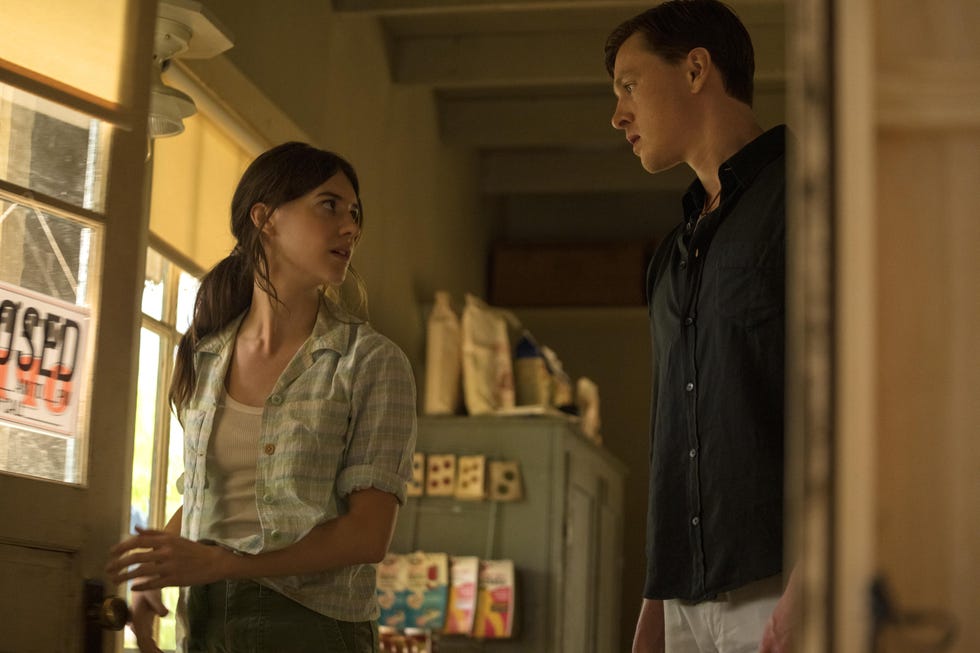
We got to have some rehearsals, which was really good. It's always fun to come to the scene, and just be really present and reactive to what each other is giving each other, if that makes sense? You can come with an idea of how you want to play something, but if you're too solid in that, you won't be free to take what you're given on that day, on that set.
So, yeah. Also, Harris is from a similar area in London to me. We were both doing the accents, so that was quite fun.
Does that help you step into the shoes of this character, doing that accent work?
Definitely. The accent informs so much more than just the vocal aspect. It also informs the physicality in a characterisation. I found with that accent in particular, there's a real sort of gentle quality to it, and a musical quality to it, that I think really informed a lot of Kya's character, because she's very gentle.
Yeah, I loved trying to get that accent right.
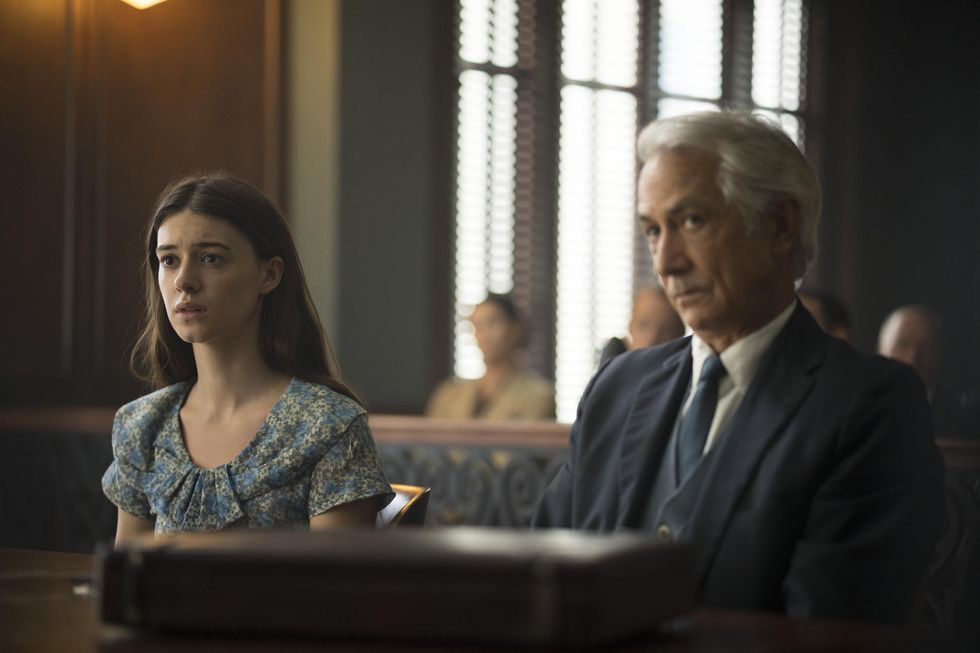
How much did you allow the environment to affect the way that you portrayed that character? Because it is so important to her, right, the marsh?
It is. And it's such a great backdrop, too, because it's a very dangerous environment at times. And I think the mystery aspect of the story – that backdrop makes it all the more tense.
But Kya has to survive in this wild landscape, and nature isn't always very forgiving. There's no judgement in nature, but it's also very powerful and all-encompassing. And I think that being there was really cool.
We filmed in the outskirts of New Orleans and Louisiana and in the bayou. There were alligators and snake wranglers wrangling snakes, and it was very different from London. But it was really cool, and it really helped to get into that character, really.

You couldn't ignore the power of nature because there would be thunder and lightning storms that would mean we had to stop filming, and go sit in our cars as the thunder rumbled overhead. So, yeah. It was an amazing place to film.
How much did you bring elements of your own womanhood and development into this character?
I think that Kya's a character who's finding herself, and finding her feet, and I think that is just part of being in your 20s – it's about finding out who you are, and the people that matter to you, and that fundamentally affect your life for the better.
That's something about the story I love: there's this profound romance and love story between Kya and one of the characters. Him teaching her to read, ultimately changes her life for the better because she's able to learn about the marsh she loves so much, and record it, and, you know, teach others about it.
So yeah, I loved that aspect of it. And I guess I related to that feeling, growing up.

There is that element where you see an almost animal instinct that drives Kya.
You do sort of jump in, really, and filmmaking is so collaborative. So that feeling is also helped by the choice of camera, and the music underneath. I love that aspect of filmmaking because the performance is only a small part of it, and so you play with it.
But Polly choosing to put a camera above you so that you seem small and vulnerable, and an ominous soundtrack, really helps to create that feeling.
Is filmmaking something you're interested in?
Yeah. For me, this is my first sort of big, big studio cinema release. And being on a film set, and seeing the scope of the project, was so amazing. I'm used to having a camera be here, and handheld. And that gives a very different feel.
And seeing these amazing rigs – and the camera was flying through the film like a bird – was really cool. Just as a film nerd, to be on set, you're like, "Oh my God, look at this camera."

Filming things out of sequence in the actual working day of it, did that throw up any difficulties for you in terms of where you were interacting with your character at any given time?
I've never really filmed anything sequentially, because I've mostly done TV, where you're filming, you know, six episodes in two months, and you're switching between so much. I'm quite used to it now. So you just take each scene, and try to remember what's come before.
I do a lot of prep – you know, on script work, and stuff like that.
In terms of the dynamic, you've got Tate and Chase. How did you approach building those different relationships?
That's always a really fun thing, too, because we're so different with different people. And I love placing a character with a different character, and seeing how it's going to affect them.
But then it's really about just playing with that actor, and seeing what they bring, and seeing what it brings out in you, and really just collaborating on it scene by scene.

Do you have a dream kind of role or character that you're like to do now?
I think it would be really cool— I said this before, but it'd be really fun to play a villain; a real, iconic villain of some kind. It'd be very fun.
Iconic in terms of comic-book-y iconic?
Well, yes. Or just like, you know, an American Psycho style or comic-book-y. Someone who's fun and villainous. Yeah, that would be really fun.
Where the Crawdads Sing is out now in cinemas.
Best Entertainment and Tech Deals

Coronation Street X Joanie - Gilroy Retro Newton And Ridley Sweatshirt






Gabriella Geisinger is a freelance film critic and journalist, with a focus on J-drama & film, and the Japanese production industry. She was previously Locations Editor at Screen International and Deputy Movies Editor at Digital Spy. Her writing can also befound in Curzon, 1883, and more. A born and raised New Yorker, she loves coffee and the colour black, obviously.


